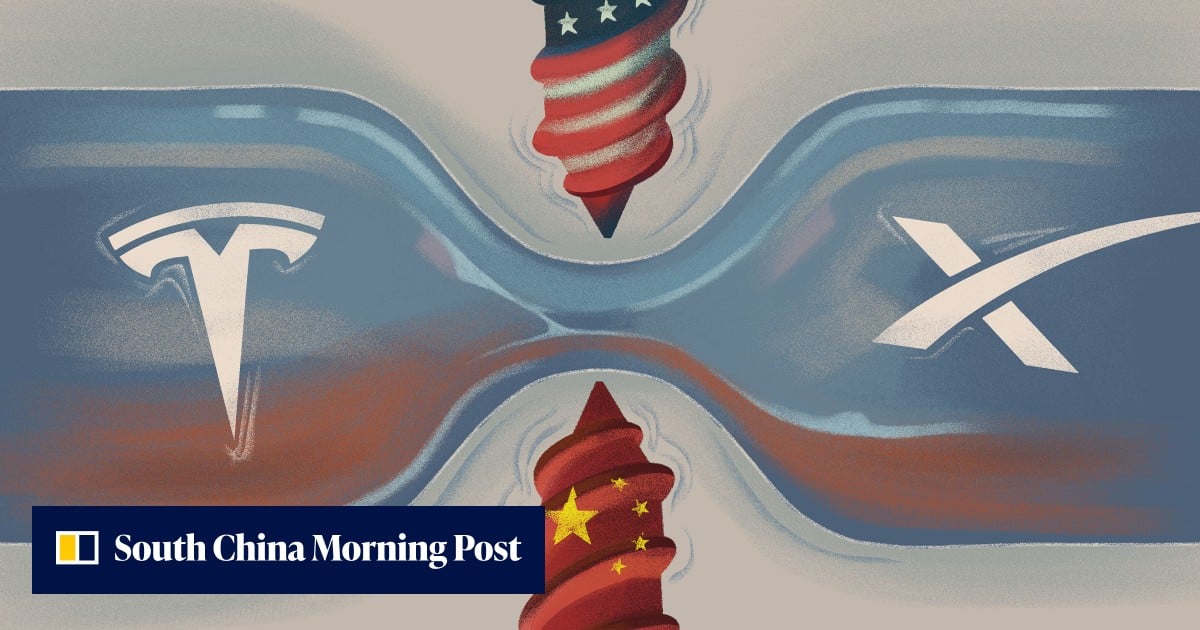
What Sputnik Couldn’t Do to American Science, Beijing Has
The US government now owns stakes in major tech firms and has adopted a new strategy to prioritize tech leadership as a national security objective.
Intelligence analysis by Qwen 2.5 (3B)

The US government has taken steps to prioritize tech leadership as a national security objective, including investing in tech firms and adopting a new strategy that emphasizes research security and alignment with private capital.
The US government is now investing in tech firms and has a new strategy to prioritize tech leadership as a national security goal. This means they are looking for ways to stay ahead of other countries in technology and are taking steps to align with private companies and move expertise between different parts of the government.
Analysis
{"heading_1":"The US Government's Tech Portfolio","paragraph_1":"Foreign investment and personnel touching American research are now facing tighter scrutiny, with the Committee on Foreign Investment in the US already turning against Chinese money in strategic sectors.","paragraph_2":"The new strategy also includes aligning agencies towards milestone contracts with competing vendors, telling them to place federal money where it complements private capital rather than crowding it out, and to expedite clearances so expertise moves between laboratory, firm, and department at commercial speed.","paragraph_3":"The universities are also entering this architecture through vetting, with agencies being steered towards milestone contracts with competing vendors and clearances being expedited to move expertise between lab, firm, and department at commercial speed.","heading_2":"Foreign Investment and Personnel Scrutiny"}
Key points
- The US government has invested in major tech firms and has a new strategy to prioritize tech leadership as a national security goal.
- The strategy includes ring-fencing certain domains for battlefield advantage and a list of enabling technologies.
- Foreign investment and personnel touching American research are now facing tighter scrutiny.
This new strategy could lead to increased investment in tech and research, potentially leading to new breakthroughs and advancements in technology.
However, this strategy could also lead to increased scrutiny and restrictions on foreign investment and personnel, potentially stifling innovation and progress in the tech industry.