Who is Khalil al-Hayya, Hamas's new political bureau chief?
Hamas has elected Khalil al-Hayya as the new head of its political bureau, succeeding Yahya Sinwar on a transitional basis. Al-Hayya, a Gaza-born co-founder of Hamas with a long record of negotiations with Israel, is considered closer to Iran than his rival Khaled Mashal.
Intelligence analysis by Llama
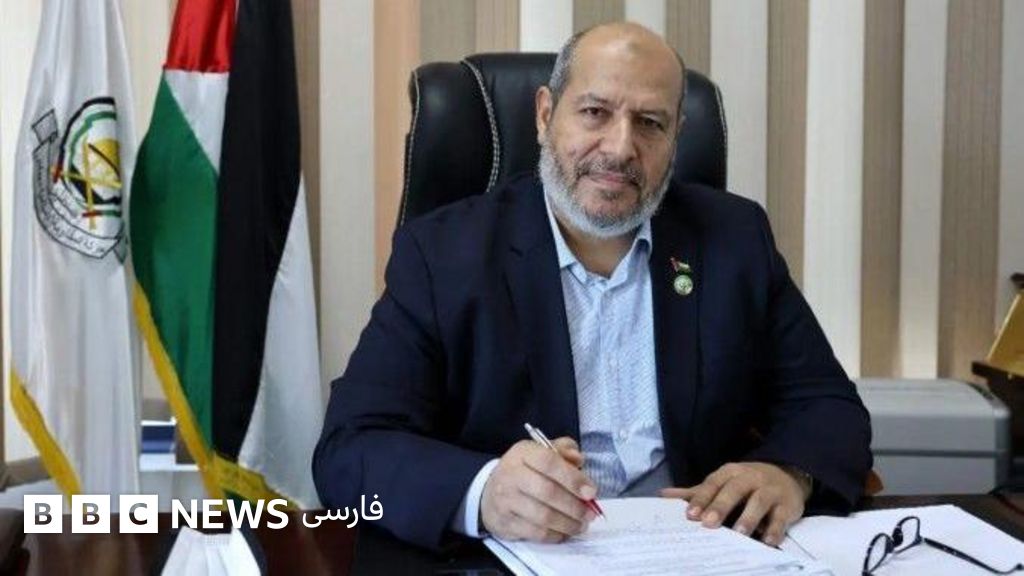
Hamas's internal council selected longtime negotiator Khalil al-Hayya to lead the movement on an interim basis after Sinwar's killing. Observers read the choice as preserving Gaza-based leadership inside the organization and as a signal of institutional continuity under Israeli pressure.
Imagine a big team whose main coach and assistant coach have both been hurt, and a new captain has to step in fast. Hamas picked Khalil al-Hayya, a Gaza-born leader who has been around since the team started and who has long talks with other teams' captains. He is seen as a friend of Iran, which is like the bigger club that helps Hamas a lot, and that choice tells everyone how Hamas wants to keep working with its friends during a hard time.
Analysis
A Gaza Insider in the Top Chair
Hamas framed the selection of Khalil al-Hayya, announced after an internal shura process, as proof of institutional health rather than mere personnel management. The movement's statement stressed that running an election while Israel was still targeting its cadres is meant to show that Hamas remains governed by its own councils and rules, according to the article. Al-Hayya defeated Khaled Mashal, the Doha-based veteran, in a vote that, per observers cited in the piece, preserves the influence of Gaza-based leaders inside the organization's hierarchy. He is to serve on a temporary, transitional basis, reflecting the scale of attrition Hamas has suffered since the October 2023 attacks.
The succession itself is a story of compression. Yahya Sinwar, the previous overall leader, was killed in Gaza in October 2024, according to Israel, and Ismail Haniyeh had earlier been killed. A five-member body that already included al-Hayya then ran the movement, leaving the new vote to formalize what was already an emerging reality. The interim framing, the article notes, leaves room for further reshuffling once the war's trajectory becomes clearer.
A Career Built on Talks and Survival
Al-Hayya's profile is unusually heavy on negotiating experience for a senior Hamas figure. He led the movement's delegation during multiple rounds of Gaza-related talks, including the 2012 and 2014 Cairo discussions with the Israeli side, the article reports. Born in Gaza in January 1960, he holds a BA from the Islamic University of Gaza, an MA from the University of Jordan, and a doctorate from Sudan's Al-Quran Al-Karim University, all in Islamic sharia-related fields. He was a co-founder of Hamas during the 1987 intifada, spent three years in Israeli prisons in the early 1990s, and won a Palestinian Legislative Council seat in 2006 on Hamas's list, later chairing the Hamas faction in that body.
His personal history is also shaped by targeted violence. His house was bombed in 2007 and 2014 in what appeared to be assassination attempts, and family members were killed in both strikes; further relatives died in the post-October 2023 campaign. In May 2025, Israeli Defense Minister Israel Katz publicly threatened to assassinate him. The article underscores that al-Hayya led a 2022 Hamas delegation to Damascus to revive ties with Bashar al-Assad, and a November 2023 visit to Lebanon to meet then-Hezbollah chief Hassan Nasrallah to discuss the hostage file.
The Iran Angle in the Leadership Choice
The piece's most Iran-relevant material is its comparison of al-Hayya with Khaled Mashal. Al-Hayya is described as the figure closer to Iran; he attended the inauguration of the Iranian president alongside Ismail Haniyeh, an event Mashal did not attend. His regional travel pattern, including the Damascus and Beirut visits, fits the diplomatic choreography of the so-called axis of resistance. For analysts following Iran's role in Palestinian factional politics, the choice signals that the Tehran-aligned wing of Hamas retains operational influence at a time when the movement is simultaneously trying to keep hostage and ceasefire channels open and to reassure its external backers that it remains a functional organization. Mashal's loss, despite his longer international profile, suggests that regional intermediaries and patrons continue to weigh Gaza-embedded credibility heavily when Hamas picks its face to the world.
Key points
- Hamas elected Khalil al-Hayya as the new head of its political bureau on a transitional basis, succeeding Yahya Sinwar after an internal shura process in which he defeated Khaled Mashal.
- Al-Hayya is a Gaza-born co-founder of Hamas, a former Palestinian Legislative Council member, and the leader of Hamas's negotiating delegation in multiple rounds of talks including the 2012 and 2014 Cairo discussions.
- The article describes al-Hayya as closer to Iran than Mashal; he attended an Iranian presidential inauguration with Ismail Haniyeh and led delegations to Damascus in 2022 and to Beirut in November 2023 to meet Hezbollah's Hassan Nasrallah.
- His house was bombed in 2007 and 2014 in apparent assassination attempts that killed family members, and Israeli Defense Minister Israel Katz publicly threatened to assassinate him in May 2025.
- Hamas framed the selection as proof of institutional continuity, while observers cited in the piece read it as preserving the influence of Gaza-based leaders inside the organization.
If al-Hayya's negotiating experience translates into a viable framework, his prior role leading Hamas's delegation in the 2012 and 2014 Cairo talks could help revive a hostage-and-ceasefire track. The movement's own statement frames his elevation as preserving institutional discipline, which could give external mediators a single, durable point of contact.
Israeli Defense Minister Israel Katz publicly threatened to assassinate al-Hayya in May 2025, and two earlier Israeli strikes on his home killed family members, suggesting the new leader is an immediate target. His closer alignment with Iran and the axis of resistance may also harden Israeli and Gulf skepticism, narrowing the diplomatic space he needs to deliver any of the priorities Hamas listed, from lifting the siege to opposing forced displacement.