Why a light plane crash in Beijing created a security dilemma for authorities
A light sport aircraft crashed into Beijing's tallest skyscraper, killing the pilot and injuring 13, prompting a nationwide suspension of flight school training and safety inspections. The incident exposed a significant security dilemma for authorities amidst the governme…
Intelligence analysis by Gemini 2.5 Flash
The recent crash of a civilian light plane into a Beijing skyscraper has highlighted critical security vulnerabilities within China's airspace management, particularly concerning the identification and response to unauthorized flights. This incident forces authorities to confront the challenge of balancing the rapid development of the 'low-altitude economy' with the imperative of nati…
Imagine a tiny toy airplane flying into a big building in a city, even though it wasn't supposed to be there. This made the grown-ups in charge realize it's super hard to tell if a small plane is just lost or if someone is trying to cause trouble, especially when more and more small planes and drones are flying around for fun and business. Now they have to figure out how to keep everyone safe while still letting people use these cool flying machines.
Analysis
Beijing's Airspace Breach
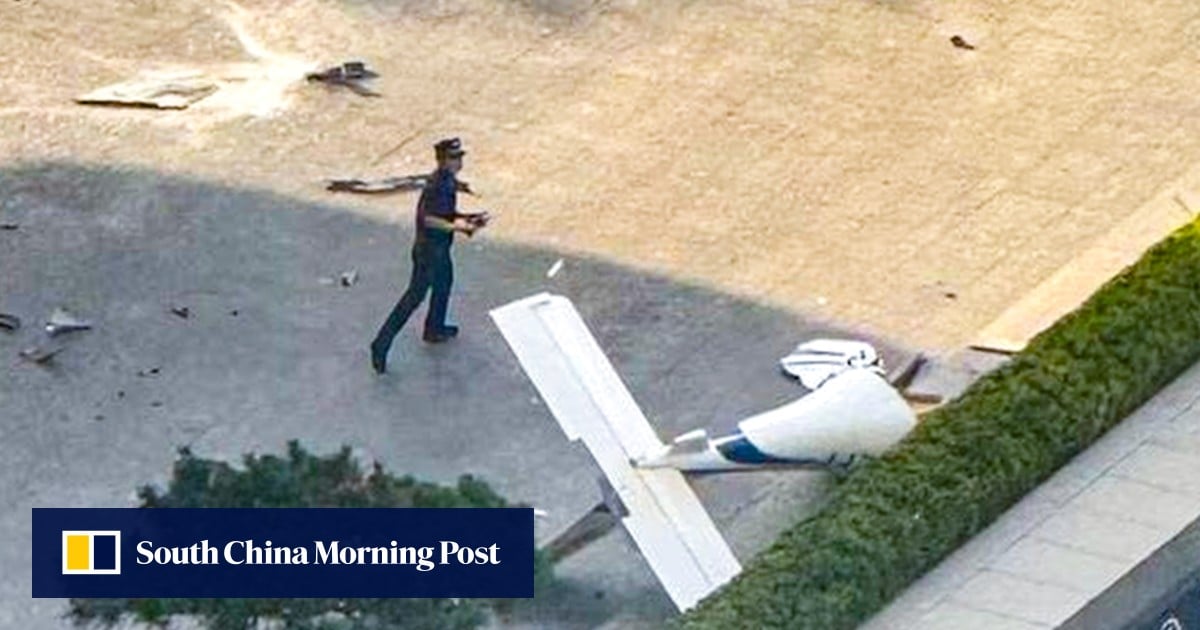
On a recent Friday, a light sport aircraft tragically crashed into Beijing's tallest skyscraper, resulting in the death of the pilot and injuries to 13 individuals on the ground. The Chaoyang district government confirmed the incident, noting that no passengers were aboard the two-seater plane. This unprecedented event immediately triggered a robust response from Chinese authorities, leading to the suspension of training activities at flight schools across the country and the initiation of comprehensive safety inspections.
This swift action reflects the gravity of a civilian aircraft breaching the airspace of the capital and striking a prominent building. The incident has undoubtedly raised questions about the efficacy of existing air traffic control and defense mechanisms, particularly concerning the monitoring of smaller, less conventional aircraft. The immediate grounding of flight operations signals a serious commitment to understanding the root causes and preventing any recurrence.
The Low-Altitude Economy's Double-Edged Sword
The crash occurs at a time when the Chinese government has identified the 'low-altitude economy' as a burgeoning and strategically important sector. This term encompasses a wide array of activities, businesses, and services conducted in airspace below 1km, including the rapidly expanding use of drones and other light aircraft. Beijing views this sector as a new engine for economic growth, investing heavily in its development and integration into various industries.
However, the incident starkly illustrates the inherent security risks associated with this economic push. While promoting innovation and commercial applications, the proliferation of low-altitude flights introduces complexities for air traffic management and national security. The challenge lies in fostering this economic growth while simultaneously ensuring that the increased air traffic does not create exploitable vulnerabilities, especially in densely populated and politically sensitive areas like Beijing.
Navigating the Security Dilemma
The light plane crash has exposed a profound security dilemma for Chinese authorities, particularly concerning the identification and response to unauthorized civilian flights. Li Wei, director of the Centre for Counter-Terrorism Studies at the China Institutes of Contemporary International Relations, a government think tank, highlighted the critical issue of reaction time. He noted that a civilian aircraft deviating from its flight path at high speed would leave minimal time for air traffic control and air defense systems to respond effectively.
Furthermore, Li emphasized the difficulty in discerning the 'intent' of such an aircraft. If a transponder is switched off, making identification impossible, the plane would automatically be perceived as a threat. The core dilemma then becomes how to appropriately handle such a perceived threat from a civilian craft without clear hostile intent, balancing potential danger with the need for proportionate response. This incident forces a re-evaluation of protocols for distinguishing between accidental deviations and malicious acts in a rapidly evolving low-altitude airspace.
Key points
- A light sport aircraft crashed into Beijing's tallest skyscraper, killing the pilot and injuring 13 people.
- Flight schools across China have been ordered to suspend training and undergo safety inspections following the incident.
- The crash highlights a security dilemma for authorities regarding the 'low-altitude economy', a sector promoted by the government.
- Experts note the difficulty in quickly identifying the intent of civilian aircraft and reacting to deviations from flight paths.
- The incident underscores the challenge of balancing economic development in low-altitude airspace with national security concerns.
The swift response by authorities to suspend flight training and initiate safety inspections suggests a proactive approach to addressing the identified security gaps. This could lead to the implementation of more robust air traffic control systems and clearer protocols, ultimately fostering safer development of the low-altitude economy while mitigating future risks.
The incident reveals a significant vulnerability in Beijing's air defense, indicating that current systems may be ill-equipped to handle the complexities of civilian low-altitude traffic. Without substantial upgrades and clear intent identification mechanisms, the growth of the low-altitude economy could inadvertently create persistent security risks, particularly in sensitive urban areas.