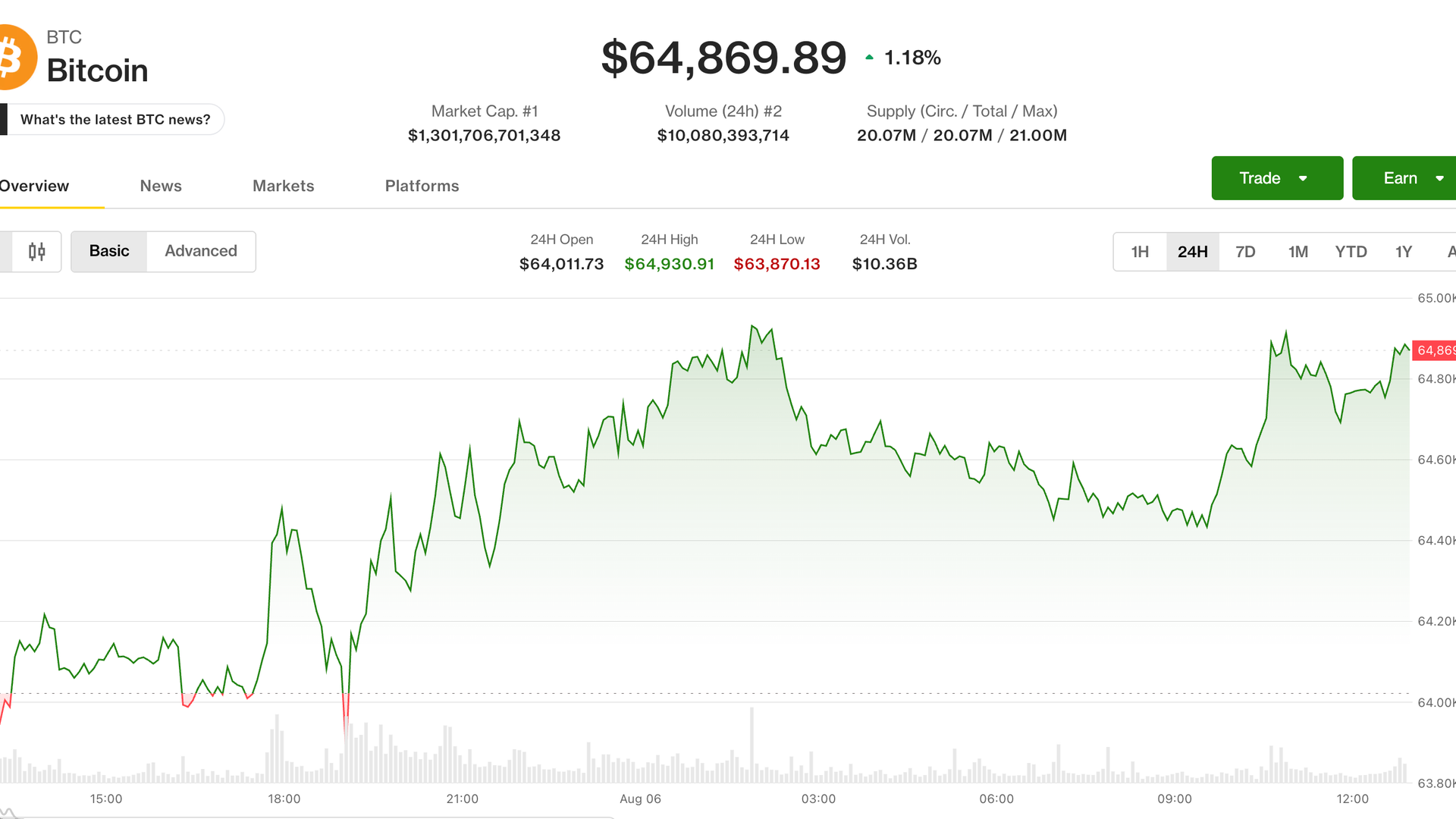
Why bitcoin remains below $65,000 as S&P 500 prints crypto's $2T market cap
The S&P 500 has gained 3.12% this month, adding roughly $2.1 trillion in market cap and pushing its total value to a record $70.5 trillion. Bitcoin is up just 2% over the same stretch, trading around $64,600.
Intelligence analysis by Llama
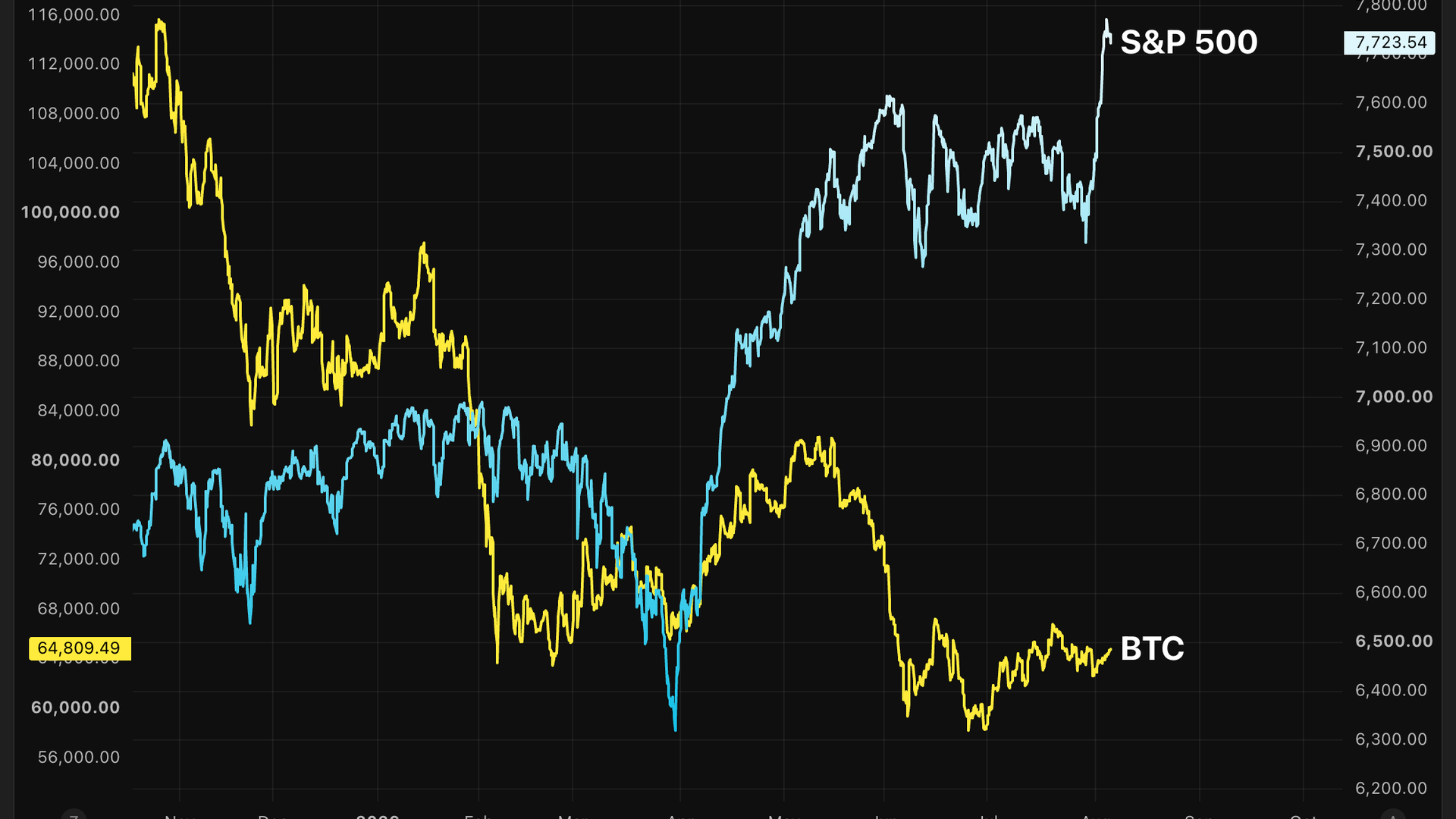
The S&P 500's rally is driven primarily by stock-specific narrative, particularly tied to AI, rather than by a broad macro risk-on impulse that would lift beta assets like BTC in tandem. Bitcoin's underperformance stems from its lack of direct exposure to AI and semiconductor stocks.
Imagine you're at a big party, and everyone's having a great time. But you're not having as much fun as everyone else because you're not really into the same things they are. That's kind of like what's happening with bitcoin right now. The party is the S&P 500 rally, and bitcoin is just sitting on the sidelines because it's not really connected to the things that are driving the party.
Analysis
A $60B Vote of Confidence
The S&P 500 has added roughly the entire crypto market's value this month, with a gain of 3.12% and a total market cap of $70.5 trillion. Bitcoin, on the other hand, has barely moved, trading around $64,600. Analysts point to a mix of reasons for this underperformance, including the fact that the equity rally is driven primarily by stock-specific narrative, particularly tied to AI, rather than by a broad macro risk-on impulse that would lift beta assets like BTC in tandem.
Why Crypto-Specific Headwinds Are Capping the Upside
Crypto has also been fighting its own battles that may be capping the upside. To name a few: the $120 million Coldcard exploit, uncertainty around the Clarity Act, and reports of Strategy liquidating its BTC. These events have damaged sentiment and led to an outflow of capital via stablecoins. Rising bond yields are creating an additional headwind for crypto, leading to an outflow of capital via stablecoins. Leading dollar-pegged stablecoin USDT's supply has dropped to its lowest since 2025.
The Halving Cycle and ETF Flows
There's also a four-year halving-cycle-related positioning story underneath all of this, and it may be the most counterintuitive piece. According to Markus Thielen, founder of 10x Research, the lack of bullish impetus is likely the result of a self-fulfilling prophecy about the halving cycle's track record, which suggests a bottom may happen in October. Because most traders have come to believe this, they are simply sitting on the fence, awaiting October. This is a notable reversal from last October, when most of these same traders dismissed the four-year cycle outright.
Key points
- The S&P 500 has added roughly the entire crypto market's value this month, with a gain of 3.12% and a total market cap of $70.5 trillion.
- Bitcoin has barely moved, trading around $64,600, despite the S&P 500's rally.
- Analysts point to a mix of reasons for bitcoin's underperformance, including the fact that the equity rally is driven primarily by stock-specific narrative, particularly tied to AI, rather than by a broad macro risk-on impulse that would lift beta assets like BTC in tandem.
- Crypto has also been fighting its own battles that may be capping the upside, including the $120 million Coldcard exploit, uncertainty around the Clarity Act, and reports of Strategy liquidating its BTC.
- Rising bond yields are creating an additional headwind for crypto, leading to an outflow of capital via stablecoins.
If the S&P 500 continues to rally, driven by AI and mega-cap stocks, it's possible that bitcoin will eventually follow suit. However, this may take some time, and investors should be prepared for a potential wait.
The current market conditions, including the Coldcard exploit and uncertainty around the Clarity Act, may continue to weigh on the cryptocurrency market, leading to further declines in bitcoin's price.