Why China’s open-weight AI model Kimi K3 is sparking anxiety in Silicon Valley
China's Moonshot AI has released a massive 2.8 trillion-parameter large language model, Kimi K3, which has narrowed the country's AI gap with the US to 'a matter of weeks'. The model outperformed premier closed-source US models on certain benchmarks, sparking jitters in S…
Intelligence analysis by Llama
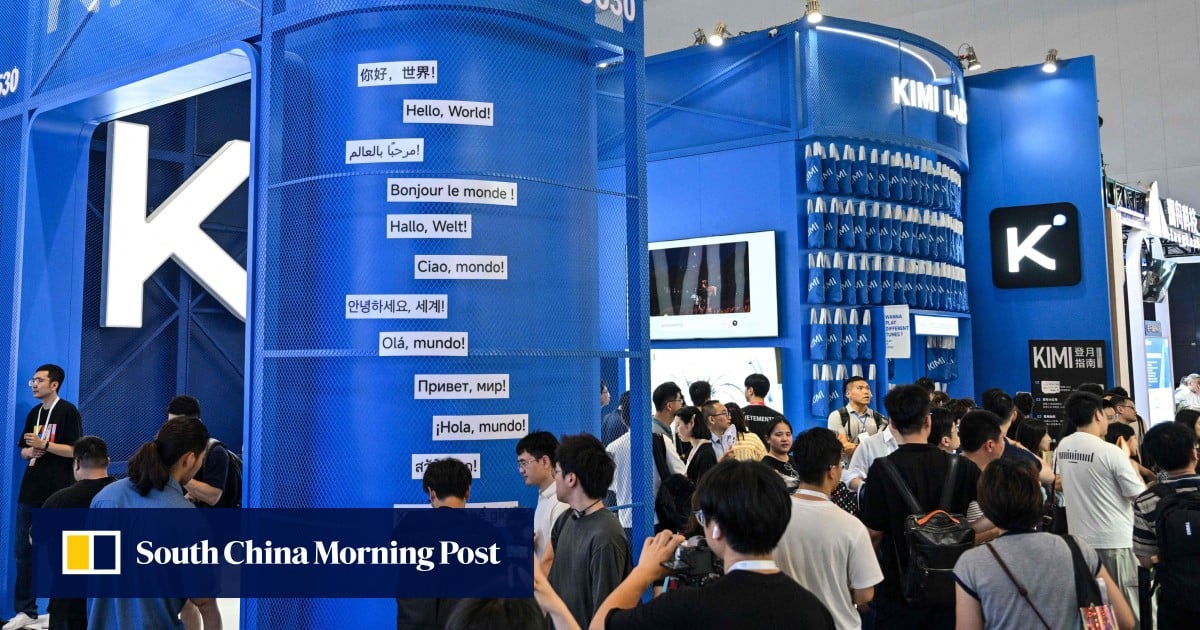
China's Moonshot AI has released a massive 2.8 trillion-parameter large language model, Kimi K3, which has narrowed the country's AI gap with the US to 'a matter of weeks'. The model outperformed premier closed-source US models on certain benchmarks, sparking jitters in Silicon Valley.
Imagine you have a super powerful computer that can understand and generate human-like language. This is what Kimi K3 is - a massive AI model that can do many things, from writing code to answering questions. China's Moonshot AI has released this model, which is making people in Silicon Valley nervous because it's so good and could potentially change the way they do things.
Analysis
A $60B Vote of Confidence
The release of Kimi K3 by Moonshot AI has sent shockwaves through the global AI community, with many analysts hailing it as a major breakthrough for China's AI industry. The model's performance has topped that of premier closed-source US models, including Anthropic's Claude Opus 4.8 and OpenAI's GPT-5.5, on certain benchmarks. This achievement has narrowed the gap between China and the US in frontier AI to 'a matter of weeks', according to Ryan Fedasiuk, a fellow at the American Enterprise Institute.
While surpassing GPT-5.6 Sol and Claude Fable 5 on certain benchmarks, Kimi K3 remains significantly cheaper than its US alternatives, despite being pricier than other Chinese models. This has sparked concerns in Silicon Valley, where companies are worried about the potential impact of Chinese AI advancements on their own research and development efforts.
The release of Kimi K3 is also seen as a major vote of confidence in China's open-source strategy. By releasing the model under an open-source license, Moonshot AI is making it available to developers and researchers around the world, which could help to accelerate the development of AI technologies in China and beyond.
However, the release of Kimi K3 also raises questions about the potential risks and challenges associated with the rapid advancement of AI technologies in China. As the country continues to invest heavily in AI research and development, there are concerns about the potential impact on jobs, industries, and society as a whole.
Why Cursor?
One of the key questions surrounding the release of Kimi K3 is why Moonshot AI chose to release the model under an open-source license. According to the company, the decision was made to accelerate the development of AI technologies in China and beyond. By making the model available to developers and researchers around the world, Moonshot AI is hoping to create a community of users and contributors who can help to improve and expand the capabilities of the model.
However, some analysts have raised concerns about the potential risks associated with releasing a highly advanced AI model under an open-source license. By making the model available to developers and researchers around the world, Moonshot AI may be creating a potential security risk, as the model could be used for malicious purposes.
The Road Ahead
The release of Kimi K3 is a major milestone in the development of AI technologies in China, and it has significant implications for the global AI landscape. As the country continues to invest heavily in AI research and development, there are concerns about the potential impact on jobs, industries, and society as a whole.
However, the release of Kimi K3 also raises questions about the potential risks and challenges associated with the rapid advancement of AI technologies in China. As the country continues to push the boundaries of what is possible with AI, there are concerns about the potential impact on human workers and the economy as a whole.
Key points
- China's Moonshot AI has released a massive 2.8 trillion-parameter large language model, Kimi K3.
- The model has narrowed the country's AI gap with the US to 'a matter of weeks'.
- Kimi K3 outperformed premier closed-source US models on certain benchmarks.
- The model is significantly cheaper than its US alternatives, despite being pricier than other Chinese models.
If Kimi K3 continues to perform well and is widely adopted, it could lead to significant advancements in AI research and development, potentially creating new opportunities for businesses and individuals alike. Additionally, the open-source nature of the model could accelerate the development of AI technologies in China and beyond, leading to greater collaboration and innovation.
However, the rapid advancement of AI technologies in China also raises concerns about the potential risks and challenges associated with their use. For example, if Kimi K3 is used for malicious purposes, it could lead to significant security risks and potentially even harm to individuals or society as a whole.
