‘Why did it become personal?’: furore over plans to expand Kent oyster shack
James Green's oyster company owns a chunk of Whitstable's shoreline but success has not brought affection from residents. The company plans to expand its oyster shack on the beach, but residents are opposing the plans, citing concerns about the impact on flood defences an…
Intelligence analysis by Llama
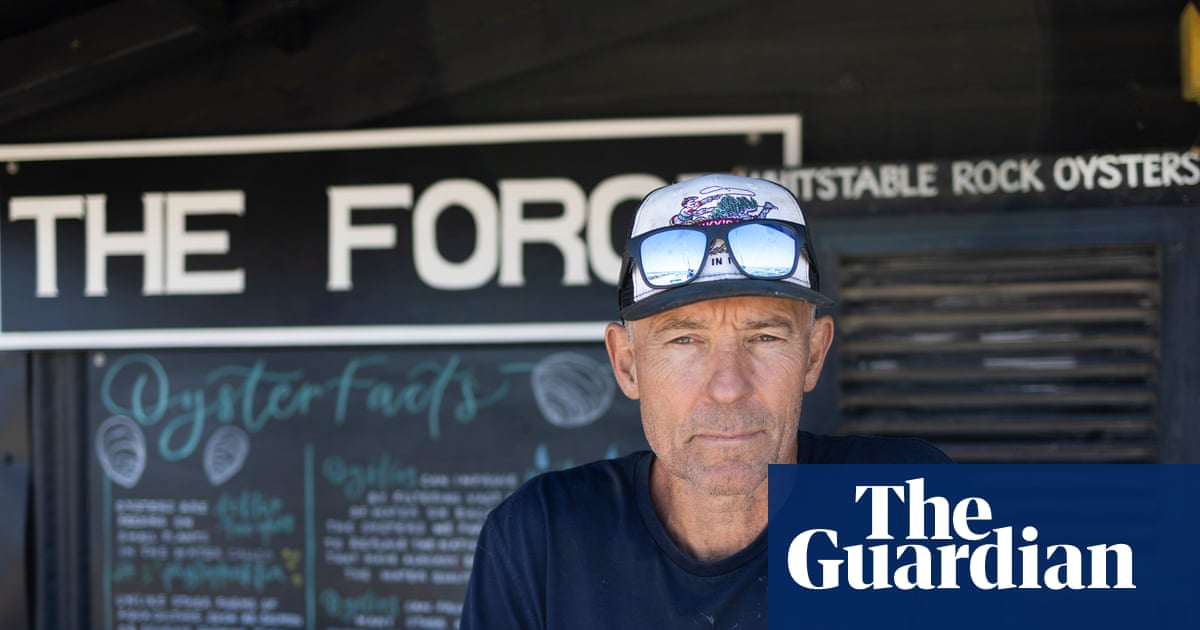
James Green's oyster company is expanding its operations in Whitstable, but residents are opposing the plans, citing concerns about the impact on the beach and the local community.
Imagine you own a big company that makes a lot of money from oysters. You want to build a new seating area on the beach so people can enjoy oysters and drinks while looking at the sea. But some people in the town don't like the idea because they think it will ruin the beach and make it less special. It's a big argument about how to balance making money and taking care of the environment.
Analysis
A Family Business with a Rich History
The Whitstable Oyster Fishery Company (WOFC) has been a part of the town's fabric for over 200 years. Founded in 1793, the company has been passed down through generations of the Green family. James Green, the current director, inherited the company from his father, Barrie, who bought it in 1976. The company had one employee and was barely functioning at the time.
A New Era for the Company
In 2008, James's sons, James and Richard, started the industrial-scale farming of non-native Pacific rock oysters. This move helped to revitalize the industry and cement Whitstable's reputation as 'Britain's Oysteropolis'. The company now harvests about 2m oysters a year from Whitstable's seabeds, half of which stay on the south coast to be sold in the company's hotel and four restaurants.
A Battle Over the Beach
The company's success has not brought affection from residents, however. The planning application for the Forge oyster shack's expansion on to a patch of beach has attracted over 200 opposing submissions, including from the Environment Agency. Residents have called the plans 'a carbuncle' and a 'horrifying visual, physical and commercial intrusion'. They are concerned about the impact on flood defences and the unspoilt nature of the beach.
A National Problem
James Green detects a 'general antipathy' towards his company and a lack of realism about the economic challenges facing the area and the UK. He believes that the country has a problem with commercial enterprises and expansion, and that people don't like change. The dispute has highlighted the tension between economic development and environmental protection.
Key points
- The Whitstable Oyster Fishery Company has been a part of the town's fabric for over 200 years.
- The company has expanded its operations in recent years, including the industrial-scale farming of non-native Pacific rock oysters.
- The planning application for the Forge oyster shack's expansion on to a patch of beach has attracted over 200 opposing submissions.
- Residents are concerned about the impact on flood defences and the unspoilt nature of the beach.
- James Green believes that the country has a problem with commercial enterprises and expansion.
If the plans for the Forge oyster shack's expansion are approved, it could bring more jobs and economic growth to the area. The company's success could also help to promote Whitstable's reputation as a tourist destination and attract more visitors to the town.
However, if the plans are rejected, it could lead to a loss of jobs and economic growth in the area. The dispute could also damage the company's reputation and make it harder for them to operate in the future.