Why Do China and North Korea Have a Love-Hate Relationship?
Xi Jinping is visiting North Korea as both sides try to refresh a long, uneasy alliance shaped by war, nuclear ambition and mutual suspicion.
Intelligence analysis by GPT-5.4 Mini
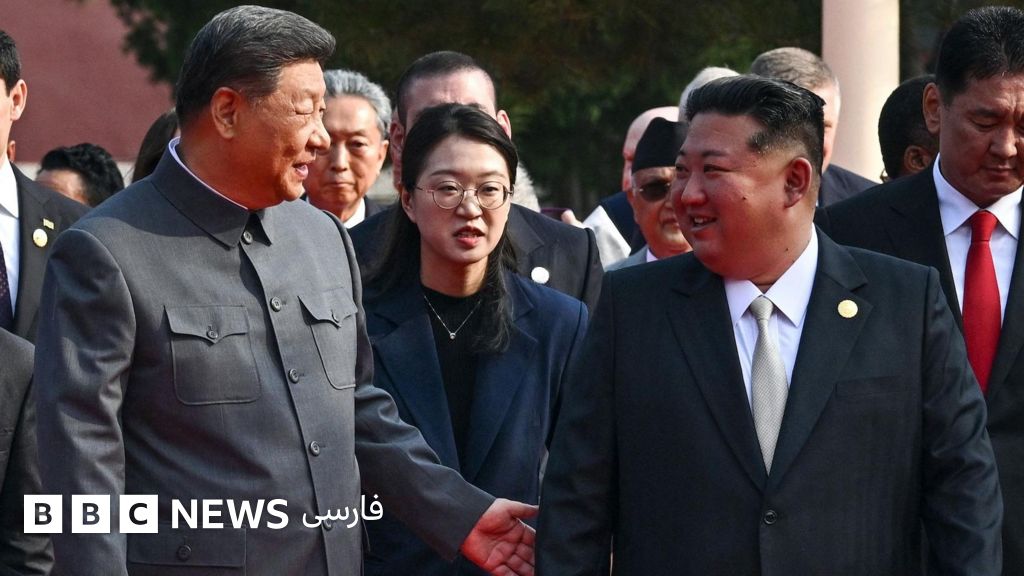
The BBC says China and North Korea remain strategically tied, but their partnership has always mixed dependency with friction. Beijing wants stability next door, while Pyongyang wants room to act on its own terms.
China and North Korea are like two neighbors who need each other, but do not fully trust each other. China helps North Korea just enough to keep the house from falling down, while North Korea keeps trying to act on its own.
Analysis
A relationship built on necessity
The article describes China and North Korea as partners whose ties were forged in war but never became simple friendship. China sent huge numbers of troops into the Korean War, and Mao Zedong later framed North Korea as strategically vital to China’s security.
Shared interests, different goals
North Korea also sought protection from other powers, first by aligning with the Soviet Union and later by balancing Moscow and Beijing. After the Soviet collapse in 1991, China became Pyongyang’s main economic backer and still remains its largest trading partner. But the BBC notes that Beijing supports North Korea only enough to keep the regime from collapsing, while avoiding investments that would make it fully self-reliant.
Nuclear tensions
The relationship has repeatedly been strained by North Korea’s nuclear program. China has said it wants a nuclear-free Korean peninsula, yet it has also stopped short of using all of its economic leverage against Pyongyang. The article says Beijing fears the consequences of collapse more than it dislikes North Korea’s weapons drive. Those risks include refugees, uncertainty over nuclear assets, and the possibility of greater US or South Korean influence moving north.
Xi’s visit and the timing game
Xi Jinping’s trip to Pyongyang is presented as a diplomatic reset after he recently met Vladimir Putin and Donald Trump. The piece says this visit underlines North Korea’s importance as a neighbor and a strategic partner. It also notes that Kim Jong Un has sometimes used the timing of missile and nuclear tests to pressure China, showing that Pyongyang is not simply following Beijing’s lead.
Key points
- Xi Jinping is visiting North Korea as part of a long-running but uneasy strategic relationship.
- China backed North Korea during the Korean War and later became its main economic supporter after the Soviet collapse.
- Beijing wants stability and a non-nuclear peninsula, but it also fears the fallout from a North Korean collapse.
- North Korea has repeatedly used nuclear and missile activity to signal that it is not under China’s control.
- The article presents the relationship as necessary for both sides, but full of friction and mistrust.
If Xi’s visit helps calm tensions, the two countries could keep their relationship stable and avoid sudden shocks on the Korean peninsula. The article suggests that steady contact may also give Beijing more room to press for restraint without forcing a crisis.
The same relationship could stay tense if North Korea keeps testing missiles or nuclear weapons at politically sensitive moments. The BBC also warns that China’s fear of collapse may keep it from applying enough pressure to change Pyongyang’s behavior.