Why Kerala government skipped Vande Mataram on Independence Day despite Congress-led states complying
Kerala's Congress-led United Democratic Alliance government opted not to sing the full 'Vande Mataram' at its official Independence Day function, defying a central government directive. This decision contrasts with Congress-ruled states like Karnataka and Himachal Pradesh…
Intelligence analysis by Gemini 2.5 Flash
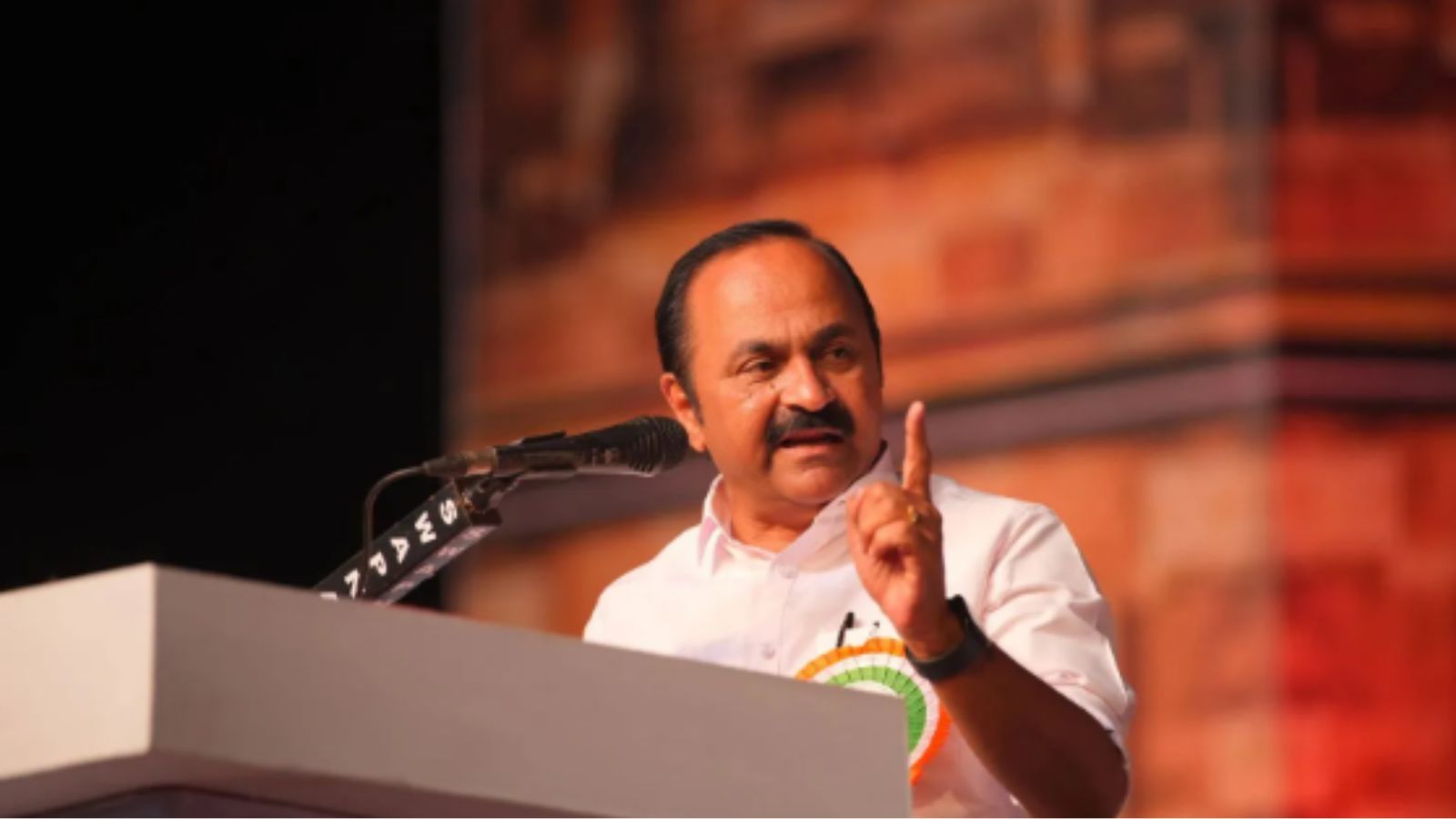
The Kerala government, led by Chief Minister V D Satheesan, chose to omit the full six-stanza version of 'Vande Mataram' from its official Independence Day celebrations, despite a central government communication urging its inclusion. This move sparked political controversy, with the BJP accusing the Congress of appeasing its ally, the Indian Union Muslim League, while other Congress-…
Imagine there's a special national song that everyone is asked to sing all six verses of on a big holiday. But in one state, Kerala, the grown-ups in charge decided to only sing a different, shorter song instead. This made some other grown-ups, especially from a different political team, quite upset. They said it was like not following the rules and accused the Kerala leaders of listening too much to one of their friends. It's a bit like when your teacher asks everyone to draw a flag, but one student draws a flower instead, and it causes a big discussion about what's right.
Analysis
The Kerala government's decision to bypass the full rendition of 'Vande Mataram' during its official Independence Day ceremony has ignited a significant political debate, showcasing the intricate relationship between state autonomy and national directives. The central government's communication, forwarded by Chief Secretary Bishwanath Sinha, explicitly called for the inclusion of the six-stanza national song as part of the 'Har Ghar Tiranga' campaign. However, the V D Satheesan government chose a different path, leading to accusations of 'toeing the Sangh Parivar line' from the Opposition, ironically, for not complying with a directive that the BJP-led central government issued.
V D Satheesan
Chief Minister V D Satheesan's government found itself in a precarious position, navigating between a central directive and internal political considerations. The decision to skip the full 'Vande Mataram' was framed as a stance to be clarified on Independence Day, following earlier controversies. Notably, the song was sung in its entirety during the Cabinet's swearing-in in May, a decision Satheesan had justified by attributing the ceremony's organization to Lok Bhavan. This prior incident, where Lok Bhavan later described the omission of the full version during the Assembly's first session as a protocol violation, likely influenced the government's cautious approach this time.
Thiruvananthapuram
The political divide was starkly evident at the local level, particularly in Thiruvananthapuram. Despite the state government's decision to omit the song from its official function, 'Vande Mataram' was indeed sung at events held at the Lok Bhavan and within the BJP-ruled Thiruvananthapuram municipal corporation. This contrast underscored the BJP's commitment to the directive, even as the state government diverged. Furthermore, at the Kozhikode Municipal Corporation, BJP councillors recited 'Vande Mataram' concurrently with the ruling CPI(M) singing the national anthem, illustrating the deep ideological chasm and the politicization of national symbols across different political entities within the state.
Indian Union Muslim League
The BJP swiftly capitalized on the controversy, alleging that the Congress government's decision was influenced by its ally, the Indian Union Muslim League (IUML). The IUML holds key portfolios, including education and local self-government, in the current Kerala government. The BJP framed the Congress's action as acting at the behest of the IUML, further announcing plans to sing 'Vande Mataram' at 15,000 locations across Kerala as a 'strong defence against forces which give support for anti-national elements.' This narrative attempts to link the Congress's decision to perceived anti-national sentiments, thereby escalating the political stakes and potentially fueling communal undertones in the debate.
Key points
- Kerala's Congress-led UDF government skipped the full 'Vande Mataram' at its official Independence Day function.
- This defied a central government directive for all states to sing the six-stanza version as part of the 'Har Ghar Tiranga' campaign.
- Congress-ruled states like Karnataka and Himachal Pradesh complied with the central government's instruction.
- The BJP accused the Kerala government of acting at the behest of its ally, the Indian Union Muslim League, which holds key ministries.
- Despite the state government's stance, 'Vande Mataram' was sung at local events, including in the BJP-ruled Thiruvananthapuram municipal corporation.
The Kerala government's decision could be interpreted as an assertion of state autonomy in cultural matters, fostering a nuanced approach to national symbols that respects diverse interpretations. This might lead to a more inclusive dialogue on how national identity is expressed, allowing states greater flexibility in their observances.
This incident risks further political polarization and accusations of disrespect towards national symbols, potentially fueling communal tensions, especially given the BJP's strong reaction. It could deepen the divide between the central government's directives and state-level implementation, leading to more such confrontations over cultural and national observances.