Why the “Mexican wave” is probably not Mexican, and why some teams want it banned
The “Mexican wave” may have become famous in Mexico, but its modern origin likely traces back to the United States. A BBC Persian report looks at how the stadium ritual spread, how it works, and why it can be controversial.
Intelligence analysis by GPT-5.4 Mini
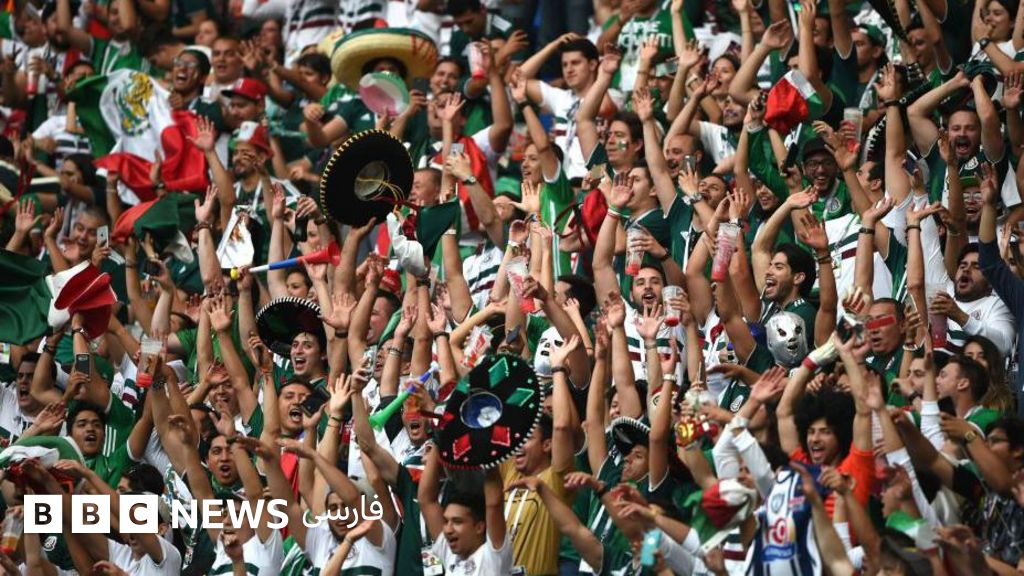
The article explains that the stadium wave is a global crowd ritual with a disputed origin: it became famous at the 1986 World Cup in Mexico, but one account credits an Oakland baseball game in 1981. It also shows how physicists studied the wave like a moving pattern in nature, and why it can be seen both as collective joy and as a sign that the match is dull.
A stadium wave is like a giant row of dominoes made of people. One small group stands up, then the next, and it keeps rolling around the crowd. The article says it became famous in Mexico, but it may have started in the United States.
Analysis
A famous ritual with a disputed name
The article argues that the so-called “Mexican wave” is probably not Mexican in origin, even though Mexico helped turn it into a global symbol. The wave became widely known during the 1986 World Cup in Mexico, but the piece says many people credit an earlier version to George Henderson, known as “Crazy George,” at an Oakland Athletics baseball game in California in 1981.
How the wave spreads
The report summarizes research published in Nature in 2002 by Iles Farkas, Tamas Vicsek, and Dirk Helbing. They studied video of stadium waves in football crowds larger than 50,000 people and found that a typical wave moves clockwise at about 12 meters per second, or roughly 20 seats per second. It usually stays about 6 to 12 meters wide, and only 25 to 35 people may be enough to start it in a large stadium.
The researchers treated people like “excitable” units in a physical system, similar to models used for heart signals or forest fires. The point was not that people are machines, but that simple local actions can produce a large, coordinated pattern.
Joy, boredom, or both?
The article presents the wave as a symbol of shared excitement and collective identity. A psychology professor in Mexico, Eric Salazar Flores, says that doing the wave shows that a person is not just an individual, but part of a larger group. At the same time, the research suggests the wave often begins when nothing especially exciting is happening in the match, which creates a built-in contradiction: it can signal togetherness, but also boredom.
That tension helps explain why some teams and fans embrace it while others see it as distracting or worth restricting. The article places that debate in the broader context of Mexico City’s plan to try to break the Guinness record for the largest human wave ahead of the 2026 World Cup.
Key points
- The wave became globally famous in Mexico, but the article says its likely origin was in the United States.
- George Henderson, known as "Crazy George," says he started the wave at an Oakland Athletics game in 1981.
- Researchers found that a typical wave moves at about 12 meters per second and can start with only 25 to 35 people.
- The article frames the wave as both a sign of collective joy and a possible sign of boredom.
- Mexico City wants to break the Guinness record for the largest human wave ahead of the 2026 World Cup.
If the wave is embraced as a shared tradition, it can bring thousands of fans into one visible moment of unity. The article suggests it is easy to start, easy to spread, and powerful as a symbol of collective fun.
The same behavior can also be read as a sign that nothing exciting is happening in the match. That makes it easier for critics to view the wave as distracting, and helps explain why some teams might want to limit it.