Will ‘Trump-class’ battleship be a sitting duck for Chinese carrier-killer missiles?
A US House committee questioned Trump’s BBG(X) battleship plan, warning it could strain nuclear shipbuilding and needs review.
Intelligence analysis by GPT-5.4 Mini
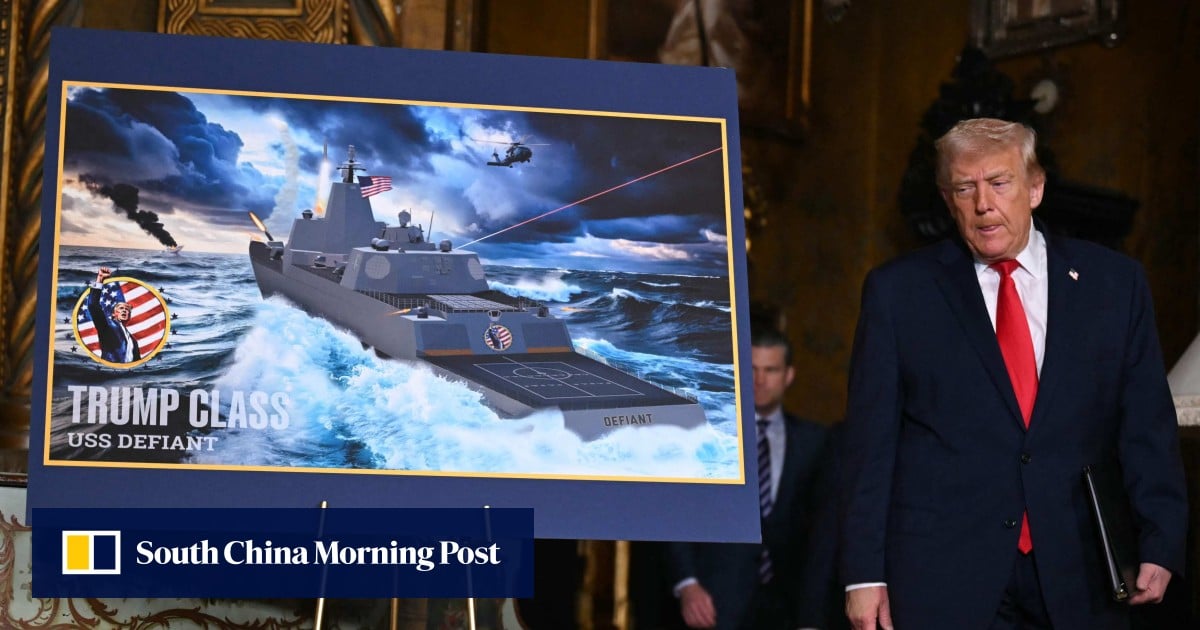
Congress is casting doubt on Donald Trump’s proposed “Golden Fleet,” especially the BBG(X) nuclear-powered battleship. Lawmakers worry the schedule could overload limited US shipyard capacity, while one amendment also pointed to Chinese missile threats like the DF-21D.
US lawmakers are asking whether a giant new warship would be hard to build and easy to threaten. It is like trying to add a huge new truck to a garage that already has only a few mechanics and one special parts maker.
Analysis
What happened
The House Armed Services Committee advanced the 2027 US defence budget after approving amendments that put Trump’s proposed BBG(X) battleship under scrutiny. One amendment, introduced by Democratic Congressman Joe Courtney, asks the navy secretary for a report by next March on how the ship could be built without disrupting existing nuclear shipbuilding programmes.
Why lawmakers are concerned
The amendment says the committee is worried that the aggressive production schedule for a nuclear-powered BBG(X) could strain US nuclear shipyards and the wider maritime industrial base. The article notes that the US has only two shipyards capable of building nuclear-powered vessels, and only one of them has an active production line for surface ships. It also says there is just a single supplier of naval nuclear reactors.
China angle
The debate is happening against the backdrop of growing concern in Washington about China’s naval build-up. One lawmaker warned that battleships may be vulnerable in modern maritime warfare, citing the People’s Liberation Army’s Dongfeng missile family, including the DF-21D ballistic missile, which is widely described as a “carrier killer.”
Bigger picture
Trump announced the BBG(X), described as a “Trump-class” battleship, last December as part of his proposed Golden Fleet. This article suggests the plan is now running into an old problem: even if Washington wants more hard-hitting ships, the industrial base may not be able to deliver them quickly without creating bottlenecks elsewhere.
Key points
- The House Armed Services Committee advanced the 2027 defence budget with an amendment targeting the BBG(X) review.
- Congressman Joe Courtney wants a report on how the ship could be built without disrupting existing nuclear shipbuilding.
- The committee warned that the proposed schedule could strain US nuclear shipyards and the wider maritime industrial base.
- The article says the US has only two shipyards that can build nuclear-powered vessels and only one active surface-ship line.
- One lawmaker cited China’s DF-21D missile, widely known as a carrier killer, as a threat to battleship-style ships.
If the report finds a workable path, the US could add a major new warship without breaking its current nuclear shipbuilding programs. That would let lawmakers test the idea while protecting the shipyards and reactor supply chain they already rely on.
If the schedule is too aggressive, it could overload the few US shipyards that can build nuclear ships and slow other naval programmes. The article also suggests the battleship concept may be vulnerable to China’s anti-ship missiles, weakening its value in a modern conflict.