Woman who was part of Cambodian scam group targeting S’poreans gets 25 months’ jail
A Filipina woman was jailed for 25 months for being part of a Cambodia-based scam group that caused S$52.5 million losses to Singapore victims. The organised crime group had 78 members and employed government official impersonation scams to cheat money from people in Sing…
Intelligence analysis by Llama
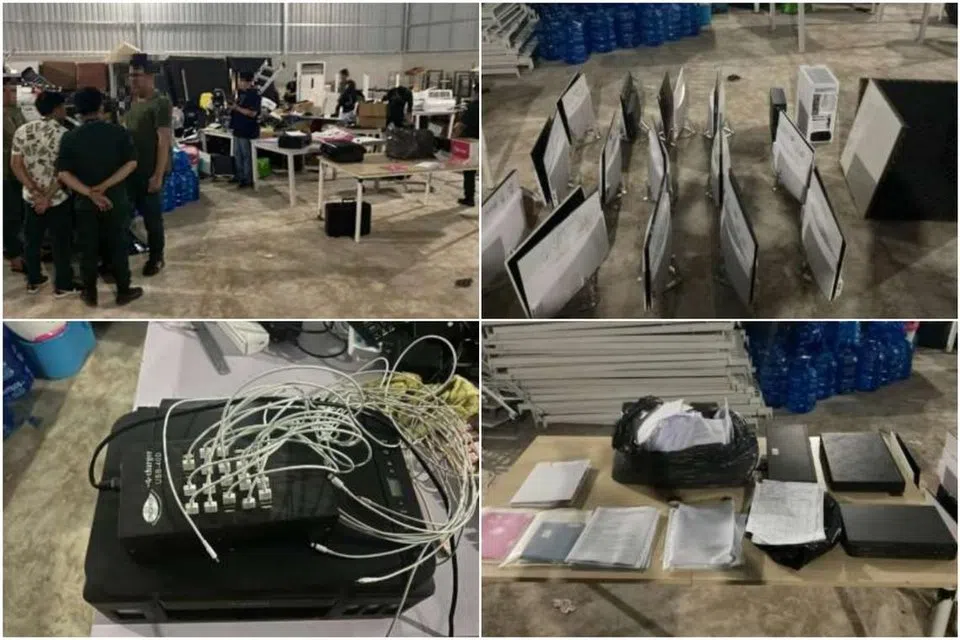
A Filipina woman was jailed for 25 months for being part of a Cambodia-based scam group that caused S$52.5 million losses to Singapore victims. The group had 78 members and employed government official impersonation scams to cheat money from people in Singapore.
Imagine you're getting a call from someone who claims to be a government official. They're asking you for money, but you're not sure if it's real. This is a type of scam called a government official impersonation scam. A group of people in Cambodia were doing this to cheat money from people in Singapore. They had 78 members and caused S$52.5 million in losses. The police caught some of them and put one of them in jail for 25 months.
Analysis
Organised Crime Groups: A Growing Concern in Singapore and Beyond
The recent conviction of a Filipina woman for her role in a Cambodia-based scam group that targeted Singaporeans highlights the growing concern of organised crime groups operating across borders. The group, which had 78 members, employed sophisticated tactics, including government official impersonation scams, to cheat money from people in Singapore. The total losses caused by the group between September 2024 and September 2025 were estimated to be around S$52.5 million.
The case of De Villar Rizalyn Panganiban, the Filipina woman who was jailed for 25 months, is a prime example of the transnational reach of organised crime groups. Panganiban had arrived at the Cambodian scam compound on March 29, 2025, after being lured by the promise of financial gains. She remained at the compound until April 24, 2025, when she was asked to go to another scam compound in Laos.
The group's operations were highly sophisticated, with members playing distinct roles ranging from bank officers to government officials. They employed various props, such as artificial intelligence rendering, uniforms, and backdrops resembling Singapore's government agencies. The money-laundering aspect of the group was itself a distinct and equally sophisticated operation involving mule accounts, runners, and cryptocurrency.
The conviction of Panganiban and her co-conspirators is a significant victory for law enforcement agencies in Singapore and Cambodia. However, it also highlights the need for continued vigilance and cooperation between countries to prevent such scams. The case of Panganiban and her co-conspirators serves as a reminder of the importance of effective law enforcement and the need for individuals to be aware of the risks of government official impersonation scams.
The Impact of Organised Crime Groups on Singapore's Economy
The impact of organised crime groups on Singapore's economy cannot be overstated. The total losses caused by the group between September 2024 and September 2025 were estimated to be around S$52.5 million. This is a significant amount of money that could have been used for various purposes, such as investing in businesses or supporting social causes.
The case of Panganiban and her co-conspirators also highlights the need for individuals to be aware of the risks of government official impersonation scams. These scams are becoming increasingly sophisticated, with scammers using various tactics, such as artificial intelligence rendering, to convince victims to hand over their money.
The Role of Law Enforcement in Preventing Organised Crime
The conviction of Panganiban and her co-conspirators is a significant victory for law enforcement agencies in Singapore and Cambodia. However, it also highlights the need for continued vigilance and cooperation between countries to prevent such scams. Law enforcement agencies must continue to work together to share intelligence and best practices in preventing and investigating organised crime.
In conclusion, the case of Panganiban and her co-conspirators highlights the growing concern of organised crime groups operating across borders. The group's sophisticated tactics and the significant losses caused by the group between September 2024 and September 2025 are a reminder of the importance of effective law enforcement and the need for individuals to be aware of the risks of government official impersonation scams.
Key points
- A Filipina woman was jailed for 25 months for being part of a Cambodia-based scam group that caused S$52.5 million losses to Singapore victims.
- The group had 78 members and employed government official impersonation scams to cheat money from people in Singapore.
- The group's operations were highly sophisticated, with members playing distinct roles ranging from bank officers to government officials.
- The money-laundering aspect of the group was itself a distinct and equally sophisticated operation involving mule accounts, runners, and cryptocurrency.
- The conviction of the Filipina woman and her co-conspirators is a significant victory for law enforcement agencies in Singapore and Cambodia.
If the authorities continue to work together to share intelligence and best practices in preventing and investigating organised crime, it's possible that the number of government official impersonation scams will decrease. This would make it safer for people in Singapore to receive calls from government officials and reduce the risk of financial losses.
If the authorities are not able to effectively prevent and investigate organised crime, it's possible that the number of government official impersonation scams will continue to increase. This would make it more difficult for people in Singapore to distinguish between real and fake government officials, leading to more financial losses.