World reacts with cautious optimism to Hamas disarmament agreement
Hamas has agreed to a phased disarmament deal brokered by the US, Egypt, Qatar and Turkiye, contingent on an Israeli withdrawal and international force deployment. Reactions range from Trump's 'historic' framing to Israeli far-right rejection.
Intelligence analysis by Llama

Hamas's conditional agreement to surrender weapons in stages, tied to an Israeli withdrawal and the deployment of an international stabilisation force, has drawn a mixed global response. While Trump heralds it as a historic turning point, Israeli officials are publicly split, Palestinian Islamic Jihad has voiced reservations, and mediators emphasise that implementation is the real tes…
Imagine two kids who've been fighting for almost three years. One finally agrees to put down his toys, but only if the other stops pushing him and a group of trusted adults watches to make sure everyone plays nice. The grown-ups are hopeful but nervous, because the last time they tried this, the fighting started again.
Analysis
A Conditional Surrender, Not a Verdict
The framework is built on sequencing rather than trust. Hamas's disarmament is tied in the deal to an Israeli pullback, the deployment of an international stabilisation force, the disbanding of Israeli-backed militias, and the entry of the National Committee for the Administration of Gaza. Each step gives every party leverage over the next, allowing Hamas and Israel to publicly claim victory while leaving no single, clearly enforceable trigger if any side slows down. Negotiator Ghazi Hamad cast the package as a "comprehensive" exchange rather than a unilateral arms handover, with the "primary objective" described as shielding Gazans from Israeli operations. That conditional architecture is the deal's political genius and its biggest vulnerability: each link can become a new point of friction.
Israel's Fractured Coalition
The Israeli government's silence by Friday evening is itself a signal. Far-right National Security Minister Itamar Ben-Gvir rejected the draft as "unacceptable" and vowed that "the assassinations in Gaza must continue." Former army chief Gadi Eisenkot, a leading contender to succeed Netanyahu, described an "outrageous gap" between what the premier promised and what the draft delivers, warning Israel must not accept a reality in which Hamas "survives, rearms and waits." Trump's claim that Israel is "very happy" with the agreement cuts against publicly available reporting from Jerusalem, suggesting either White House expectation management or quiet US pressure on Netanyahu to hold his coalition together long enough to let the deal take hold.
The Verification Question
Board of Peace director-general Nickolay Mladenov conceded the talks nearly collapsed multiple times and warned that what happens next "matters even more" than the announcement itself. The mechanisms for verifying weapons handovers, coordinating the international force, and transferring governance to the National Committee remain under-specified in public reporting. Palestinian Islamic Jihad's public "reservations" point to a factional implementation gap inside the Palestinian camp before the weapons question even begins. The October ceasefire's collapse is the closest recent precedent, and it demonstrates that announcements only become agreements once ground-level verification holds for weeks, not days.
Key points
- Hamas has agreed to staged disarmament conditional on an Israeli withdrawal, international force deployment and the disbanding of Israeli-backed militias
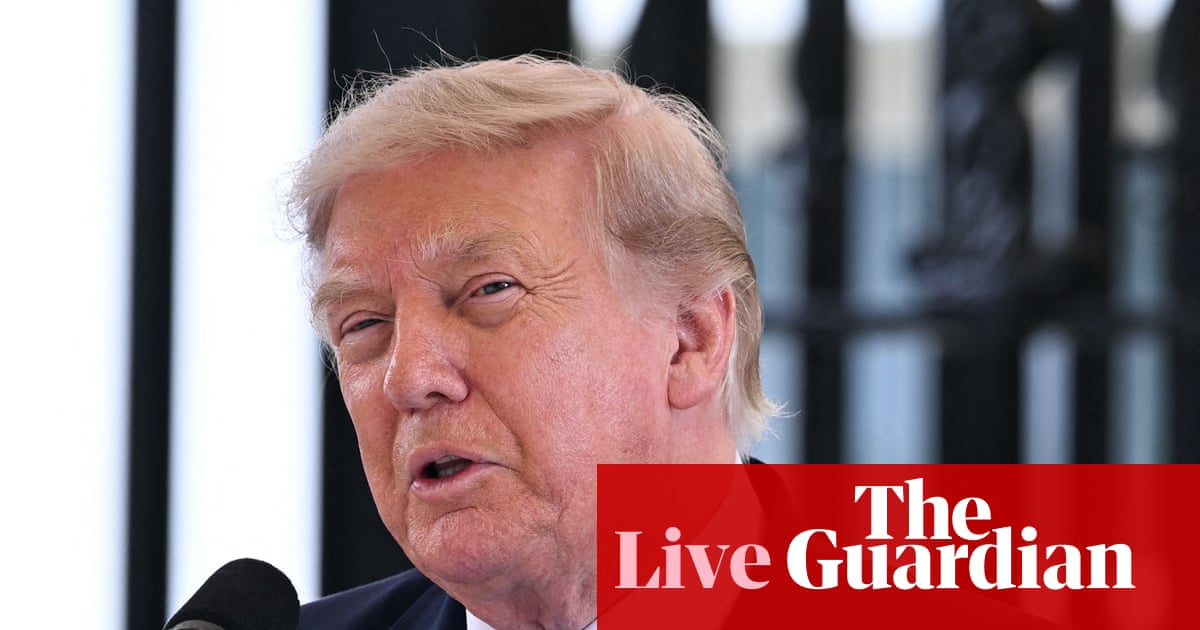
- Trump announced the deal late Thursday, calling it 'historic' and 'monumental' and tying it to his 20-point plan
- The Israeli government had issued no official response by Friday; far-right minister Ben-Gvir rejected it and ex-army chief Eisenkot criticised it
- Mediators Egypt, Qatar, Turkiye and the US brokered the framework via the Board of Peace and International Stabilization Force for Gaza
- Palestinian Islamic Jihad raised 'reservations,' signalling the agreement is not yet uniformly accepted among Palestinian armed factions
If implemented, the deal could end a war that has killed and displaced vast numbers of Gazans, open the door to large-scale reconstruction financed through the US-led Board of Peace, and create a template for Israeli-Palestinian security cooperation that outlasts Trump's term. Hamas negotiator Hamad framed the movement's acceptance as a concession 'for the sake of our Palestinian people,' suggesting domestic appetite for a ceasefire may help absorb the political cost.
The October 2025 truce failed to halt fighting even after being signed, and Israeli hardliners including Ben-Gvir are openly hostile to a deal that halts targeted killings. Palestinian Islamic Jihad's public reservations hint at factional non-cooperation, and the verification mechanism for staged weapons handovers remains unclear. Without enforcement teeth, history suggests each sequencing step becomes a fresh opportunity for recrimination.