Xi Jinping calls for global cooperation on AI development
Chinese President Xi Jinping advocated for greater international cooperation in artificial intelligence (AI), emphasizing that the technology should benefit all nations and not be dominated by a few. China announced 5,000 AI training opportunities for developing countries…
Intelligence analysis by Gemini 2.5 Flash
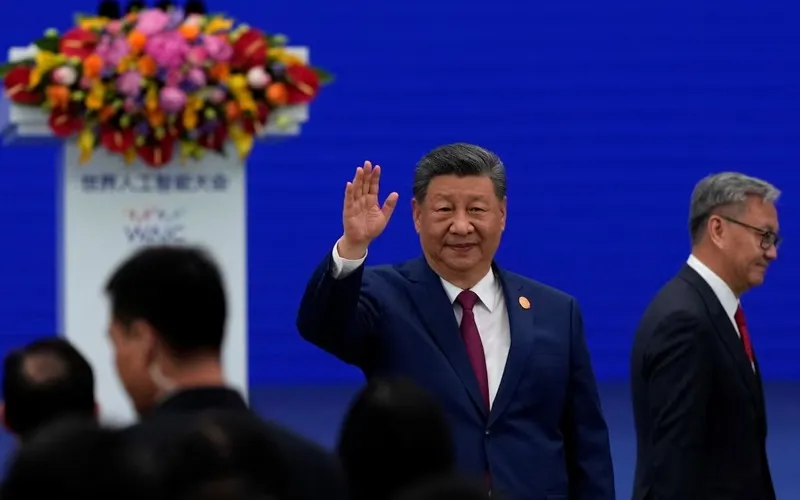
President Xi Jinping urged global collaboration on AI development, positioning China as a partner for developing nations and stressing shared progress over competition. These remarks come amidst escalating technology tensions between China and the United States, particularly concerning advanced chip access and computing technologies.
Imagine a super-smart computer brain called AI. China's leader, Xi Jinping, wants all countries to work together to make this AI better and safer, like everyone playing in a big orchestra instead of just one person. He even offered to teach 5,000 people from other countries how to use AI, so everyone can benefit, especially since some big countries are trying to keep the best AI for themselves.
Analysis
Chinese President Xi Jinping's address at the World Artificial Intelligence Conference in Shanghai underscores China's strategic vision for AI, advocating for a multilateral approach to its development and governance. By calling for AI to be a 'symphony of international cooperation' rather than a 'solo performance,' Xi aims to position China as a leader in fostering inclusive AI growth, particularly for developing nations. The announcement of 5,000 AI training opportunities and seminars for these countries, alongside expanded cooperation with regional blocs like ASEAN and the African Union, highlights a concerted effort to build a broader coalition around China's AI agenda. This initiative seeks to counter the narrative of technological dominance by a few and promote a more equitable distribution of AI capabilities and benefits globally.
The Geopolitical AI Divide
Xi's call for cooperation is set against a backdrop of intense technological rivalry, primarily between China and the United States. The article explicitly mentions the ongoing tensions, including US export control measures designed to limit China's access to advanced semiconductors and high-end computing technologies. These restrictions, initiated under the Trump administration and expanded by the Biden administration, have significantly impacted companies like Nvidia, which reported difficulties in competing in China's data center market. Xi's warning against 'overstretching the national security concept' in AI, without naming specific countries, directly addresses these US policies. This highlights a fundamental divergence in approach: China advocates for open collaboration, while the US prioritizes national security and seeks to maintain a technological edge, creating a complex geopolitical environment for AI development.
Implications for Developing Nations
The establishment of the World Artificial Intelligence Cooperation Organization (WAICO) in Shanghai, with 29 countries signing on, signifies a tangible step towards China's vision of global AI governance. For developing countries, this offers an alternative pathway for AI development, potentially reducing reliance on Western technologies and expertise. China's offer of training and seminars could be crucial for nations looking to build their AI infrastructure and human capital, fostering technological self-reliance and economic growth. However, these countries must also navigate the broader geopolitical landscape, balancing the benefits of Chinese cooperation with potential implications from US-led restrictions. The long-term success of WAICO and China's cooperative initiatives will depend on their ability to deliver tangible benefits and address the diverse needs and concerns of participating nations, while also managing the inherent tensions of a bifurcated global tech order.
Key points
- Chinese President Xi Jinping called for greater international cooperation in AI development, emphasizing shared benefits over national dominance.
- China announced 5,000 AI training and seminar opportunities for developing countries and expanded cooperation with international groups.
- The World Artificial Intelligence Cooperation Organization (WAICO) was established in Shanghai by 29 countries to promote AI cooperation.
- Xi stressed the importance of managing AI risks, ensuring systems are secure, controllable, and under human supervision.
- His remarks come amid US-China tech tensions, with the US imposing export controls on advanced chips and computing technologies to China.
If global cooperation on AI development, as advocated by China, materializes, it could lead to a more inclusive and equitable distribution of AI benefits worldwide. Developing countries could gain crucial access to training, technology, and expertise, accelerating their digital transformation and economic growth without being left behind by advanced nations.
The ongoing technology tensions between China and the United States could escalate, leading to a fragmented global AI landscape where countries are forced to choose sides. This could hinder universal standards, limit the free flow of innovation, and create a two-tiered system where some nations are excluded from cutting-edge AI advancements due to geopolitical rivalries.