Xi Jinping warns against creating ‘new historical injustices’ in AI era
Chinese President Xi Jinping warned against creating “new historical injustices” in the AI era, advocating for greater support for the Global South and an open, inclusive approach to AI development.
Intelligence analysis by Gemini 2.5 Flash
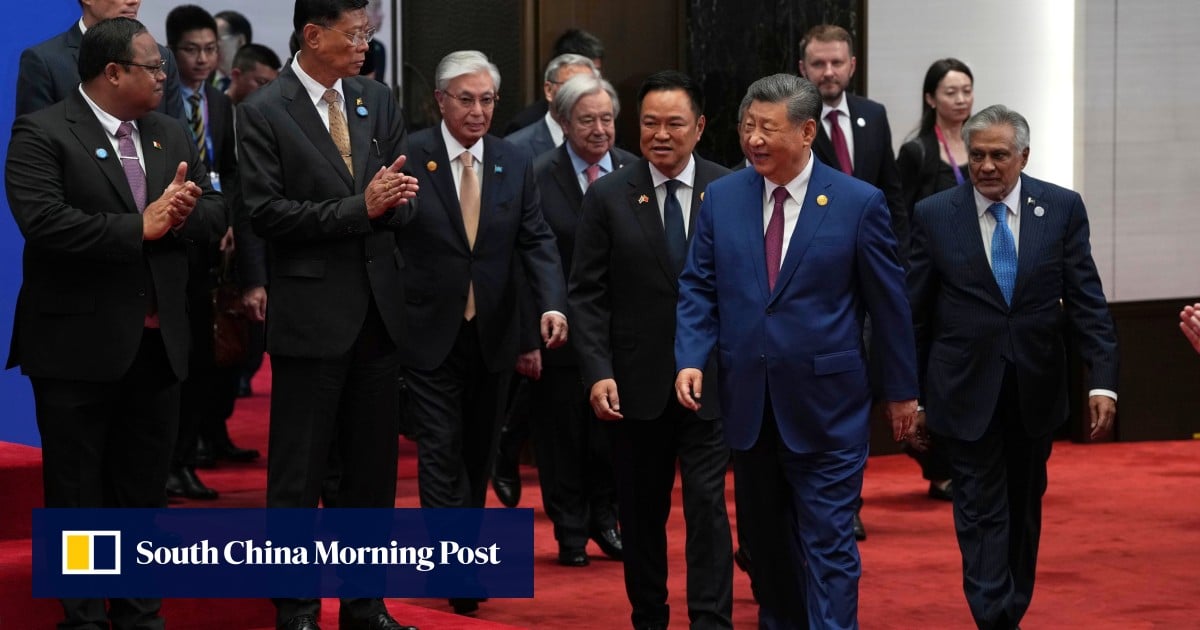
Addressing the World Artificial Intelligence Conference, Xi Jinping positioned China as a leader in global AI governance, criticizing the 'overstretching the national security concept' in AI and calling for secure, controllable technology. His speech signals Beijing's intent to shape international AI policy amid escalating US-China tech rivalry.
Imagine grown-ups are building super-smart computer brains called AI. China's leader, Xi, says we need to be fair so these smart brains help everyone, especially countries that don't have many computers yet. He also thinks it's wrong for some countries to keep all the best AI secrets just for themselves, like hiding toys from friends, and wants everyone to work together safely.
Analysis
Beijing's Vision for Global AI Governance
Chinese President Xi Jinping's address at the 2026 World Artificial Intelligence Conference marks a significant moment in Beijing's strategy to assert leadership in global AI governance. His call for an "open, inclusive approach to AI development" directly contrasts with the increasing trend of export controls and corporate blacklists, largely driven by the United States. By advocating for greater support and adoption of AI in the Global South, Xi aims to position China as a champion for equitable access to advanced technologies, potentially fostering new alliances and technological dependencies.
This stance is not merely rhetorical; it reflects a strategic effort to counter the narrative that Western nations are the sole arbiters of AI ethics and development. Beijing seeks to establish a framework that prioritizes shared benefits and avoids the creation of "new historical injustices," a phrase that implicitly critiques past and present power imbalances in technological advancement. The emphasis on AI being "secure and controllable" also highlights China's internal governance priorities, which it seeks to project onto the international stage as a model for responsible development.
Challenging the 'National Security' Narrative
A core component of Xi's speech was his direct challenge to the "growing securitisation of the technology." He explicitly stated, "We should jointly oppose overstretching the national security concept in the field of AI or placing one country’s security over that of others." This statement is a thinly veiled criticism of the United States' strategy, which has increasingly framed AI as a critical national security asset, leading to restrictions on technology transfer and collaboration with China. Xi's remarks suggest that such an approach is not only counterproductive but also risks creating a fragmented and unequal global AI landscape.
By framing national security concerns as potentially self-serving and detrimental to global cooperation, China aims to delegitimize the rationale behind US export controls and sanctions. This rhetorical strategy seeks to rally international support, particularly from countries that may feel caught between the two tech giants or are wary of unilateral restrictions. The implication is that a narrow focus on national security by one power could impede the broader benefits of AI for humanity, thus advocating for a more multilateral and less confrontational approach to managing AI risks.
Implications for the Global South
Xi Jinping's emphasis on providing "greater support for the technology’s use and adoption in the Global South" is a strategic move to broaden China's influence and create a more multipolar AI ecosystem. Many developing nations lack the infrastructure, expertise, and resources to fully harness AI's potential. By offering support, China positions itself as a crucial partner, potentially providing technology, investment, and training that might otherwise be inaccessible due to Western restrictions or economic barriers.
This initiative could lead to increased technological collaboration between China and countries in Africa, Latin America, and parts of Asia, fostering a different model of AI development that is less reliant on Western standards and platforms. Such a move could also enhance China's soft power and economic ties, creating a network of nations that align with Beijing's vision for global AI governance. The long-term impact could be a diversification of AI development pathways, potentially leading to different ethical frameworks and application priorities tailored to the specific needs and values of the Global South.
Key points
- Chinese President Xi Jinping warned against creating “new historical injustices” in the AI era.
- He called for greater support for AI use and adoption in the Global South.
- Xi advocated for a more open and inclusive approach to AI development.
- He criticized the “overstretching the national security concept” in AI, opposing placing one country's security over others.
- The speech signals Beijing's intent to lead global AI governance amid intensifying US-China tech rivalry.
The article suggests a potential for more inclusive global AI development, where the Global South receives greater support, fostering broader innovation and equitable access to advanced technologies. This could lead to a more collaborative international framework for AI governance, reducing disparities in technological advancement.
The speech highlights the intensifying US-China tech rivalry, with Xi's remarks directly challenging US policies on AI securitization and export controls. This could further deepen geopolitical divides, leading to a fragmented global AI landscape and hindering universal standards and cooperation on critical AI challenges.