Xi's Visit to Egypt: Will Partnership Shift from Import to Manufacturing?
Chinese President Xi Jinping's visit to Egypt aims to transform economic ties from trade and infrastructure to industrial investment, addressing a significant trade imbalance.
Intelligence analysis by Gemini 2.5 Flash
Egypt seeks to attract Chinese factories and transfer production chains to its territory, leveraging its strategic location for exports to African, Middle Eastern, and European markets. This shift is crucial for job creation, technology transfer, and foreign currency generation, moving beyond a one-way flow of goods.
Imagine Egypt and China are friends who trade toys. China sells many cool toys to Egypt, but Egypt doesn't sell as many back. Now, China's leader is visiting, hoping to build toy factories in Egypt so Egypt can make its own toys and sell them to other friends too, making their friendship fairer and stronger.
Analysis
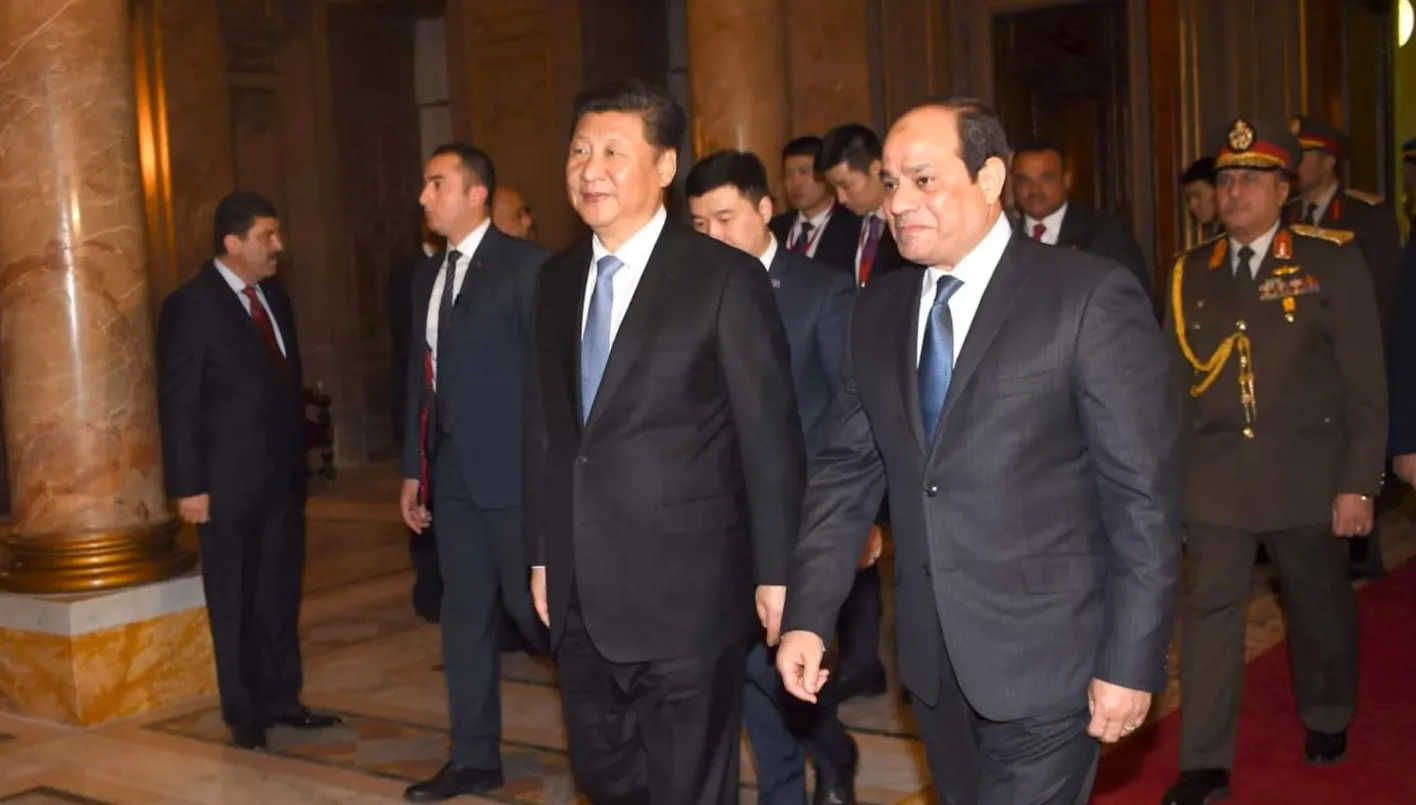
The visit of Chinese President Xi Jinping to Egypt marks a pivotal moment in the bilateral economic relationship, signaling a potential shift from a predominantly trade and infrastructure-focused partnership to one emphasizing industrial investment and manufacturing. For years, the economic ties have been characterized by a significant trade imbalance, with Chinese exports to Egypt far outweighing Egyptian exports to China. This dynamic has led Cairo to actively seek a reorientation, aiming to attract Chinese factories to establish production bases within Egypt. The strategic goal is to leverage Egypt's geographical position and existing trade agreements to serve African, Middle Eastern, and European markets, thereby creating jobs, acquiring technology, and generating much-needed foreign currency. The timing of the visit, coinciding with the 70th anniversary of diplomatic relations and a decade since the elevation to a "Comprehensive Strategic Partnership," underscores the long-term strategic importance both nations place on this evolving relationship. The true measure of success will be the tangible implementation of investments and the growth of Egyptian exports, rather than merely the signing of new agreements.
Trade Deficit
The current economic relationship is heavily skewed, as evidenced by the substantial trade deficit Egypt faces with China. In 2025, bilateral trade reached $20.78 billion, a 20% increase from the previous year, yet the vast majority of this figure represents Chinese goods flowing into Egypt. Data from the first half of 2026 revealed Egyptian imports from China at $10.4 billion, while exports to China, despite a 200% jump, only reached $840.8 million, resulting in a deficit exceeding $9.5 billion. This imbalance is further exacerbated by the nature of exports: Egypt primarily sends raw materials like fuel, mineral oils, vegetables, fruits, cotton, phosphates, and chemicals, whereas it imports higher-value manufactured goods, machinery, and production inputs from China. A key objective of Xi's visit is to expand market access for Egyptian agricultural, food, and industrial products in China, moving beyond a nearly one-way flow of goods.
Suez Canal Economic Zone
A significant portion of China's growing investment in Egypt is concentrated within the Suez Canal Economic Zone, particularly the "TEDA Egypt" area in Ain Sokhna. This strategic location offers Chinese companies access to a large Egyptian domestic market, proximity to vital global trade routes, and preferential access to various regional markets through Egypt's existing trade agreements with Arab, African, and European blocs. The investments in this zone span diverse sectors, including the manufacturing of tires, glass, solar cells, batteries, chemicals, home appliances, textiles, and electronics. For Egypt, these investments are crucial for job creation, attracting foreign direct investment, facilitating technology transfer, and increasing the local content in manufactured goods, aligning with its broader economic development goals.
Currency Swap Agreement
In a move to bolster financial stability and facilitate trade, the central banks of Egypt and China renewed and expanded their currency swap agreement in June 2026, increasing its value from 18 billion yuan to 30 billion yuan (approximately $4.4 billion). This agreement is designed to help finance bilateral trade and reduce Egypt's direct reliance on the US dollar for transactions, offering a degree of relief amidst global currency fluctuations. However, while the currency swap provides a mechanism for smoother financial exchanges, the article emphasizes that it does not inherently address the fundamental trade imbalance. The true resolution of the deficit hinges on a substantial increase in Egyptian exports to China, requiring Chinese companies to not only invest in manufacturing within Egypt but also to utilize local inputs and open their vast domestic market to Egyptian-made products. The success of the visit will ultimately be judged by its ability to foster a more equitable and productive economic partnership.
Key points
- Chinese President Xi Jinping's visit to Egypt aims to shift economic partnership from trade to industrial manufacturing.
- Egypt seeks to attract Chinese factories to produce goods for African, Middle Eastern, and European markets.
- Bilateral trade reached $20.78 billion in 2025, but Egypt faces a significant trade deficit of over $9.5 billion in six months.
- Chinese investments, exceeding $10 billion, are increasingly concentrated in the Suez Canal Economic Zone.
- A renewed currency swap agreement (30 billion yuan) aims to facilitate trade but doesn't solve the core trade imbalance without increased Egyptian exports.
Increased Chinese manufacturing investments in Egypt could create numerous jobs, boost local production capabilities, facilitate technology transfer, and generate significant foreign currency through exports to regional markets. This shift could help Egypt diversify its economy and reduce its reliance on imports.
If the visit fails to translate into substantial, implemented manufacturing investments and a significant increase in Egyptian exports, the existing trade imbalance and Egypt's economic reliance on imports and external debt could persist, exacerbating its financial challenges.