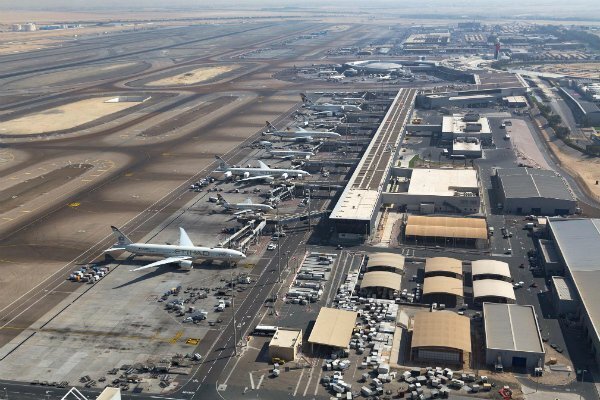
Yemeni army launch missile attacks on main base in S Arabia
Yemeni Armed Forces launched missile strikes against Saudi Arabia's King Khalid airbase and an oil facility in Jizan, reportedly in retaliation for ongoing Saudi aggression and siege against Yemen.
Intelligence analysis by Gemini 2.5 Flash

The Yemeni military conducted multiple ballistic missile attacks targeting key Saudi infrastructure, including a major airbase and an Aramco oil facility, causing electricity blackouts and flight diversions. These actions follow Saudi air raids on Yemeni targets and a declared 'maritime blockade' by Yemen against Saudi Arabia.
Imagine two neighbors, Saudi Arabia and Yemen, have been fighting for a long time. Yemen says Saudi Arabia keeps attacking its home and blocking its supplies. So, Yemen decided to fight back by sending rockets to hit Saudi Arabia's big army airport and a place where they get oil. This made some lights go out and planes change their routes, showing that Yemen can hit back hard.
Analysis
Escalation in the Saudi-Yemeni Conflict
The recent missile strikes by the Yemeni Armed Forces against Saudi Arabia represent a significant escalation in the protracted conflict. Targeting the King Khalid airbase near Khamis Mushait, a crucial military installation, and an oil facility belonging to Saudi Aramco in Jizan, demonstrates an intent to hit strategic assets. These attacks, reportedly utilizing domestically-manufactured ballistic missiles, underscore the evolving capabilities of the Yemeni forces and their willingness to project power deeper into Saudi territory.
The impact of these strikes was immediate and tangible, with local reports indicating electricity blackouts in Jizan and disruptions to air traffic. Flights to Riyadh and other cities were diverted, and international airports in Yanbu and Jizan suspended operations. Such disruptions highlight the vulnerability of Saudi infrastructure to these types of attacks, which have become a recurring feature of the conflict, despite Saudi Arabia's advanced air defense systems.
Yemen's Retaliatory Strategy and Maritime Blockade
The Yemeni military framed these missile attacks as direct retaliation for the Riyadh regime’s “ongoing military aggression and brutal siege against Yemen.” This narrative of self-defense and retribution is central to the Yemeni forces' public statements and strategic messaging. The strikes followed earlier Saudi air raids on telecommunications facilities and oil depots in Yemen’s Hudaydah province, indicating a tit-for-tat cycle of violence.
Adding another layer to the conflict, Yemen also declared a “maritime blockade” on Saudi Arabia, effective immediately. While the practical implications and enforcement mechanisms of such a blockade remain to be fully seen, it signals an intent to disrupt Saudi shipping and economic activities. This move, coupled with the missile attacks on oil infrastructure, suggests a strategy aimed at increasing economic pressure on Saudi Arabia and forcing a re-evaluation of its military campaign in Yemen.
Regional Instability and Iran's Strategic Calculus
The renewed intensity of the Saudi-Yemeni conflict has profound implications for regional stability, particularly for Iran. As a key supporter of the Houthi movement in Yemen, Iran views these developments through the lens of its broader regional influence and strategic competition with Saudi Arabia. The ability of Yemeni forces to conduct sophisticated missile attacks on Saudi targets, despite years of Saudi-led coalition efforts, can be seen as a validation of Iran's strategy of supporting non-state actors to challenge rival powers.
This escalation risks further destabilizing the Middle East, a region already fraught with tensions. Any significant disruption to oil production or shipping lanes in the Persian Gulf or Red Sea could have global economic repercussions. For Iran, the continued conflict in Yemen serves as a persistent pressure point on Saudi Arabia, diverting resources and attention, and reinforcing Iran's position as a significant regional player capable of influencing events through its allies.
Key points
- Yemeni Armed Forces launched missile strikes against Saudi Arabia's King Khalid airbase and an Aramco oil facility in Jizan.
- The attacks reportedly used domestically-manufactured ballistic missiles and caused electricity blackouts and flight diversions.
- The strikes were declared as retaliation for Saudi Arabia's ongoing military aggression and siege against Yemen.
- Yemen previously declared a 'maritime blockade' on Saudi Arabia, signaling an intent to disrupt shipping.
- Saudi fighter jets had recently conducted air raids against telecommunications facilities and oil depots in Yemen's Hudaydah province.
The intensity of these strikes could potentially force a re-evaluation of the conflict by all parties, leading to renewed international efforts for a diplomatic solution and a de-escalation of hostilities, which would bring much-needed stability to the region.
These retaliatory attacks are likely to provoke further military responses from Saudi Arabia, trapping the region in a dangerous cycle of escalation, increasing civilian casualties, and further destabilizing critical global trade routes and energy supplies.
Market signals
- OIL The reported missile strikes on Saudi oil facilities and the declaration of a maritime blockade by Yemeni forces introduce significant supply-side risks to global oil markets, potentially driving prices higher.
AI-generated analysis of potential market relevance. Not financial advice.