Your AI Agents Are Guessing at Scale: Permissions Decide the Damage
AI agents are designed to improvise, but this can lead to security risks when paired with broad access. Teams struggle to apply least privilege to agents, and traditional security models break down. Token Security offers a solution to discover and map risky access, and au…
Intelligence analysis by Llama
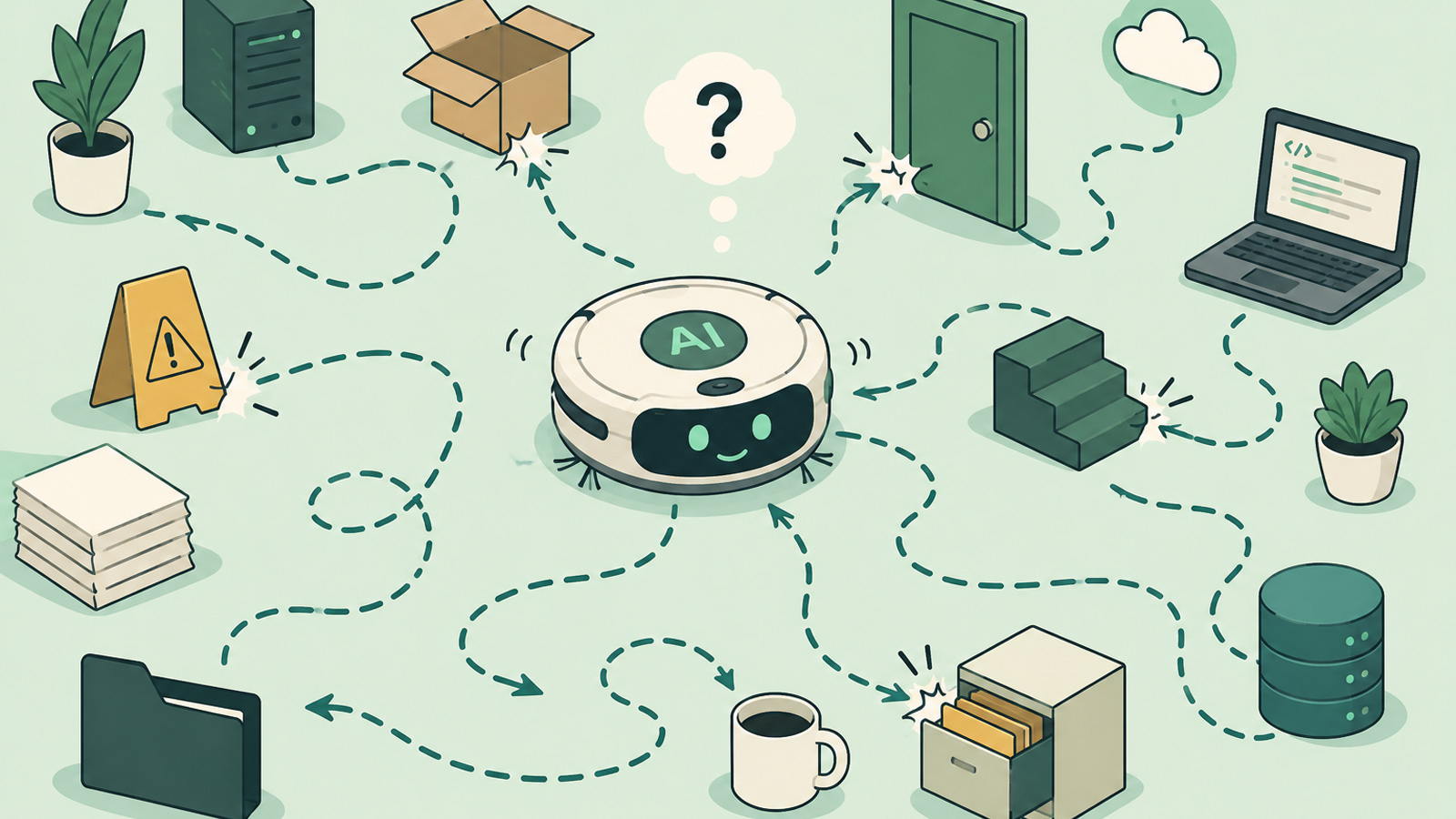
AI agents are powerful but also pose a security risk due to their ability to improvise and broad access. Token Security provides a solution to secure AI by design, discovering agents, mapping risky access, and enforcing intent-based policies.
Imagine you have a robot that can do lots of things, but you're not sure what it will do next. This is like an AI agent. If the robot has too many tools and can do too many things, it might make a mistake and cause a problem. To fix this, we need to give the robot only the tools it needs to do its job, and make sure it can't do anything else. This is called 'least privilege' and it's like giving the robot a special permission list.
Analysis
The Problem with Predictable Workflows
AI agents are designed to improvise, which makes them powerful but also poses a security risk. When paired with broad access, every wrong turn becomes a security risk. The question is, how do you secure a system whose next move you cannot predict?
The Usual Playbook Fails
For two years, most AI security efforts went into shaping how models respond. Guardrails that include prompt filtering, input and output constraints, and behavior controls. While these are useful in many contexts, they are the wrong layer for the problem in front of us. Prompt filters try to constrain behavior, but they cannot undo what the agent is allowed to do. Prediction fails for the same structural reason. Traditional identity and access management answers one question: what can this identity reach? That model is less useful for AI agents.
Why Identity Is the Only Control Plane That Holds
Strip away the model, the prompt, and the framework, and one thing stays constant: every action an agent takes runs through an identity. It authenticates with a service account, an API key, an OAuth grant, a cloud role, or a token. All actions, from reading data to modifying infrastructure, depend on the permissions of an agent’s identities. That is why identity, not prompt filtering, is the control plane for agentic AI. Identity is the layer that spans every system an agent touches, making it the only place you can enforce control consistently.
Intent-Based Security Is the Answer
Traditional access control asks what an identity can do. For agents, that is not enough, because purpose is what separates safe behavior from dangerous behavior. An agent resolving a failed deployment and an agent exfiltrating data may perform nearly identical low-level actions: reading logs, calling APIs, and accessing a database. From an IAM perspective, they look the same, but their intent is not the same at all. Intent-based security adds that missing context. Instead of asking
Key points
- AI agents are designed to improvise, which poses a security risk when paired with broad access.
- Traditional security models break down when applied to AI agents.
- Intent-based security is the answer to securing AI agents.
- Identity is the only control plane that holds for agentic AI.
- Least privilege is essential for securing AI agents.
By using intent-based security, organizations can ensure that their AI agents are only able to access the resources they need to accomplish their purpose, reducing the risk of security breaches and data loss. This approach also enables organizations to scale their AI deployments safely and efficiently.
If organizations fail to implement intent-based security, their AI agents may continue to pose a significant security risk, leading to data breaches and other security incidents. This could result in financial losses, reputational damage, and even legal consequences.