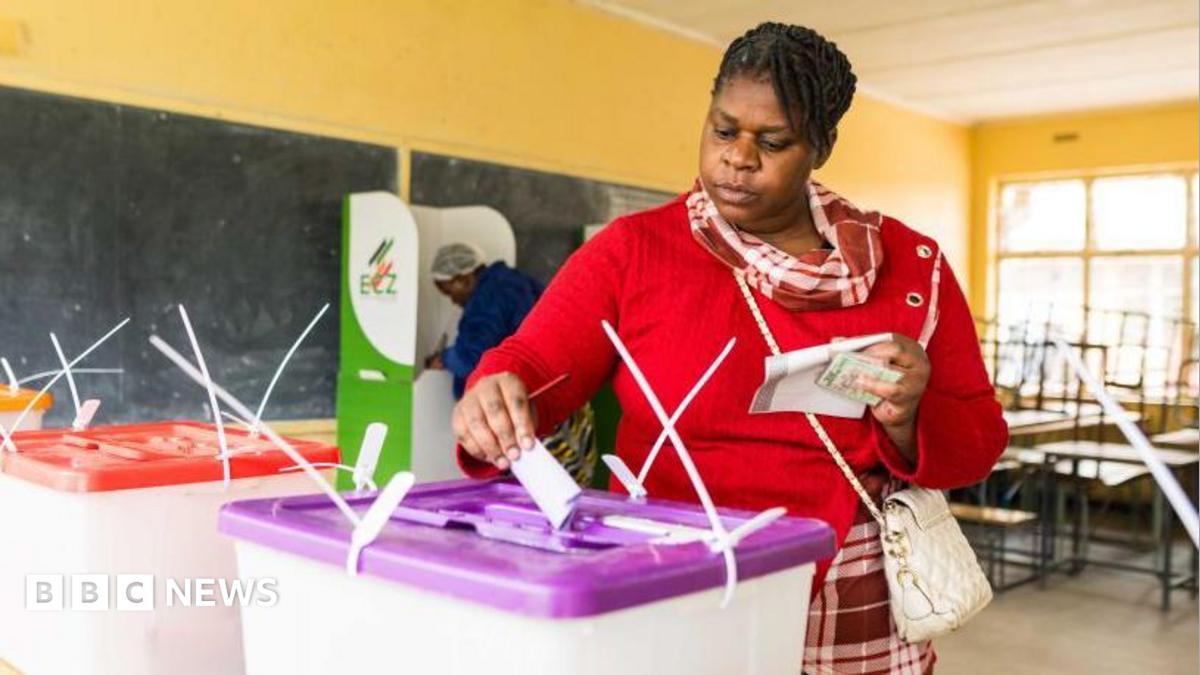
Zambians vote as Hichilema’s economic record faces crucial test
Zambians are voting in a presidential election that serves as a crucial test for President Hakainde Hichilema's economic record, amidst widespread public frustration over the rising cost of living.
Intelligence analysis by Gemini 2.5 Flash
Millions of Zambians are casting ballots to elect their president, lawmakers, and local councillors, with the economy and the high cost of living dominating voter concerns. President Hakainde Hichilema, who took office in 2021, is seeking re-election based on his economic reform agenda, but critics argue that these gains have not yet translated into tangible improvements for ordinary …
Imagine Zambia is having a big 'report card' day for its leader, President Hichilema. People are voting to decide if he gets to keep his job. The main thing they're thinking about is how much things cost, like food and clothes, which have gotten really expensive. So, they're choosing if they want to keep the current plan, hoping things get better soon, or try someone new to fix their money worries, like picking a different team captain for the next game.
Analysis
Zambia's presidential election is a pivotal moment for the southern African nation, with the incumbent, President Hakainde Hichilema, facing a critical assessment of his economic stewardship. Since taking office in 2021, Hichilema has championed a platform of economic reforms aimed at stabilizing the country's finances and leveraging its copper wealth. However, the article highlights a significant disconnect between these policy efforts and the lived experiences of many Zambians, who are grappling with persistent increases in the cost of living.
Hakainde Hichilema
President Hakainde Hichilema's administration has focused on implementing economic reforms designed to bring stability to Zambia. These reforms were initiated following his election in 2021, with the goal of improving the country's financial health and harnessing its natural resources more effectively. Supporters of the president often point to the progress made under his leadership, suggesting that the foundational changes are beginning to take root and will eventually yield broader benefits for the population. The election serves as a direct referendum on the efficacy and perceived success of these policies, particularly as Hichilema seeks a second term to continue his agenda.
However, the path to economic recovery has been fraught with challenges, and the benefits of these reforms have not yet been universally felt. Critics argue that while macroeconomic indicators might show some improvement, these gains have not translated into meaningful improvements for the daily lives of many ordinary Zambians. This disparity forms the core of the electoral debate, with voters weighing the promises of long-term stability against their immediate economic hardships. The outcome will indicate whether the electorate prioritizes the continuation of reform efforts or seeks a change in leadership to address more immediate concerns.
Cost of Living
The rising cost of living has emerged as the central and most pressing issue for Zambian households in this election. Voters across the country, from businessmen like Akapelwa Akapelwa to long-time participants like Mathias Ngoma, expressed deep frustration over the economic pressures they face daily. This widespread sentiment underscores the challenge for President Hichilema, whose economic record is being directly tested by the public's experience with inflation and affordability.
The article notes that despite the government's economic reforms, the tangible impact on household budgets has been limited, fueling discontent. This situation highlights a common dilemma in developing economies: the time lag between implementing structural reforms and seeing their positive effects trickle down to the general populace. For many Zambians, the ability to afford basic necessities outweighs the abstract promises of future economic stability, making the cost of living a decisive factor in their voting choices. The election results will therefore reflect the public's patience and tolerance for ongoing economic austerity versus their demand for immediate relief.
Eight Million People
Approximately eight million people are registered to vote in Zambia, a significant portion of the nation's 22 million inhabitants. This large electorate is tasked with not only choosing their president but also electing members of Parliament and local government councillors. The sheer number of registered voters underscores the democratic weight of this election, with citizens like Belinda Katanga expressing gratitude for their ability to exercise their democratic right and Mululu Chirwa emphasizing his responsibility as a Zambian citizen.
The electoral process, monitored by observers including those from the European Union, is a testament to Zambia's commitment to democratic principles. Voters, some braving the cold before dawn, formed long queues, demonstrating their dedication to participating in shaping their country's future. The expectation of results on Monday adds to the anticipation, as the collective voice of these eight million people will determine the direction of Zambia's leadership and economic policies for the coming term. The high voter turnout, despite the challenges, signifies the importance Zambians place on their electoral power.
Key points
- Zambians are voting in a presidential election, with President Hakainde Hichilema seeking a second term.
- The election is a crucial test of Hichilema's economic record, which includes reforms aimed at stabilizing the copper-rich nation.
- Widespread frustration over the rising cost of living is a central issue for voters.
- Approximately eight million people are registered to vote for president, lawmakers, and local councillors.
- Results for the presidential election are expected to be announced on Monday.
If President Hichilema's economic reforms begin to yield more tangible benefits, Zambia could see improved economic stability, reduced cost of living pressures, and increased foreign investment, strengthening its democratic institutions and fostering greater prosperity for its citizens.
Should the economic frustrations over the cost of living persist or worsen, it could lead to increased social unrest and political instability, potentially undermining the country's reform efforts and democratic progress, and deterring much-needed investment.