2027 UP assembly elections: How parties are vying for Dalit votes amid Mayawati’s shrinking base
As Mayawati's BSP weakens, the BJP, SP and Congress are competing more openly for Dalit voters ahead of the 2027 UP election.
Intelligence analysis by GPT-5.4 Mini
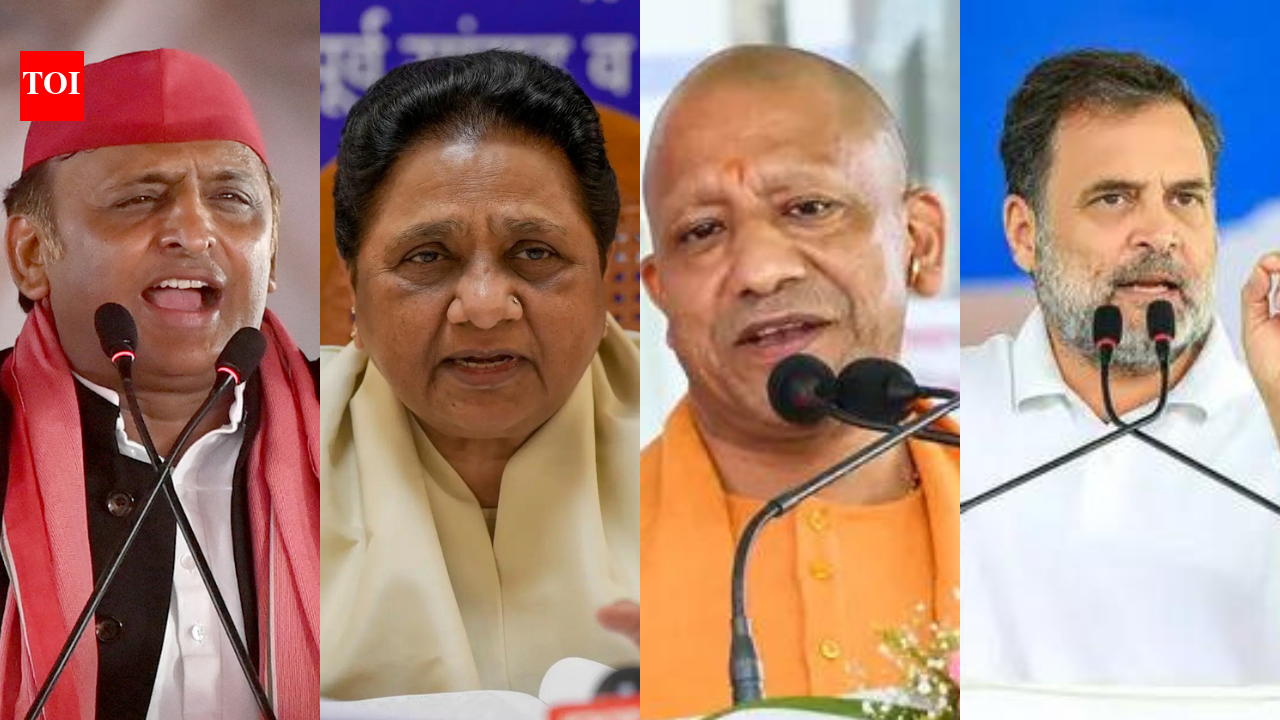
Uttar Pradesh’s Dalit vote is no longer locked to the BSP. Mayawati’s decline has opened a crowded field where the BJP leans on symbolism, the SP courts Dalits through broader coalition politics, and Congress and Chandrashekhar Azad try to carve out space.
Dalit voters in Uttar Pradesh are being courted like a favorite team that no longer belongs to just one club. Mayawati's party used to own that support, but now other parties are trying new tricks, like changing place names and promising more seats, to win it.
Analysis
Mayawati
Mayawati’s decline is the article’s central political shift. The BSP once turned Dalit consolidation into governing power, but the paper says the party has fallen from 206 seats in 2007 to just one seat in 2022, with its vote share dropping in both assembly and Lok Sabha contests. That collapse matters because it breaks the old assumption that Dalit votes in Uttar Pradesh naturally flow to one party.
The article also points to a party struggling with internal authority as much as electoral relevance. Mayawati has insisted that she, not Akash Anand, will finalise candidates, while Anand has already opened the 2027 campaign. That tension suggests the BSP is not only trying to win back voters but also trying to reassert who speaks for the party.
The harder problem is structural. The piece argues that the BSP cannot realistically return to power on Dalit support alone and would need the Dalit-OBC combination that once powered its majority. That is a steep lift in a political landscape where rivals have learned to target the same communities more aggressively.
Sant Ravidas Nagar
The BJP’s outreach is described as heavily symbolic, and the renaming of Bhadohi as Sant Ravidas Nagar is the clearest example. The article frames it as part of a broader effort to position the ruling party as attentive to Dalit identity and memory. In UP politics, symbolism like this is not decorative; it is a direct claim over who gets to define respect and representation.
What makes the move sharper is its historical layering. The article notes that Mayawati had renamed the district in 1997, Akhilesh Yadav restored the old name in 2014, and Yogi Adityanath has now brought Sant Ravidas Nagar back. That sequence turns a place name into a running scorecard of caste politics.
Mayawati’s public welcome for the decision is revealing too. It shows how powerful symbolic recognition remains, even when the broader relationship between Dalit voters and the BSP has weakened. At the same time, the article suggests the BJP is using that symbolism to pull Dalit voters away from the BSP’s old gravitational field.
Akhilesh Yadav
The Samajwadi Party is trying a different route: not a single-caste appeal, but a wider coalition. Akhilesh Yadav’s announcement of 14 extra seats for Dalits is presented as part of his PDA politics, which seeks to bind together backward classes, Dalits and minorities. That is an attempt to make Dalits feel included without relying on the BSP’s old machinery.
Congress is also mentioned as trying to recover voters lost long ago, while Chandrashekhar Azad is working to build his own independent space. Together, they show that the Dalit vote is fragmenting into multiple destinations rather than moving as one bloc. That fragmentation may benefit the party best able to convert symbolism into organisation.
The article’s larger implication is that Dalit politics in UP is entering a new phase. If the BSP remains weak, the real contest is no longer just about who praises Dalit icons, but who can turn that recognition into durable support on the ground. For 2027, that makes Dalit voters less a fixed base and more a contested prize.
Key points
- The BSP's dominance among Dalit voters in Uttar Pradesh has sharply eroded.
- The paper says Mayawati's party fell to one seat in the 2022 assembly election and failed to win a Lok Sabha seat in 2024.
- The BJP is using symbolic moves like the Sant Ravidas Nagar renaming to deepen its Dalit outreach.
- Akhilesh Yadav is widening the SP's pitch with extra seats and PDA politics.
- Congress and Chandrashekhar Azad are also competing for parts of the same voter base.
If the competition pushes parties to take Dalit concerns more seriously, representation could become broader and less tied to one fading party. The article also suggests that a stronger Dalit-OBC alliance could produce a more durable governing coalition if it is built on real outreach rather than symbolism alone.
The downside is that caste outreach may stay mostly symbolic, with name changes and messaging substituting for substantive change. If the BSP keeps weakening while rivals split the vote in different directions, Dalit political influence could become fragmented rather than strengthened.