What makes controlling Ebola virus challenging
WHO says the DRC Ebola outbreak may become the deadliest on record, as scientists struggle to trace its reservoir, spread, and treatment options.
Intelligence analysis by GPT-5.4 Mini
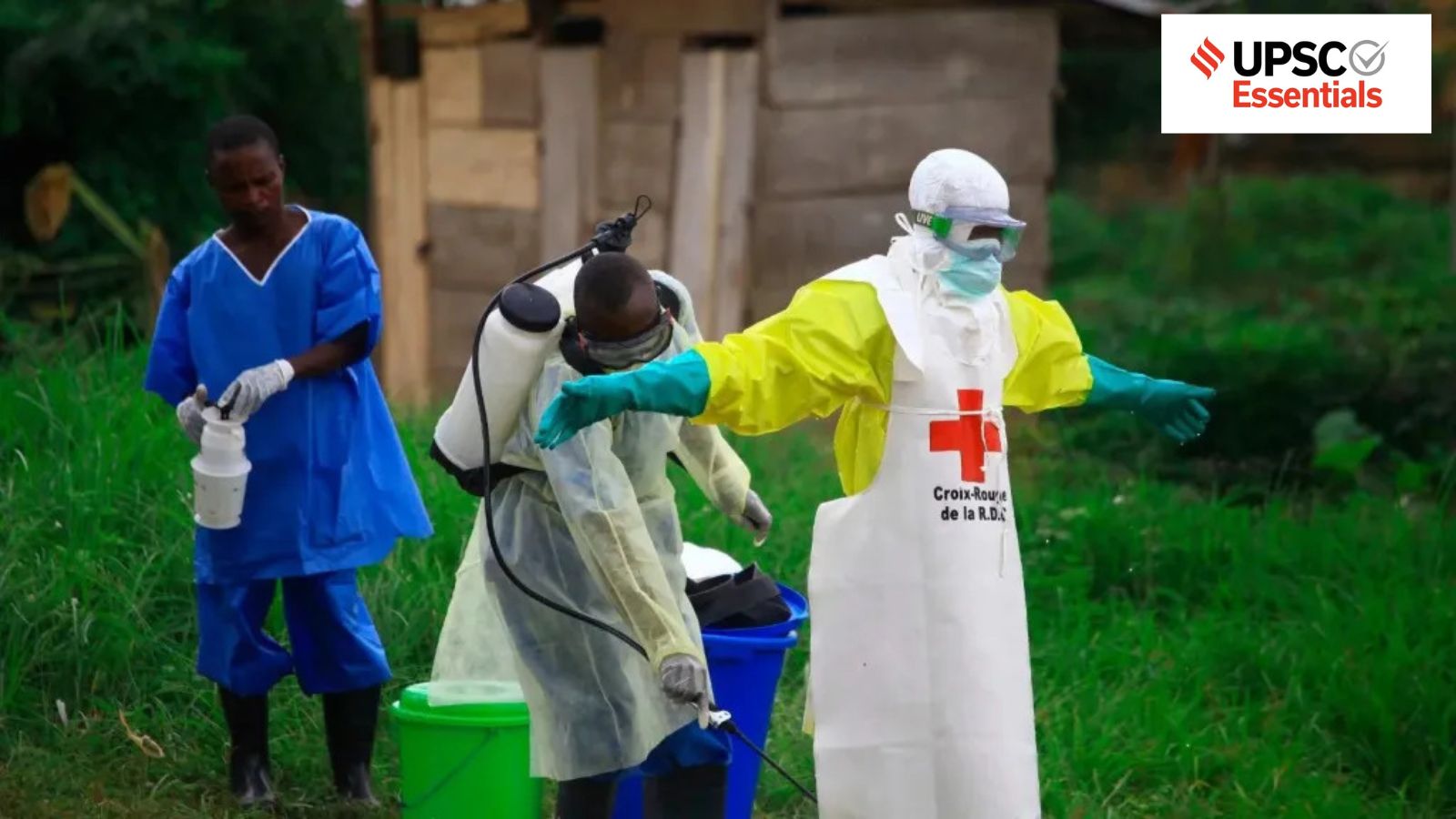
The piece explains why Ebola is so hard to contain: the virus can spread through messy wildlife-human contact, its natural host is still uncertain, and this outbreak has advanced with too few diagnostics, vaccines, and treatments in place.
Ebola is hard to stop because nobody is fully sure where it hides in nature, and it can move from animals to people in many ways, like a fire jumping between dry leaves. Scientists can read its genes to follow it, but there still are not enough medicines, vaccines, or fast tests.
Analysis
Bundibugyo
The article’s central warning is that controlling Ebola is not just about stopping person-to-person transmission after a case is found. By the time the current outbreak was declared in the Democratic Republic of the Congo, the paper says it may already have been spreading for months, which turns public health into a race against delay.
That delay matters because the virus is not moving through a simple chain. It sits at the intersection of wildlife exposure, human movement, and weak detection systems, so each missing link makes the outbreak harder to map and contain.
Python cave
The section on the Python cave shows how ecology can become epidemiology. Cameras in bat-infested caves captured a mixed scene of bats, monkeys, eagles, lizards, and leopards, which underlines how many species can sit inside the same risk network.
The article also notes that tourists, travellers, and schoolchildren visit such places without basic protection. That is a useful reminder that outbreak control is often shaped by ordinary behaviour as much as by laboratory science.
Genome sequences
The genome work described in the article offers the clearest path toward better control. Researchers from DRC and Uganda published three genome sequences online, and that kind of data helps track how the virus is spreading and whether separate chains of transmission are connected.
But the story also makes clear that data alone is not enough. With limited outbreaks of Bundibugyo virus in the past, there is still little reliable evidence on incubation, disease progression, or best treatment, and the article says approved vaccines and treatments are still lacking.
That combination is what makes Ebola so difficult: a moving target, an uncertain reservoir, and too few tools ready for the front line. The result is a response that must be both scientific and logistical, while the outbreak itself keeps exploiting every gap.
Key points
- WHO says the current DRC outbreak may become the deadliest Ebola outbreak on record.
- Scientists still have not precisely identified Ebola’s natural reservoir, though bats remain the leading hypothesis.
- Wildlife contact, cave visits, travel, and social gatherings can all complicate transmission tracing.
- Genome sequences shared by researchers can help track spread, but the article says vaccines and treatments are still lacking.
- Mining-linked deforestation may increase zoonotic spillover risk by bringing people closer to wildlife.
Publishing genome sequences can help experts trace spread more quickly and understand whether cases are linked. Better tracking, along with awareness around risky wildlife exposure, could help officials interrupt transmission sooner.
If the outbreak kept spreading before detection, control efforts may always be behind the virus. The lack of approved vaccines, treatments, and strong diagnostic tools means even well-informed response teams can struggle to contain it.
Market signals
- Copper The article links expanded mining for copper and cobalt with deforestation and spillover risk, but it does not discuss market pricing directly.
AI-generated analysis of potential market relevance. Not financial advice.