Why war and weather could push up food prices
Ukraine-Russia attacks on Black Sea ports, plus EU drought and heat, are tightening grain flows and pushing international food prices higher.
Intelligence analysis by GPT-5.4 Mini
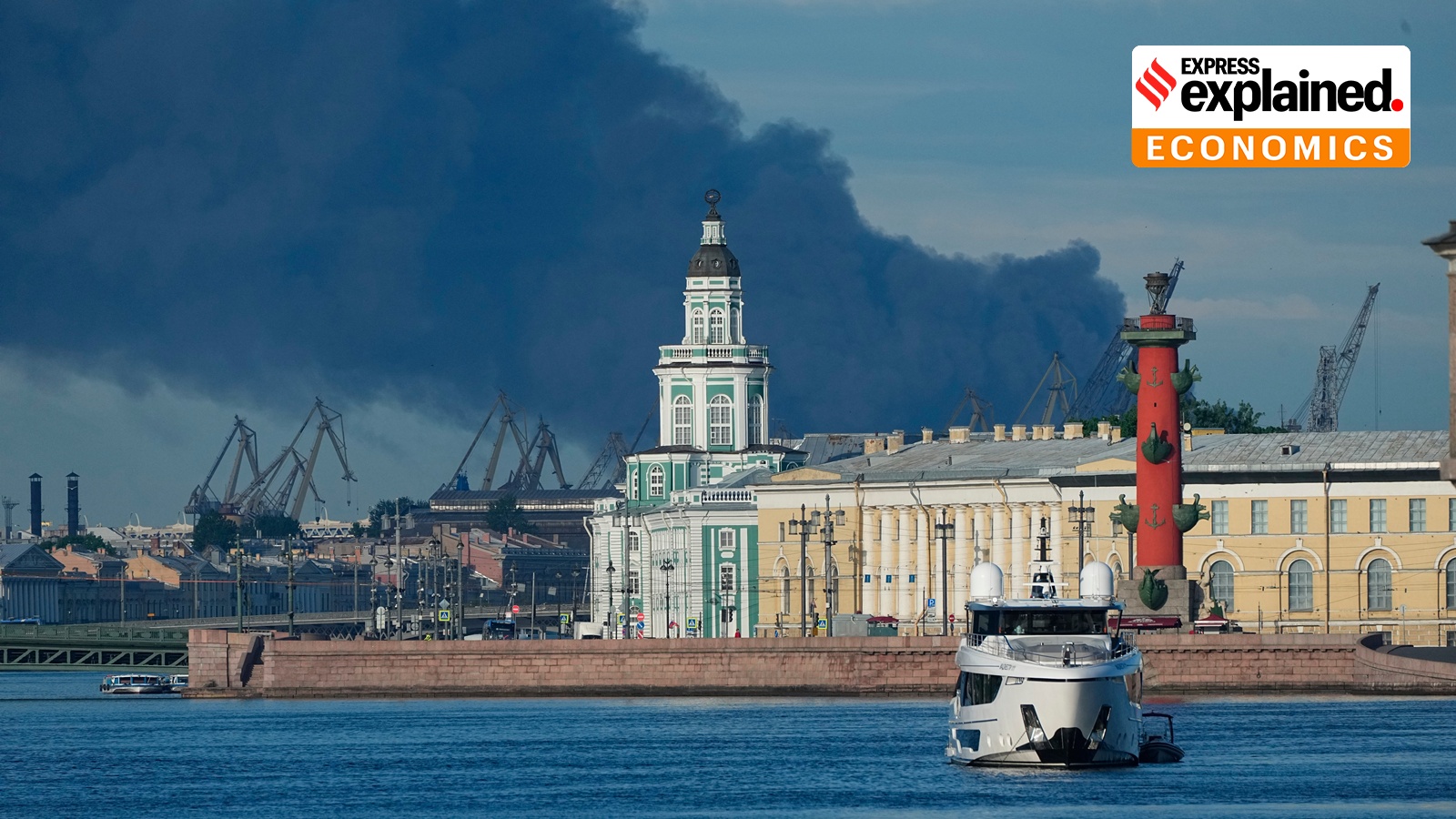
A renewed Black Sea shipping crisis and severe European heat are converging to squeeze grain exports. The article says that has already lifted wheat and corn prices and could keep food inflation elevated.
It is like two big pipes carrying food got squeezed at once: one by fighting near the Black Sea, and one by hot, dry weather in Europe. When less grain can move and less can grow, grocery prices can rise like a balloon filling with air.
Analysis
Novorossiysk
The article treats Novorossiysk as a key pressure point because the Ukrainian drone strike hit two of Russia’s biggest grain export terminals there. The immediate damage matters less as a battlefield event than as a trade event: the terminals together had an export capacity of 15.6 million tonnes a year, so any disruption reverberates through shipping and pricing.
That is why the piece focuses on logistics, not just destruction. When export terminals are forced offline, grain does not vanish, but it becomes slower, dearer, and riskier to move. The market response, in that sense, is built into the infrastructure: higher insurance premiums, fewer vessel calls, and more uncertainty about whether cargo can leave on time.
Kerch Strait
The Kerch Strait sits at the center of the article’s warning because it links the Sea of Azov to the Black Sea and has become a contested route. Ukraine’s attacks on vessels and port infrastructure around the strait, together with Russia’s strikes on Ukrainian facilities, are narrowing the space for normal trade flows.
The important point is that this is not only about one port or one attack. It is about a wider shipping lane where movement is now constrained by fear, delay, and the need for detours through places like Rostov-on-Don, Taman, and Kavkaz. The article makes clear that once a maritime corridor becomes a conflict zone, the cost of doing business rises even if warehouses are still full.
FAO
The FAO index gives the story its global frame. The article says the benchmark food price index hit a three-and-a-half-year high in July, while EU crop forecasts are sliding because of heat and dry weather. Those two forces, war and weather, are reinforcing each other rather than acting separately.
That combination is what makes the outlook more worrying than a single supply shock. The US Department of Agriculture’s numbers in the piece show lower expected output for wheat, corn, barley, oats, and rye in the EU, while Black Sea disruptions reduce the ability to ship grain that already exists. When supply shrinks and transport tightens at the same time, prices tend to stay elevated longer than either problem would suggest on its own.
Key points
- Ukraine strikes on Russian grain terminals in Novorossiysk disrupted major export capacity in the Black Sea.
- Attacks on vessels and ports around the Kerch Strait are making shipping through the Sea of Azov more difficult.
- Hot, dry weather in the European Union is cutting crop forecasts for wheat, corn, barley, oats, and rye.
- The FAO food price index has already reached a three-and-a-half-year high.
- The article says the Black Sea may now matter as much as the Strait of Hormuz for global food costs.
If attacks on ports and vessels ease and shipping corridors become safer, grain exports from the Black Sea could recover more quickly. Better weather in Europe would also help crop yields and reduce the pressure on global food prices.
If the strikes continue, insurers, shipowners, and crews may stay cautious, keeping export flows choppy and expensive. A longer stretch of heat and drought in Europe would add another layer of supply stress and leave food prices elevated for longer.