40 years ago August 6, 1986: Tougher sanctions
The Indian Express published an article on August 6, 1986, discussing the Commonwealth summit's decision to impose fresh economic sanctions against South Africa, with India and five other nations agreeing to the move, while Britain refused to comply.
Intelligence analysis by Llama
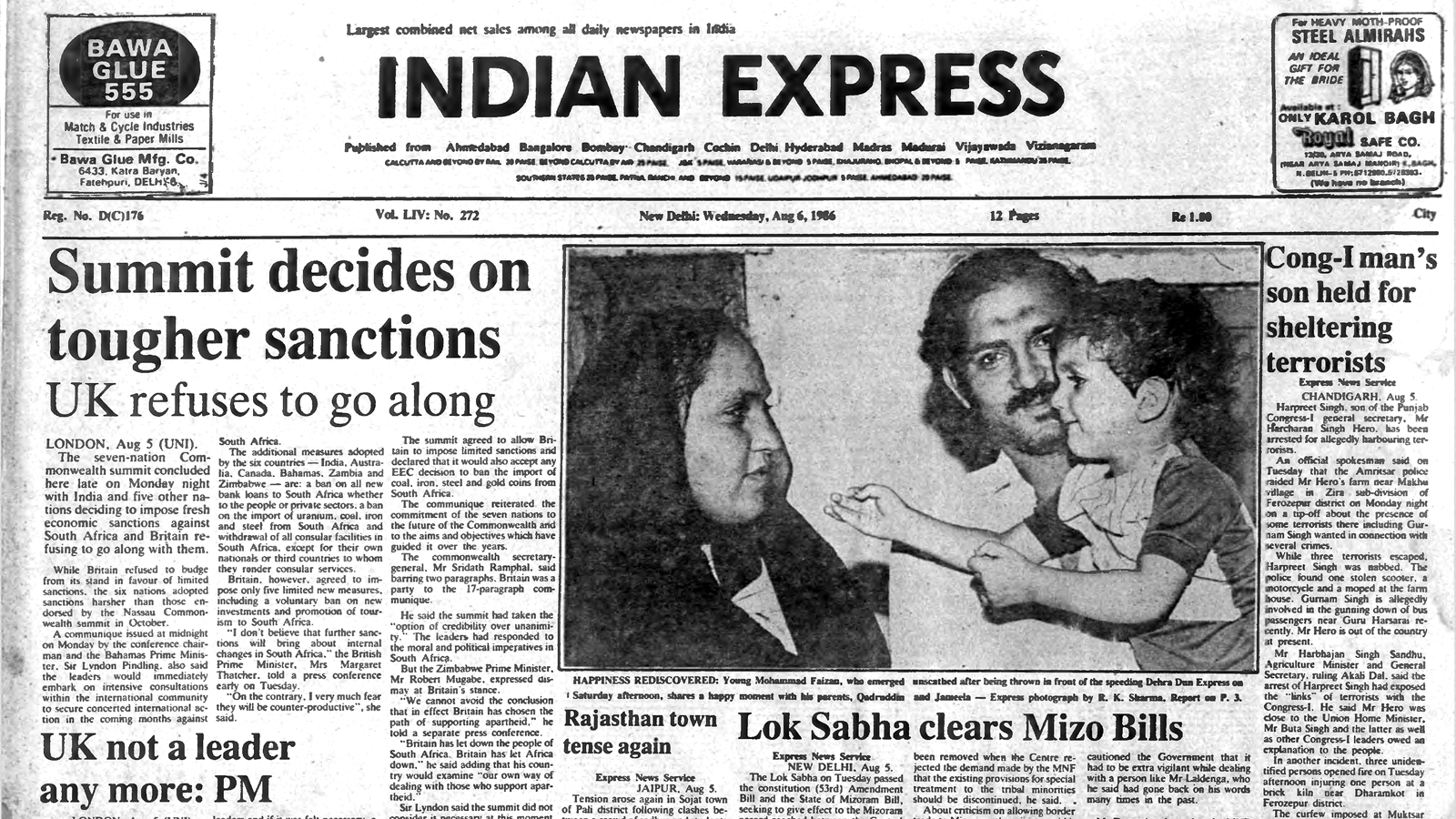
The Commonwealth summit concluded with India and five other nations deciding to impose fresh economic sanctions against South Africa, while Britain refused to go along with them, marking a shift in leadership and values.
Forty years ago, a group of countries called the Commonwealth decided to punish South Africa for being mean to its people. They wanted to make South Africa's economy weaker so it would stop being mean. But one country, Britain, didn't agree with this plan and wanted to be friends with South Africa instead.
Analysis
A Shift in Leadership and Values
The Commonwealth summit's decision to impose fresh economic sanctions against South Africa marked a significant shift in leadership and values within the organization. The seven-nation summit concluded late, with India and five other nations deciding to impose harsher sanctions than those endorsed by the Nassau Commonwealth summit in October. Britain, traditionally a leader in the organization, refused to budge from its stand, compromising on basic principles and values.
The Impact of Sanctions
The sanctions imposed by India and other nations are expected to have a significant impact on South Africa's economy. The move is seen as a strong stance against apartheid and a demonstration of the Commonwealth's commitment to human rights. The article highlights the importance of the decision and its implications for the region.
The Road Ahead
The decision to impose sanctions marks a significant shift in the Commonwealth's approach to human rights and economic development. The article suggests that the move will have far-reaching consequences for South Africa and the region as a whole. It remains to be seen how the situation will unfold and what the future holds for the Commonwealth and its member nations.
Key points
- The Commonwealth summit decided to impose fresh economic sanctions against South Africa.
- India and five other nations agreed to the move, while Britain refused to comply.
- The sanctions are expected to have a significant impact on South Africa's economy.
- The move is seen as a strong stance against apartheid and a demonstration of the Commonwealth's commitment to human rights.
If the sanctions are successful, they could lead to significant economic and social changes in South Africa, potentially paving the way for a more equitable and just society.
However, the sanctions could also lead to economic hardship and instability in South Africa, potentially exacerbating the country's existing social and economic challenges.