A Nigerian soldier is arrested for tipping off criminals - but does it go deeper?
A Nigerian soldier has been arrested for allegedly supplying military uniforms to criminal and terrorist groups, reigniting debate about insider collusion behind the country's decade-long insecurity crisis.
Intelligence analysis by Llama
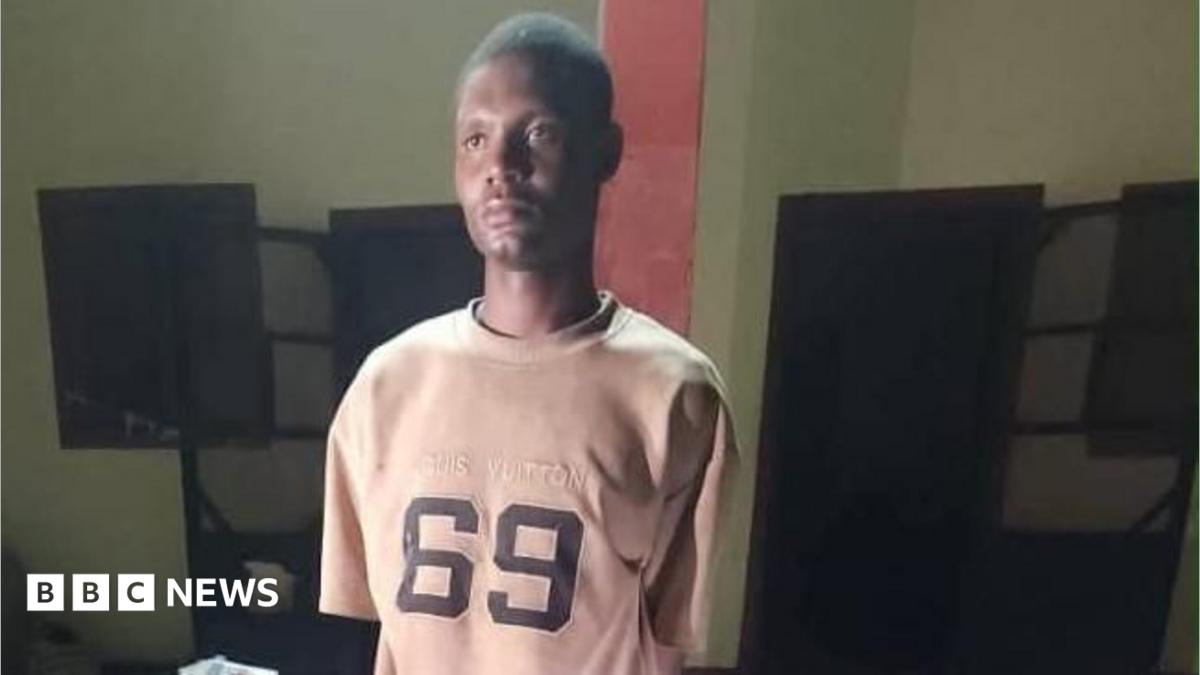
The arrest of Private Mohammed Yusuf, caught allegedly trying to flee into Cameroon with army gear destined for armed groups, has amplified long-standing suspicions that Nigeria's worsening violence is fuelled by insiders. Survivors, analysts and even a state governor describe a pattern of tipping off, collusion and quiet cover-ups inside the security services.
In Nigeria, a soldier was caught trying to give army uniforms to bad guys who hurt people. This made many people wonder if other soldiers are also helping the criminals on the quiet, which is why the country has struggled to stop the violence for so many years.
Analysis
The Arrest That Lit a Long Fuse
The arrest of Private Mohammed Yusuf at a Maiduguri bus stop on a Saturday evening is, on its face, a single soldier caught in a single transgression. According to army spokesperson Mohammed Goni, Yusuf was a deserter from a unit that makes army equipment, and was allegedly trying to cross into Cameroon when picked up. But the case has resonated far beyond the individual because it touches a nerve that has been raw for years in north-eastern Nigeria. Uniforms, ammunition and tactical knowledge are precisely the items that allow armed groups to move undetected, infiltrate military positions and carry out the kind of attacks that have defined the Boko Haram and banditry crises since the late 2000s. One soldier with access to a factory is a small data point; the symbolism of the arrest, in the same city that has been the epicentre of the insurgency, is much larger.
The army's public statement is itself a signal. By announcing the case, naming the suspect's rank and outlining the alleged plan to flee, the military is performing accountability at a moment when it is under heavy criticism. Yusuf has not commented publicly, and investigations are ongoing, the army says. The director of media operations, Maj Gen Markus Kangye, did not respond to the BBC's request for comment, which suggests the institution is managing the narrative carefully even as it claims transparency.
A Pattern of Allegations, Not Just One Case
The story sits on top of a thick stack of evidence and anecdote suggesting that insider collaboration is structural, not incidental. Data from Nigeria's National Human Rights Commission records at least 3,000 kidnappings and 3,580 killings by armed groups between January 2024 and April 2025 alone. The International Centre for Investigative Reporting counts 26 major school attacks with at least 2,416 students abducted between April 2014 and May 2026. Ransom payments, by official estimates, run into millions of dollars a year, a sum large enough to corrupt even well-paid institutions, let alone one in which, as security analyst Bashir Galma argues, poor pay is a known driver of indiscipline.
The pattern is corroborated by a series of voices inside and outside the system. In April 2025, Borno state governor Babagana Zulum publicly alleged that Boko Haram informants were operating within the armed forces, political class and local communities. Months later, a special court-martial sentenced three soldiers to life imprisonment for an arms and ammunition racketeering scheme, including a charge of "aiding the enemy." A serving soldier, speaking anonymously to the BBC, admitted that soldiers "caught dealing with the other side" are often "hushed and dealt with internally," a phrase that captures the gap between isolated court-martials and the absence of a systematic purge.
What Survivors Describe and Why It Endures
Testimony from freed hostages gives the abstract statistics a human shape. One man, whose family paid a 57m naira (about $42,000) ransom, described being released into the company of security personnel who shook hands and laughed with his captors. Another survivor of a 30-day ordeal in late 2024 said he heard a helicopter land near his captors' camp and expected rescue; instead, it departed. He heard the same sound several times and concluded that the gangs enjoyed some form of high-level logistical cooperation. These are recollections, not proven facts, and the article is careful to flag that the first man has no proof ransom was shared and the second is inferring from sound alone. But they are consistent with the broader pattern identified by analysts, and they explain the widespread public scepticism that any single arrest can satisfy.
Security expert Abdullahi Abdullahi offers a complementary explanation: armed groups are sustained not only by rogue security personnel but by civilian informants, which is why operations against them keep stalling. The persistent security challenges point to a failing system, the article concludes, and Yusuf's arrest shows the military is at least acknowledging the problem inside its own ranks. Whether that acknowledgment translates into meaningful action, the piece notes, remains to be seen, a measured formulation that captures both the significance of the arrest and the deep scepticism that surrounds it.
Key points
- Private Mohammed Yusuf arrested at a Maiduguri bus stop while allegedly trying to flee into Cameroon with military equipment
- Yusuf had deserted from a unit that manufactures army kit, according to army spokesperson Mohammed Goni
- National Human Rights Commission data records at least 3,000 kidnappings and 3,580 killings by armed groups between January 2024 and April 2025
- Borno state governor Babagana Zulum publicly alleged in April 2025 that Boko Haram informants operate inside the armed forces
- A special court-martial later sentenced three soldiers to life imprisonment for an arms and ammunition racket that included 'aiding the enemy'
- Security analyst Bashir Galma and a serving soldier both say poor pay and quiet internal cover-ups allow collusion to continue
If the Yusuf case leads to a transparent prosecution and triggers a wider internal purge, it could rebuild public confidence in the military and make it harder for armed groups to operate disguised in army kit. Coupled with the recent life sentences handed to three soldiers for arms racketeering, it suggests the chain of command is at least willing to act against insiders when evidence surfaces.
Anonymous soldiers admit collusion cases are routinely hushed up internally, and survivors describe interactions between captors and uniformed personnel that suggest the problem is not isolated. Without structural reform of military pay, vetting and intelligence-sharing, the arrest of one private is unlikely to dent a patronage network that has reportedly thrived for over a decade.