AI and new digital technologies must not leave SA's workforce behind: Ramokgopa
South Africa's Minister of Electricity and Energy, Dr Kgosientsho Ramokgopa, advocates for a human-centered approach to AI, ensuring technological advancements do not displace the workforce.
Intelligence analysis by Gemini 2.5 Flash
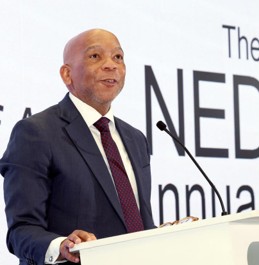
Speaking at NEDLAC's 31st Annual Summit, Minister Ramokgopa highlighted AI's potential for productivity and innovation but warned against deepening inequalities and worker displacement. He stressed the need for significant investment in human capital, upskilling, and social dialogue to manage the transition to an AI-enabled economy inclusively.
Imagine a super-smart robot that can do lots of jobs really fast. South Africa's energy boss, Dr Ramokgopa, says we need to make sure these robots help everyone, not just a few people. He wants to teach everyone new skills so they can work with the robots, instead of losing their jobs to them. It's like making sure everyone gets a new, cool tool instead of just watching others use it.
Analysis
Dr Kgosientsho Ramokgopa, representing Deputy President Paul Mashatile, delivered a significant address at the National Economic Development Labour Council’s (NEDLAC) 31st Annual Summit in Pretoria. His core message underscored the imperative for South Africa to adopt a human-centered strategy in its engagement with artificial intelligence and other digital technologies. This approach is deemed essential to prevent the rapid pace of technological innovation from marginalizing the nation's workforce. The Minister acknowledged the transformative power of AI in reshaping economies, businesses, and government services, presenting both immense opportunities and considerable risks.
Dr Kgosientsho Ramokgopa's Vision
Minister Ramokgopa articulated a vision where AI serves as a catalyst for national progress, capable of enhancing productivity, fostering innovation, improving service delivery, and creating new industries and entrepreneurial avenues. However, he cautioned that such technological advancement is not inherently inclusive. Without careful management, AI could widen existing inequalities, displace workers, and deepen the digital divide, particularly for those lacking access to necessary skills and infrastructure. His emphasis on targeted investments in human capital, alongside upskilling and re-skilling initiatives, highlights a proactive stance to prepare South African youth and current workers for evolving labor market dynamics.
The Age of AI
The Minister explicitly stated that the age of AI is already altering the world of work, predicting changes in occupations, automation of tasks, emergence of new jobs, and the requirement for new skills in existing roles. This necessitates a people-centric approach to AI, ensuring that the transition to an AI-enabled economy does not leave workers behind. Key to this strategy are investments in education, skills development, re-skilling, and lifelong learning, particularly for young South Africans. Furthermore, the protection of workers during technological transformation is paramount, an area where social dialogue is expected to play a critical role. Businesses are encouraged to consider how technology can boost productivity while simultaneously supporting employees through periods of change.
NEDLAC's Role
Ramokgopa highlighted the critical importance of platforms like NEDLAC in navigating the complex economic and social challenges facing South Africa. He described social dialogue as central to the country's democratic project, providing a vital forum for government, business, labor, and community constituencies to collaborate on solutions. The summit's theme prompted a crucial question: how can social dialogue ensure AI contributes to inclusive economic growth, improved productivity, competitiveness, and job creation? The Minister stressed that addressing these difficulties requires a meaningful partnership across all sectors, not just government efforts. This collaborative approach, he believes, can build consensus around the difficult choices needed to steer the economy towards a more sustainable and inclusive growth path, especially as the country manages simultaneous technological and environmental transitions.
Key points
- Minister Ramokgopa advocates for a human-centered approach to AI in South Africa.
- AI presents opportunities for productivity and innovation but risks deepening inequalities and displacing workers.
- Investments in human capital, upskilling, and re-skilling are crucial for an inclusive transition.
- Social dialogue among government, business, labor, and communities is vital for managing technological change.
- The goal is to ensure AI contributes to inclusive economic growth and job creation, not just increased productivity.
If South Africa successfully implements a human-centered AI strategy, it could significantly boost national productivity and competitiveness, fostering new industries and creating sustainable employment opportunities. Targeted investments in education and skills development could empower a new generation of workers to thrive in the digital economy.
Without proper management and investment, the rapid adoption of AI could exacerbate existing inequalities in South Africa, leading to widespread worker displacement and a widening digital divide. This could leave a significant portion of the workforce unprepared for the future economy, intensifying social and economic challenges.