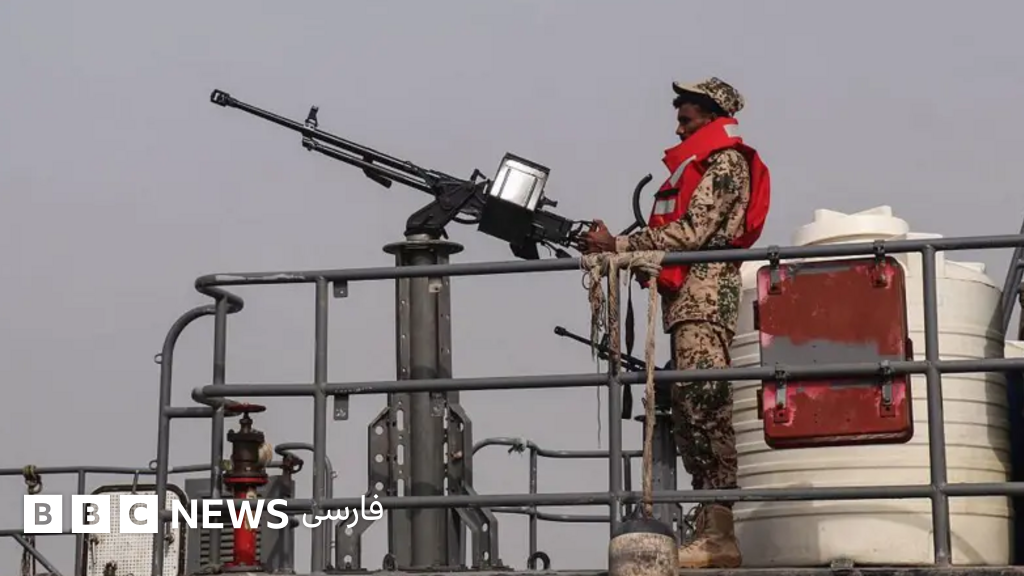
AI on the battlefield: Is Palantir complicit in war crimes against Iran?
The use of artificial intelligence in modern warfare raises questions about legal responsibility. Private companies like Palantir provide platforms that integrate intelligence to support military planning and target identification, potentially influencing operational deci…
Intelligence analysis by Llama
The increasing role of AI in warfare raises concerns about legal responsibility, particularly for companies like Palantir that provide platforms for military operations.
Imagine a computer system that helps soldiers decide who to target in a war. This system can make mistakes, and it's hard to know who's responsible. This is a big problem because it can lead to people getting hurt or killed.
Analysis
The Growing Role of AI in Warfare
Artificial intelligence has fundamentally transformed modern warfare. Military superiority increasingly depends not only on weapons but also on the ability to collect, integrate, and analyze vast amounts of data in real time. Contemporary wars are planned as much through algorithms and data platforms as they are fought on the battlefield. Private technology companies have consequently become influential actors in military operations. Firms such as Palantir provide platforms that integrate intelligence from satellites, drones, electronic surveillance, cyber networks, and other sources to support military planning and target identification. Although these companies maintain that the final decision to use force remains with human commanders, algorithmic recommendations inevitably influence operational decision-making.
The Responsibility Gap
The principles of distinction, proportionality, precaution, and military necessity remain fully applicable in AI-assisted warfare. However, where corporate executives knowingly provide technologies that substantially facilitate internationally wrongful conduct, questions of legal accountability inevitably arise. This concern is reinforced by Article 36 of Additional Protocol I, which requires the legal review of new means and methods of warfare, as well as by the UN Guiding Principles on Business and Human Rights, which require companies to exercise human rights due diligence and avoid contributing to serious violations.
The Future of International Humanitarian Law
The defining legal question of the AI era may no longer be who pulled the trigger, but rather: Who designed the algorithm that guided the human hand toward the trigger? The answer to that question may shape the next generation of international humanitarian law and international criminal justice.
Key points
- Artificial intelligence is increasingly used in modern warfare to support military planning and target identification.
- Private companies like Palantir provide platforms that integrate intelligence to support military operations.
- The use of AI in warfare raises concerns about legal responsibility, particularly for companies involved in military operations.
- The principles of distinction, proportionality, precaution, and military necessity remain fully applicable in AI-assisted warfare.
- Companies like Palantir may incur liability for their role in AI-assisted warfare if they knowingly provide technologies that substantially facilitate internationally wrongful conduct.
If companies like Palantir are held accountable for their role in AI-assisted warfare, it could lead to more responsible use of technology in military operations. This could ultimately reduce the risk of harm to civilians and other non-combatants.
If companies like Palantir are not held accountable for their role in AI-assisted warfare, it could lead to a 'responsibility gap' where no one is held accountable for the harm caused by these technologies. This could have serious consequences for international humanitarian law and the protection of civilians.