Antisemitism in UK remains near record levels, charity says
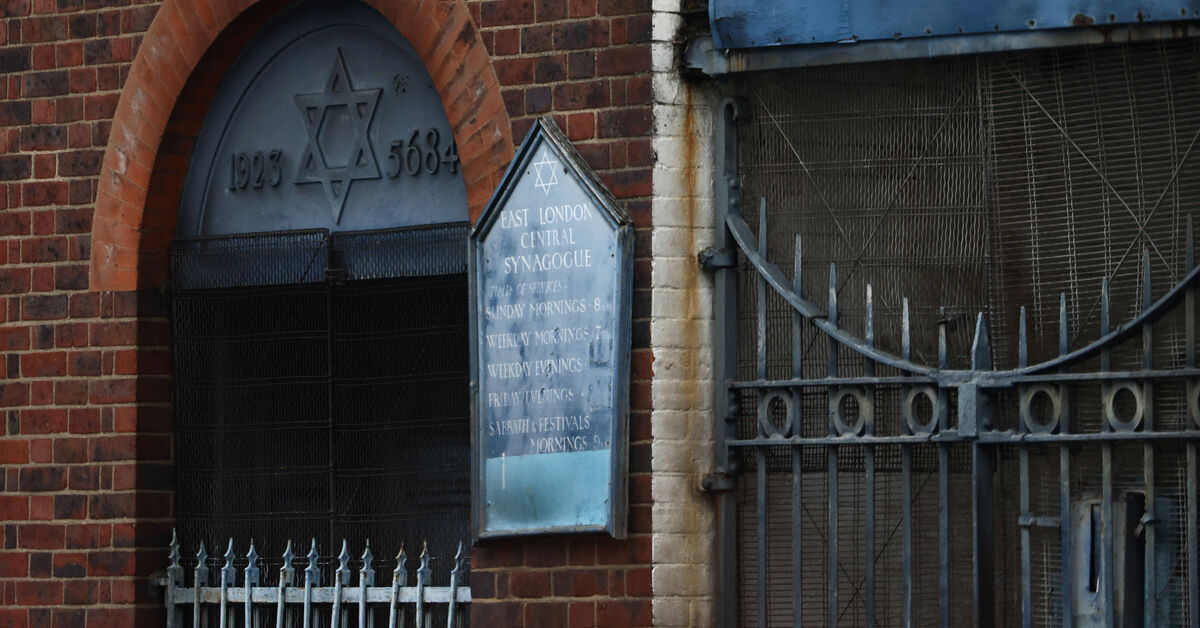
The Community Security Trust recorded 1,926 anti-Jewish hate incidents in the first half of 2026, a 21% rise year-on-year and the second-highest first-half figure on record, with the charity linking the spike to the US-Israeli war with Iran.
Intelligence analysis by Llama
British antisemitic incidents are running near record highs, with a leading Jewish security charity documenting nearly 2,000 cases in the first six months of 2026. The CST attributes the surge partly to fallout from the US-Israeli war with Iran and points to both domestic extremists and what it calls Iranian state-directed activity.
A charity that watches over Jewish communities in Britain counted almost 2,000 bad things done to Jewish people in the first half of 2026, like name-calling, vandalism, and even stabbings. They say the numbers jumped after a big war started in the Middle East, which made some people in Britain angrier. The UK government is now spending hundreds of millions of pounds to keep Jewish places like schools and synagogues safe.
Analysis
A Spate Driven by the Iran War's Aftermath
The CST's midyear report is the first to draw an explicit line between antisemitic incidents in Britain and the February outbreak of the US-Israeli war with Iran. According to the charity, incidents spiked in the weeks after fighting began, suggesting that geopolitical shocks thousands of miles away are translating into street-level hostility in British cities. The 1,926 incidents logged between January and June represent a 21% jump over the same period in 2025, and the second-highest first-half total since the CST began tracking. The charity's framing, that these are threats "whether state-directed from Iran, or internally driven by Islamist, far Right, far Left, or other ideological extremes," points to a convergence of foreign and domestic drivers that complicates any single-cause explanation.
From Golders Green to Manchester
The most serious episodes in 2026 have been physical rather than verbal. In April, two Jewish worshippers were stabbed in the Golders Green neighborhood of north London in an attack police are treating as terrorism. That followed the October 2025 killing of two worshippers at a synagogue in Manchester, an event that already had Jewish communities on edge. Between these flashpoints, a wave of arson attacks hit synagogues and Jewish premises in London, including the torching of four ambulances belonging to a Jewish volunteer emergency service. The pattern, mixing lone-actor stabbings, coordinated arson, and online harassment, has left Britain's roughly 280,000 Jews fearful, the CST said, even as the broader public is only intermittently aware of the scale.
Tehran, Proxies, and a £250 Million Response
The British government has not held back on naming names. Officials have accused Iran of using proxies to carry out attacks on British and European soil, a charge Tehran denies. That diplomatic escalation, combined with the Manchester and Golders Green attacks, has produced a concrete policy response: a £250 million ($336 million), three-year package to better protect Jewish schools, synagogues, and community centers, announced earlier in August. Policing minister Sarah Jones framed the spending as a defense of "our country's values." The CST's data effectively functions as the evidentiary backdrop for that spending push. Whether the new resources can outpace a threat environment that the charity says is now fueled by an active Middle East war will be the real test of London's response.
Key points
- CST recorded 1,926 antisemitic incidents in the first half of 2026, up 21% year-on-year
- It is the second-highest first-half total since the charity began tracking
- CST links the surge to the February start of the US-Israeli war with Iran
- British authorities have accused Iran of directing proxy attacks in the UK, which Tehran denies
- The UK government has announced a £250 million, three-year program to protect Jewish communities
If the government's £250 million protective package is deployed effectively, Jewish communities could see a tangible reduction in vulnerability, and the broader public may gain a clearer picture of the threat environment. Stronger security at schools and synagogues, combined with diplomatic pressure on Tehran, could help deter both state-directed proxies and opportunistic domestic extremists.
If the underlying drivers, including the ongoing Iran war and the activity of ideological extremists on multiple flanks, continue unabated, the CST's numbers could break new records. Britain's accusations against Tehran risk triggering tit-for-tat intelligence operations on UK soil, while domestic copycat attackers may be inspired by high-profile incidents like the Golders Green stabbing.