As eviction fears grip Kashmir business community, top traders’ body says ‘this should not happen’
Kashmir's business community is gripped by fear after the J&K government issued eviction notices to commercial establishments on Nazool land, prompting the Kashmir Chamber of Commerce and Industries (KCCI) to seek an amicable solution.
Intelligence analysis by Gemini 2.5 Flash
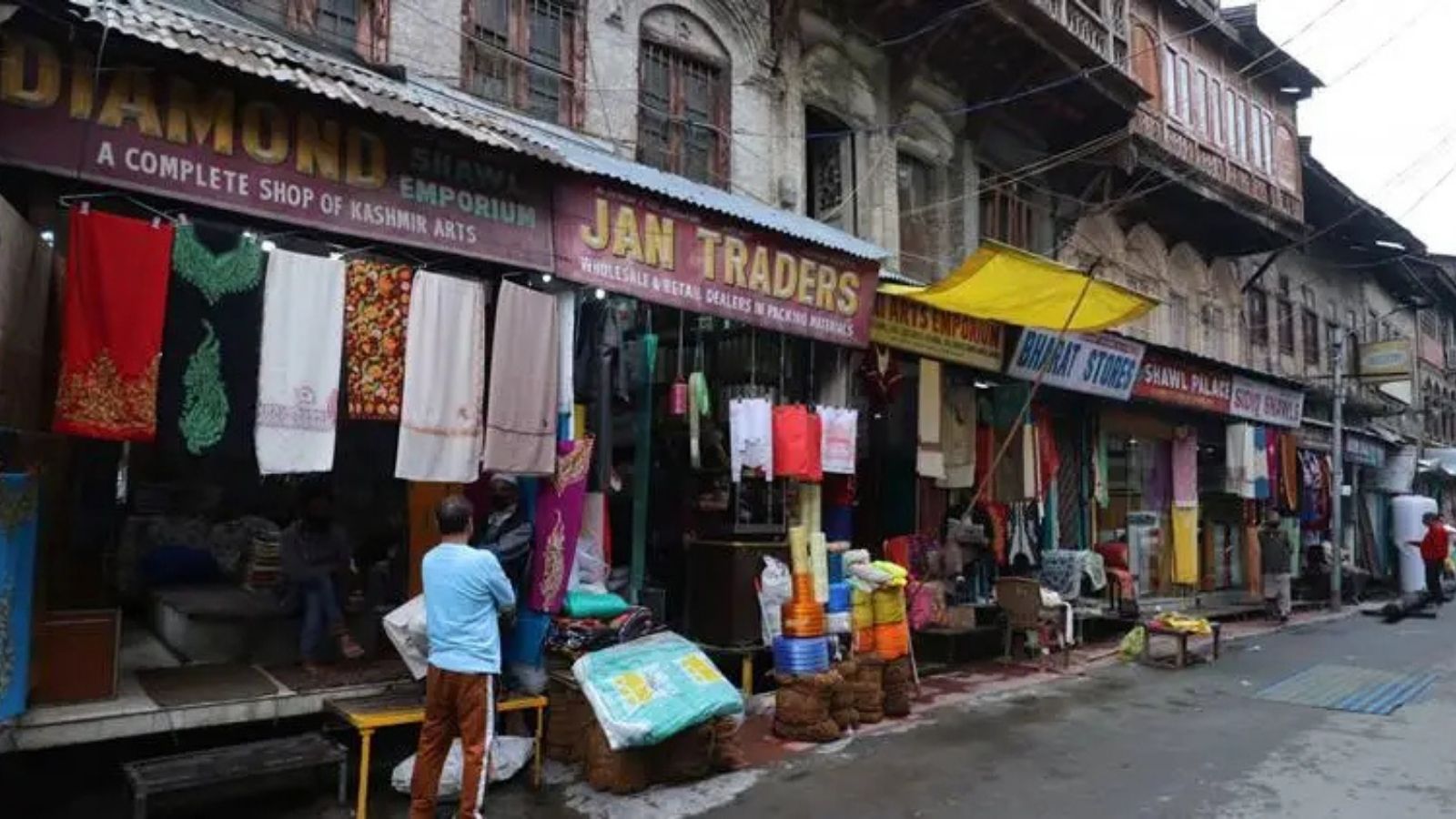
The J&K government has begun issuing eviction notices to businesses operating on Nazool land in Srinagar, citing expired leases or unpaid rent. This move has caused significant concern among traders, particularly as it threatens to exacerbate the region's already high unemployment rate, leading the KCCI to call for a negotiated resolution.
Imagine a big landlord who let people use his land for shops and homes for a long time, but now he's saying some of those agreements have run out. He's asking people to leave, which makes the shopkeepers and their workers very worried because they might lose their jobs and their way of making money. A group that helps businesses is asking the landlord to talk and find a fair way for everyone to stay, maybe by paying a bit more rent, so nobody loses their livelihood.
Analysis
The recent issuance of eviction notices by the Jammu and Kashmir government to commercial establishments built on Nazool land has sent ripples of anxiety through Srinagar's business community. This action, targeting properties where leases have reportedly expired or rent payments are due, carries substantial implications for the local economy and social fabric. The Kashmir Chamber of Commerce and Industries (KCCI) has voiced strong opposition, emphasizing the potential for widespread job losses in a region already struggling with significant unemployment.
Mohidin Trust building
One of the most prominent examples of the government's eviction drive is the iconic Mohidin Trust building located at Polo View in Srinagar. This particular structure is not merely a single entity but houses between 40 to 42 distinct commercial establishments. Each of these businesses, in turn, employs multiple individuals, typically two to four, making the building a source of livelihood for a considerable number of families. The eviction notice served to the Mohidin Trust specifically cites Section 5(1) of the Jammu & Kashmir Public Premises (Eviction of Unauthorised Occupants) Act, 1988, demanding vacation by September 21.
The notice acknowledges that the Trust owners had submitted their original lease documents and various representations seeking renewal. However, it states that these submissions failed to establish the existence of a subsisting lease or a valid renewal order from the competent authority. This situation underscores a broader administrative challenge regarding land records and lease management in the region, potentially affecting many other properties beyond this specific case.
Nazool land
The core of the current dispute lies with 'Nazool land,' which refers to government-owned land leased out for specific periods and purposes without transferring ownership rights. Official records indicate that a substantial 58,000 kanals, equivalent to over 7,000 acres, across Jammu and Kashmir fall under this category. Srinagar alone accounts for approximately 8,000 kanals (1,000 acres) of Nazool land, with major commercial hubs like Lal Chowk, Residency Road, and Rajbagh largely built upon it. The remaining 50,000 kanals (over 6,000 acres) are situated in Jammu.
The government's decision to enforce evictions on this land category suggests a broader policy shift or a more stringent approach to lease management. While the government's intent might be to regularize land use or reclaim properties, the immediate impact on businesses and employment is a significant concern. The sheer volume of land under Nazool category implies that the current evictions could be just the beginning, potentially affecting a vast number of commercial and even residential properties across the Union Territory.
Kashmir Chamber of Commerce and Industries (KCCI)
The Kashmir Chamber of Commerce and Industries (KCCI), represented by its President Javed Ahmad Tenga, has emerged as a vocal advocate for the affected business community. Tenga explicitly stated that such evictions "should not happen," highlighting the severe economic repercussions. He pointed out that the region is already grappling with a "huge unemployment" crisis, and these evictions would only exacerbate the problem by rendering more people jobless and impacting numerous families' "bread and butter."
The KCCI is not entirely against the government's right to manage its land but is pushing for a pragmatic and humane approach. Tenga urged the government to develop an "amicable solution" and a clear "framework" within the existing legal parameters. This framework could involve options such as increasing rent rates or extending leases, rather than outright evictions. The traders' body's stance reflects a desire for dialogue and a negotiated settlement that balances government regulations with the economic realities and livelihoods of the local population.
Key points
- The J&K government has issued eviction notices to commercial establishments on Nazool land in Srinagar.
- The iconic Mohidin Trust building, housing over 40 businesses, is among those served eviction notices.
- The Kashmir Chamber of Commerce and Industries (KCCI) warns that evictions will worsen unemployment and seeks an amicable solution.
- Around 7,000 acres of land in J&K fall under the Nazool category, including significant commercial hubs in Srinagar.
- The KCCI proposes solutions like increased rent or lease extensions within a legal framework to avoid mass job losses.
The KCCI's call for an "amicable solution" and a "framework" suggests that negotiations could lead to a resolution where businesses are allowed to renew leases or agree to revised terms, potentially preventing widespread evictions and preserving livelihoods in Kashmir.
If the evictions proceed as planned, it could lead to significant job losses for the "40-42 entities" and "so many families" dependent on these businesses, further worsening Kashmir's "huge unemployment" crisis and causing economic distress.