At a Gaza zoo, war takes its toll on the animals
A Gaza zoo owner, Mahmoud Gomaa, struggles to keep his animals alive amidst ongoing conflict, facing severe shortages of food and medicine after relocating his facility.
Intelligence analysis by Gemini 2.5 Flash
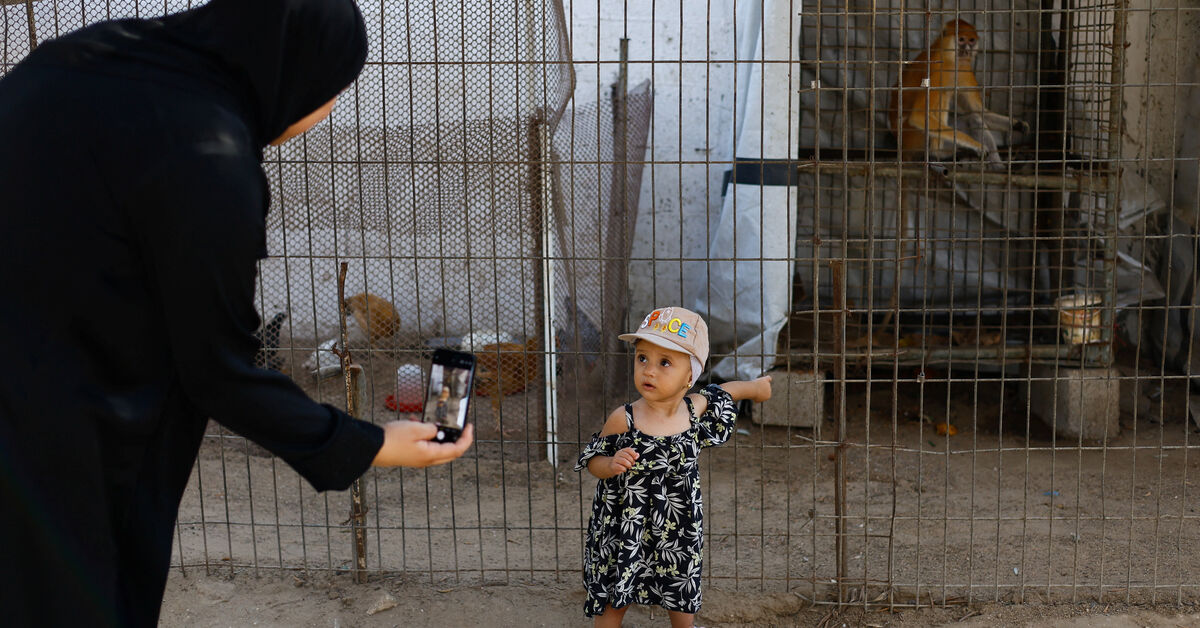
The war in Gaza has devastated a local zoo, leaving many animals malnourished and traumatized. Owner Mahmoud Gomaa moved his surviving animals from Rafah to Nuseirat, battling immense challenges to provide care and offer a small respite for children in the war-torn enclave.
Imagine your favorite pet, but instead of a cozy home, it lives in a place where loud booms happen all the time, and it's really hard to find food or medicine. That's what's happening to the animals at a zoo in Gaza. The kind owner, Mahmoud, had to move them many times to keep them safe, but they are still very scared and hungry because of the war. Kids visit the zoo to feel a little bit happy, even though the animals are sad, because there's not much else to do in their town.
Analysis
The ongoing conflict in Gaza has created a dire humanitarian crisis, but its impact extends to all forms of life, including the animals housed in local zoos. The story of Mahmoud Gomaa's zoo near the Nuseirat refugee camp offers a poignant glimpse into the broader devastation, illustrating the immense challenges faced by those trying to preserve any semblance of normalcy or care amidst relentless destruction.
Mahmoud Gomaa
Mahmoud Gomaa, the dedicated owner of the zoo, exemplifies resilience in the face of overwhelming adversity. He initially operated his attraction in Rafah but was forced to flee when Israeli troops attacked the area in 2024. During the height of the conflict, Gomaa undertook the arduous task of moving his surviving animals from town to town, a testament to his commitment to their welfare. Earlier this year, he managed to reopen the zoo in Nuseirat, driven by a hope to provide a much-needed escape and source of enjoyment for traumatized children who have endured nearly three years of conflict and destruction. His efforts highlight a profound dedication that transcends personal survival, focusing on the well-being of his animals and the community.
Nidal Fadel
The challenges faced by Gomaa and other zoo owners are immense, as articulated by veterinarian Nidal Fadel. The primary hurdle is securing adequate food and medical supplies in a territory already struggling to feed its human population. Fadel points out that animals are currently being fed frozen meat, which he describes as a "catastrophe and a wrong nutritional plan" compared to their natural diet of fresh prey. This nutritional deficiency, coupled with a lack of vaccines and proper medicine, leaves the animals weakened and vulnerable. The direct impact of the war is also evident, with Gomaa recounting how he returned to Rafah to find only bones of crocodiles and ostriches, and his three lions missing, after being forced to abandon them during his initial flight.
Karam Al-Mazin
The zoo, despite its own struggles, serves as a crucial, albeit fragile, haven for the local community, particularly children. Karam Al-Mazin, a 42-year-old visitor, articulates the desperate need for such spaces, stating, "Today there is no avenue for children to play. There is nothing except rubble, stones and tents, so children today are bored and are in a difficult situation." The presence of the zoo, even with its listless lions and traumatized chimpanzees, offers a rare opportunity for children to interact with animals, pet monkeys, and let parrots ride on their shoulders. This brief respite from the constant threat of airstrikes and the pervasive destruction underscores the profound psychological toll the conflict takes on the youngest residents, making any small source of joy or distraction invaluable.
Key points
- Mahmoud Gomaa, a Gaza zoo owner, relocated his animals from Rafah to Nuseirat due to ongoing conflict.
- Many animals are malnourished and weakened by severe shortages of food, medicine, and vaccines.
- Veterinarians highlight the catastrophic impact of feeding animals frozen meat instead of fresh prey.
- The war's sounds and sights cause enormous stress and fear for the animals, as noted by animal welfare experts.
- The zoo provides a rare chance for traumatized children in Gaza to find enjoyment and relaxation amidst the destruction.
Despite the overwhelming challenges, Mahmoud Gomaa's dedication to his animals and his community offers a glimmer of hope. His efforts to reopen the zoo provide a rare opportunity for children to find moments of joy and relaxation amidst the conflict, demonstrating resilience and the enduring human spirit to care for others, even in the direst circumstances.
The animals at the Gaza zoo face a grim future, with ongoing shortages of food, medicine, and the constant trauma of conflict. Without significant external aid, many more animals are likely to succumb to malnutrition, disease, or direct harm, further exacerbating the suffering in an already devastated region.