BMW to cut ‘as many as 8,000 jobs’ under pressure from Chinese rivals
BMW is planning to cut up to 8,000 jobs in Germany under a voluntary redundancy programme targeting admin and development divisions, as European carmakers face pressure from Chinese EV rivals.
Intelligence analysis by Llama
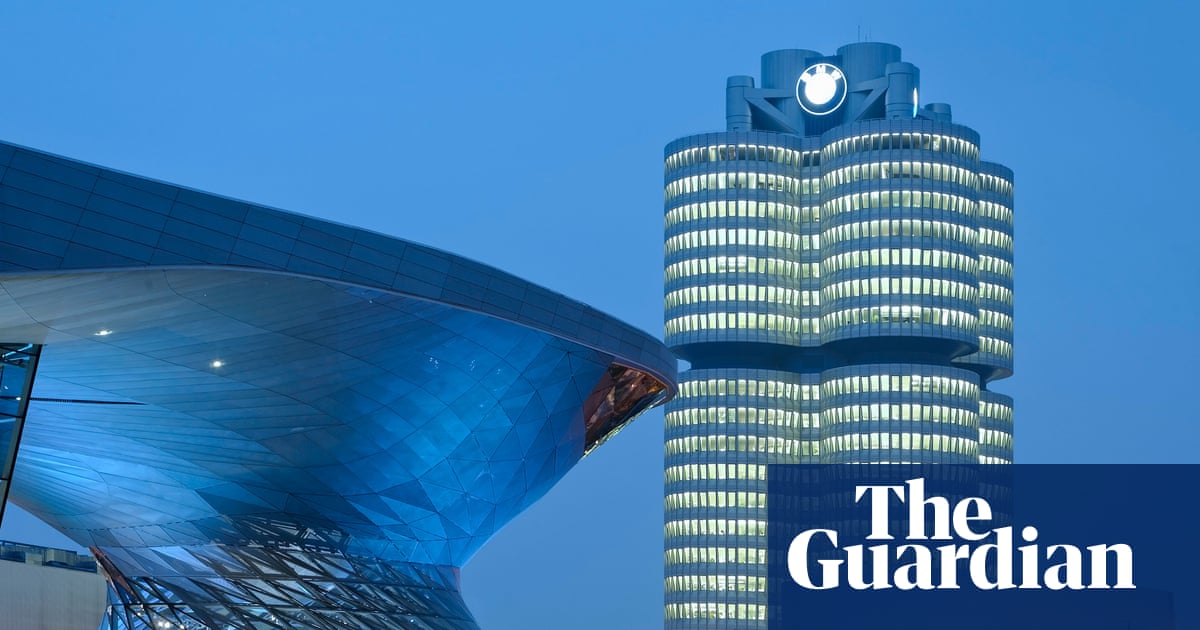
BMW has begun a voluntary redundancy programme in Germany that could remove up to 8,000 positions from its 160,000-strong workforce, targeting administration and development rather than production. The cuts reflect a wider industry squeeze as Chinese EV makers dominate and a price war in China erodes European exports.
BMW makes really nice cars, but Chinese companies are now selling lots of cheaper electric cars and even beating BMW in its own shops. Because fewer people are buying BMWs, the company needs to spend less money, so it's asking about 8,000 office workers in Germany if they'd like to leave their jobs and get a payout.
Analysis
Europe's Premium Carmakers Hit a Wall
BMW's voluntary redundancy programme, the first concrete headcount action under new chief executive Milan Nedeljković, is more than a cost-cutting exercise — it is an admission that the operating environment has fundamentally changed. A BMW spokesperson framed it as the company "proactively shaping the profound changes" driven by the EV transition, geopolitical uncertainty, and deteriorating conditions in China. Translation: the world's largest car market, long a profit centre for the Bavarian marque, is no longer reliable. Chinese manufacturers now dominate EVs at home, and a domestic price war has squeezed the export earnings European brands once counted on.
The fact that production is excluded from the cuts is telling. BMW is protecting the assembly lines and the German industrial base that anchors its identity, while trimming the overhead and engineering bureaucracy it can no longer fully afford. With 8,000 roles up for grabs in admin and development out of a 160,000 workforce, the headcount reduction is meaningful but not catastrophic — roughly 5% of total staff, concentrated in white-collar functions.
An Industry-Wide Contraction, Not a One-Off
BMW is not acting in isolation. Volkswagen, Germany's volume leader, has confirmed plans to cut up to 100,000 jobs from a 650,000 workforce, close four factories, and halve its model count. Porsche, part-owned by VW, is shedding 9,000 roles — a fifth of its staff — by 2035, with another 5,000 cuts agreed this week alone. Aston Martin, the UK luxury peer, reported a £89m pre-tax loss in the second quarter of 2026, up from £61m a year earlier, and has already cut a fifth of its workers in February. The pattern is unmistakable: Europe's high-end and volume carmakers are contracting in parallel.
The drivers are stacked. Chinese EV brands have moved from niche to dominant in the world's two largest auto markets. A price war in China has eroded the export margins European marques once earned there. The US, under Donald Trump's withdrawal of EV subsidies, is now a tougher market for premium plug-in models such as the Porsche Taycan. And Europe's own transition from combustion to electric still demands huge capital outlays at a moment when cash flow is weakening.
The New Bargain With China
Perhaps the most revealing detail is what some of these companies are doing to survive. The article notes that several manufacturers — including Volkswagen, Stellantis, and Ford — have turned to partnerships with Chinese rivals to help build and sell in Europe. That is a remarkable admission for an industry that spent the last decade dismissing Chinese competition. The implicit calculation is that going it alone against state-backed Chinese champions on their own technological turf is no longer a viable strategy; if you cannot beat them, build with them.
For BMW, the redundancy programme is a measured first move rather than a dramatic restructuring. But the direction of travel is set, and the wider European auto industry is now visibly smaller, leaner, and more dependent on the very competitors that displaced it.
Key points
- BMW has launched a voluntary redundancy programme that could cut up to 8,000 jobs in Germany, targeting administration and development but not production.
- Total BMW workforce stands at about 160,000, putting the potential reduction at roughly 5%.
- The move comes as Chinese EV manufacturers dominate their home market and intensify a price war that has eroded European brands' export earnings.
- Other European carmakers are contracting in parallel: Volkswagen plans up to 100,000 cuts and four factory closures; Porsche is shedding 9,000 jobs by 2035; Aston Martin reported a wider H1 loss of £154m.
- New BMW CEO Milan Nedeljković, previously head of production, took over in May as the company confronts EV transition costs, US tariffs, and a withdrawn US EV subsidy regime.
By moving early and limiting cuts to voluntary redundancies in non-production roles, BMW avoids the kind of forced layoffs and factory closures that are roiling Volkswagen. If the Chinese price war eases and European EV demand recovers, BMW's protected production base and leaner cost structure could leave it better positioned than peers to rebound.
The cuts are an explicit acknowledgement that the Chinese market and the global EV transition are sapping profitability. If Chinese rivals continue to gain share in Europe, BMW may need to follow Volkswagen into deeper, production-line restructuring — with significant spillover risks for the German labour market and the country's industrial tax base.