Brave New World or Groundhog Day? Burnham revisits old ground in speech on social care
New UK Prime Minister Andy Burnham fast-tracked Louise Casey's social care review and signalled openness to tax rises, reviving reform plans that collapsed in 2010 amid 'death taxes' controversy.
Intelligence analysis by Llama
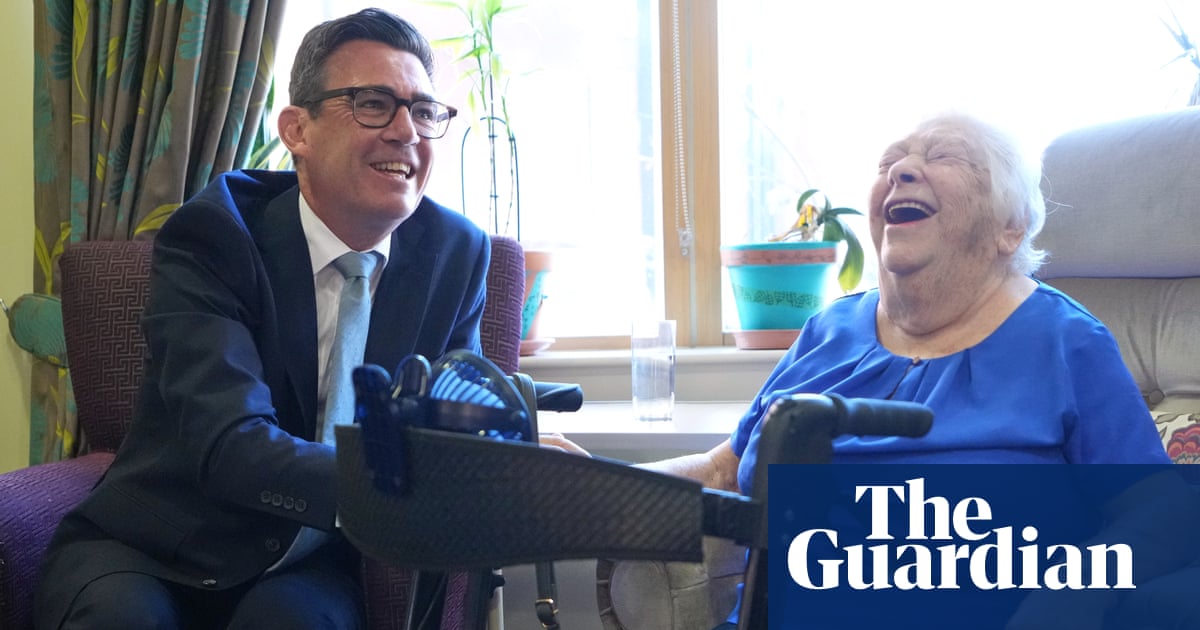
Andy Burnham, now PM, sketched a National Care Service vision by accelerating Louise Casey's review and floating broad-based tax contributions. Campaigners sensed rare political will, though 22 prior reviews have ended in failure.
Britain's new PM, Andy Burnham, once tried to fix care for old and sick people, but newspapers got angry about new taxes and the plan died. He's now in charge and trying again, speeding up a big review and hinting everyone might chip in a little, like with the NHS. Past attempts have all failed, so people are nervous.
Analysis
From 2010's 'Death Taxes' to a Second Chance
The speech carried the weight of personal history. Sixteen years ago, Burnham, then health and social care secretary, unveiled an extensive reform package that imploded under tabloid attacks on so-called death taxes. That collapse is the article's organising reference point: the framing of 'Brave New World or Groundhog Day' is a question the PM cannot avoid, because the failure happened on his watch. His reappearance on the same terrain — now with the authority of No 10 — invites direct comparison between rhetoric and delivery. Campaigners quoted in the piece registered 'a sense of excitement in the room' precisely because they have watched a generation of politicians, including this one, cycle through promises before. The implicit bet is that occupying the top office changes the political arithmetic in ways that holding the health brief never could.
Casey Review Fast-Tracked, Details Deliberately Vague
The substantive content of the speech was modest by design. Burnham announced that Louise Casey's review, originally slated for 2028 under Keir Starmer, would now report within 12 months, effectively pushing it into a putative Labour second term. He pledged full backing for Casey's National Care Service proposal but offered no shape, no costing, and no preferred option beyond 'fully fledged or lesser options or something in between.' The article reads this as deliberate ambiguity: a direction of travel rather than a blueprint. Surrounding commitments — closer NHS integration, workforce pay and training, opposition to provider 'profiteering', and support for unpaid carers — sketch the boundaries of a consensus politics can live with. The vagueness leaves Casey room to recommend, and the government room to pivot, but it also hands critics easy ammunition: 22 reviews have produced precisely this kind of unfunded aspiration before.
Testing the Tax Consensus
The most politically loaded passage was about money. Burnham declined to confirm a tax rise but reframed the question in a way that invited one: 'If everybody, on the NHS principle, contributed a little, it would mean everyone could protect the majority of what they'd worked for.' The article notes his explicit naming of the Mail and Telegraph as likely opponents, a striking move in a speech that also placed blame for the system's decay squarely on his own generation of politicians. The contrast with the privatised US system was framed as a moral challenge: 'The vulnerable pay with everything and it can completely leave them with nothing.' Whether this is a trial balloon for a hypothecated social care levy — modelled on the 2018 proposal that was abandoned within a week — or rhetorical positioning ahead of a future budget, the article leaves unresolved. For now, the King's Fund's 'Westminster graveyard' warning hangs over the whole enterprise.
Key points
- Andy Burnham, now UK prime minister, gave a flagship social care speech at a Jewish care home in north London
- He fast-tracked Louise Casey's review of social care from 2028 to within 12 months
- He hinted at broad-based tax contributions on an 'NHS principle' to fund a National Care Service
- His 2010 reform plans as health secretary collapsed amid rightwing media attacks on 'death taxes'
- The King's Fund notes 22 official social care reviews in 30 years have produced nothing
- Campaigners reported 'a sense of excitement' but cautioned that political will alone has rarely translated into delivery
If Burnham's political will holds and Casey delivers a credible, costed plan, England could finally move toward a National Care Service, easing the catastrophic financial burden families face when elderly relatives need long-term care. A cross-party settlement, anchored in the NHS-principle contribution model, would make reform harder to reverse and could become a defining domestic legacy.
The King's Fund's record of 22 failed reviews in 30 years is the obvious warning. Rightwing press opposition to any tax rise, internal Labour divisions over funding mechanisms, and the sheer fiscal cost of reform could replicate the 2010 collapse. Without cross-party buy-in, a National Care Service risks becoming the latest entry in what the article calls the Westminster graveyard of good intentions.