Brazilian farmers tokenized dairy cows to get loans, bypassing bank lending limits
Farmers in Paraná, Brazil, have tokenized 10 dairy cows on the B3 stock exchange, raising nearly $20,000 in credit backed by their livestock amid tighter bank lending.
Intelligence analysis by Llama
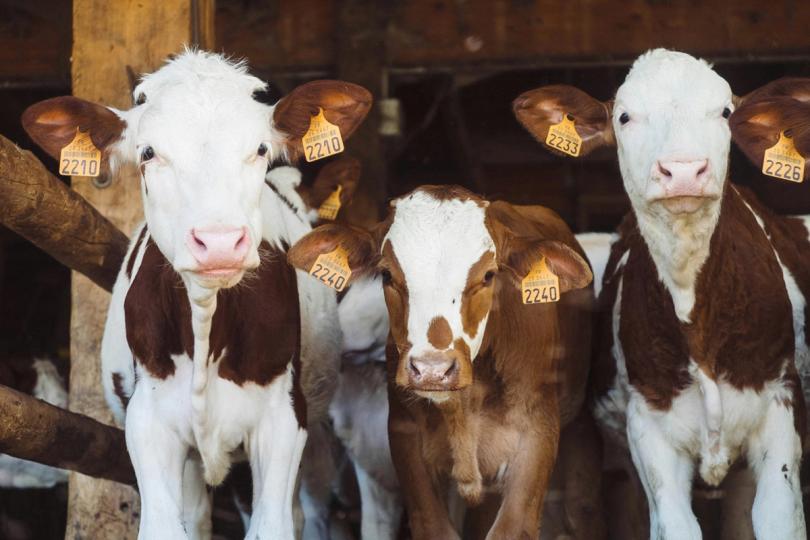
Brazilian farmers have tokenized 10 dairy cows on the B3 stock exchange, raising nearly $20,000 in credit backed by their livestock. This is a world first and serves as a test in a real-world scenario where farmers are facing increasingly stringent lending limits imposed by local banks on small agricultural businesses.
Imagine you have a cow that you want to use as collateral for a loan. But instead of physically taking the cow to the bank, you can put its information on a special kind of computer called a blockchain. This way, the bank can see that the cow exists and that you own it, without having to physically see the cow. This is called tokenization, and it's a new way for farmers to access credit.
Analysis
A New Financing Model for Farmers
The tokenization of dairy cows in Brazil is a groundbreaking development that has the potential to revolutionize the way farmers access credit. By putting real-world assets on the blockchain, farmers can create digital identities for their livestock, which can be used as collateral for loans. This approach has several benefits, including the ability to prevent double-pledging and the creation of a transparent and tamper-proof record of ownership.
The project, led by agtech firm Cowmed, uses AI-powered tracking collars to monitor the health and behavior of the cows in real-time. This data is then converted into an encrypted digital identity that is tied directly to the B3 credit agreement. This approach allows farmers to swap one dead cow for a live one, reducing the risk of default and making it easier for them to access credit.
The success of this project has the potential to unlock new credit opportunities for farmers and other businesses facing lending restrictions. According to McKinsey & Company, the market for tokenized assets is expected to grow to $4 trillion by 2030, and Standard Chartered has projected that it will reach $30 trillion by 2034. While the total value of tokenized assets currently stands at $25 billion, this development has the potential to accelerate growth in this market.
The Benefits of Tokenized Financing
Tokenized financing has several benefits for farmers and other businesses. It allows them to access credit more easily, reduces the risk of default, and creates a transparent and tamper-proof record of ownership. Additionally, it enables farmers to swap one dead cow for a live one, reducing the risk of default and making it easier for them to access credit.
The Road Ahead
The success of this project has the potential to unlock new credit opportunities for farmers and other businesses facing lending restrictions. However, it also raises several challenges and opportunities. For example, it will be important to ensure that the tokenization process is secure and transparent, and that the digital identities created for the cows are accurate and reliable. Additionally, it will be important to address any regulatory challenges that may arise from the use of tokenized financing.
Conclusion
The tokenization of dairy cows in Brazil is a groundbreaking development that has the potential to revolutionize the way farmers access credit. By putting real-world assets on the blockchain, farmers can create digital identities for their livestock, which can be used as collateral for loans. This approach has several benefits, including the ability to prevent double-pledging and the creation of a transparent and tamper-proof record of ownership. While there are several challenges and opportunities associated with this development, it has the potential to unlock new credit opportunities for farmers and other businesses facing lending restrictions.
Key points
- Brazilian farmers have tokenized 10 dairy cows on the B3 stock exchange, raising nearly $20,000 in credit backed by their livestock.
- The project uses AI-powered tracking collars to monitor the health and behavior of the cows in real-time.
- The digital identities created for the cows are tied directly to the B3 credit agreement and can be used as collateral for loans.
- The success of this project has the potential to unlock new credit opportunities for farmers and other businesses facing lending restrictions.
- The market for tokenized assets is expected to grow to $4 trillion by 2030, and Standard Chartered has projected that it will reach $30 trillion by 2034.
If this development plays out positively, it could unlock new credit opportunities for farmers and other businesses facing lending restrictions. It could also accelerate growth in the market for tokenized assets, which is expected to reach $4 trillion by 2030.
However, there are also several challenges and opportunities associated with this development. For example, it will be important to ensure that the tokenization process is secure and transparent, and that the digital identities created for the cows are accurate and reliable. Additionally, it will be important to address any regulatory challenges that may arise from the use of tokenized financing.