Caribbean bears brunt of £43bn climate-fuelled damage to developing islands
ODI Global research finds Caribbean nations suffered $53.2bn of climate-fuelled disaster damage from 2000-2024, more than 90% of the $57bn total across 39 developing island nations studied.
Intelligence analysis by Llama
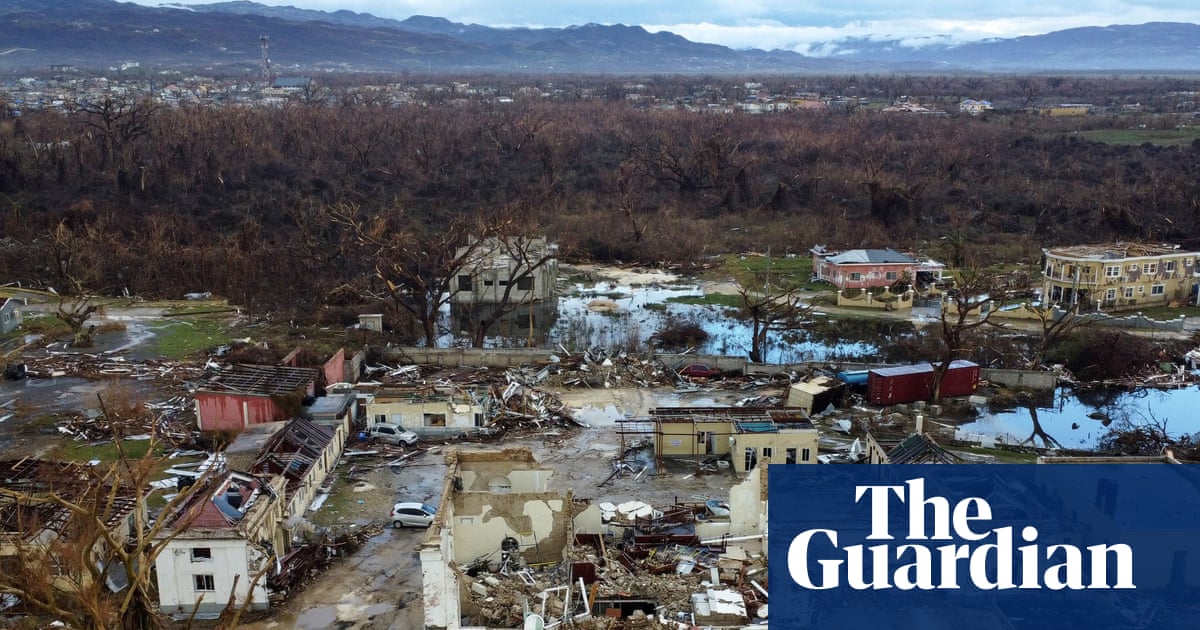
ODI Global research finds Caribbean nations absorbed over 90% of $57bn in climate-fuelled disaster damage across 39 developing island nations from 2000-2024. Hurricane Melissa's $12.2bn toll on Jamaica alone underscores the accelerating cost.
The Caribbean is a string of small islands that didn't cause much of the world's pollution, but they keep getting smashed by stronger storms. It's like a kid who keeps getting blamed for breaking a window they never touched. Scientists say most of the bad weather now is because the planet is getting hotter, and these islands are paying the price.
Analysis
The Caribbean's outsized burden in a warming world
The Caribbean is taking a disproportionate hit from climate-fuelled disasters even though the region's contribution to global emissions is minimal. ODI Global's research found that 39 developing island nations across the Caribbean, Pacific, Atlantic, Indian Ocean and South China Sea suffered $57bn in cumulative economic damage between 2000 and 2024, with the Caribbean alone accounting for more than 90% of that total at $53.2bn.
The concentration reflects both geography and infrastructure fragility. Small island developing states sit directly in the path of intensifying tropical systems, and their economies are tightly wired to tourism, agriculture and fisheries that climate disruption damages first. Emily Wilkinson, the report's author, noted that the methodology goes beyond simple attribution science by calculating the "fraction of attributable risk" - working out what share of reported damage can be tied to human-caused warming rather than natural variability.
Hurricane Melissa as a cautionary case study
Jamaica's experience over the past two years crystallises the stakes. Hurricane Melissa hit in October 2025 with 185mph winds, the strongest ever recorded in the country, and the report attributes $9.7bn of the $12.2bn in calculated damage and losses - roughly 80% - directly to the climate crisis. That figure is nearly half of Jamaica's entire economy and dwarfs the country's commitments to the UN's loss and damage fund.
The storm followed 2024's Hurricane Beryl, leaving thousands without homes, livelihoods, communication services, water or power. Jamaica's government responded in May by passing the National Reconstruction and Resilience Authority Act to streamline rebuilding and improve resilience, and Prime Minister Andrew Holness has pledged investment in cleaner, cheaper renewables such as solar. The episode illustrates how a single climate-amplified event can consume years of fiscal capacity in a small economy.
Adaptation finance flows in the wrong direction
Even as the legal case for reparations strengthens, the funding picture is deteriorating. ODI says international financing for climate mitigation and adaptation is moving in the wrong direction because some wealthy nations are cutting contributions. This widening gap between damages and available support is the central tension the report exposes.
Private-sector adaptation is advancing more quickly in some pockets. Marcelo Cataldo, chief executive of Digicel Group, told the Guardian that worsening climate shocks forced the Caribbean telecoms group to rethink how it powers its network, prompting a partnership with US-based Caban Energy to roll out solar-powered telecom sites across Jamaica and Barbados with plans to expand to 15 of its 25 markets. The systems are projected to generate 15,000MWh a year, displace 200,000 litres of diesel and cut 16,457 tonnes of CO2e annually, and Cataldo argues solar also keeps communications online longer when storms knock out grid power. Wilkinson cautioned that scaling such approaches requires overcoming high upfront costs, intermittency, storage and grid stability - barriers that ultimately demand the donor financing currently contracting.
Key points
- Caribbean nations absorbed more than 90% of $57bn in climate-fuelled disaster damage across 39 developing island nations from 2000 to 2024, with the region alone suffering $53.2bn.
- Hurricane Melissa caused $12.2bn in damage to Jamaica in October 2025, with 80% of that figure attributed by ODI directly to the climate crisis, equivalent to nearly half of Jamaica's economy.
- The ICJ's 2024 advisory opinion opens a path for vulnerable states to seek compensation from high emitters that fail to tackle fossil fuels.
- Digicel partnered with US-based Caban Energy to roll out solar-powered telecom sites across Jamaica and Barbados, with plans to expand to 15 of its 25 markets.
- ODI warns international climate adaptation financing is moving in the wrong direction as wealthy nations reduce contributions.
The ICJ's 2024 advisory opinion could eventually open legal channels for vulnerable nations to claim compensation from high-emitting states, sharpening accountability. Jamaica's National Reconstruction and Resilience Authority Act and Digicel's solar partnership with Caban Energy show adaptation is being pursued alongside litigation, with Caribbean companies demonstrating that renewable-powered infrastructure can be both cleaner and more storm-resilient.
ODI warns that international financing for climate adaptation is moving in the wrong direction as wealthy nations cut contributions, even as damages accelerate. Hurricane Melissa's $12.2bn toll on Jamaica alone dwarfs existing commitments to the UN's loss and damage fund, and the upfront costs of solar and other resilience measures remain a barrier for cash-strapped island governments.