China, India and Pakistan’s dangerous nuclear triangle just became more complicated
A new defensive pact between Pakistan, Turkey, and Saudi Arabia has added complexity to the already volatile nuclear triangle involving China, India, and Pakistan.
Intelligence analysis by Gemini 2.5 Flash
The recent agreement, signed in Mecca, commits Pakistan, Turkey, and Saudi Arabia to mutual defense, which analysts believe will alter Pakistan's strategic standing. This development introduces significant uncertainty into India's security planning, exacerbating its existing border disputes with both China and Pakistan.
Imagine three big kids, China, India, and Pakistan, who sometimes argue and have powerful toys (nuclear weapons). Now, one of them, Pakistan, has made a new friendship club with two other strong kids, Turkey and Saudi Arabia, promising to help each other if one gets into trouble. This makes the arguments even trickier for India, who now has to think about more friends getting involved if there's a disagreement, making the whole playground a bit more complicated and tense.
Analysis
Mecca Pact
Last week, Pakistan, Turkey, and Saudi Arabia formalized a defensive alliance in Mecca, agreeing to consider an armed attack on one as an attack on all. The signatory governments have publicly characterized this pact as purely defensive, asserting it is not aimed at any specific state. This agreement institutionalizes a trilateral framework that strategically combines Saudi capital, Turkish defense technology, and Pakistan's crucial strategic geography, according to analyst Brahma Chellaney.
This new alliance introduces a significant variable into the already volatile geopolitical landscape of South Asia. While the immediate invocation of the pact might be uncertain, its very existence is expected to reshape regional power dynamics. The agreement's long-term implications for regional stability and the balance of power among nuclear states are a subject of intense scrutiny among strategic analysts.
India's Strategic Calculus
The formation of this new defensive alliance presents a considerable strategic headache for India. New Delhi already grapples with two major security challenges stemming from its protracted border disputes: one with Pakistan to its west and another with China to its north. The pact's existence could complicate India's strategic calculus by injecting additional uncertainty into its crisis planning and deterrence strategies.
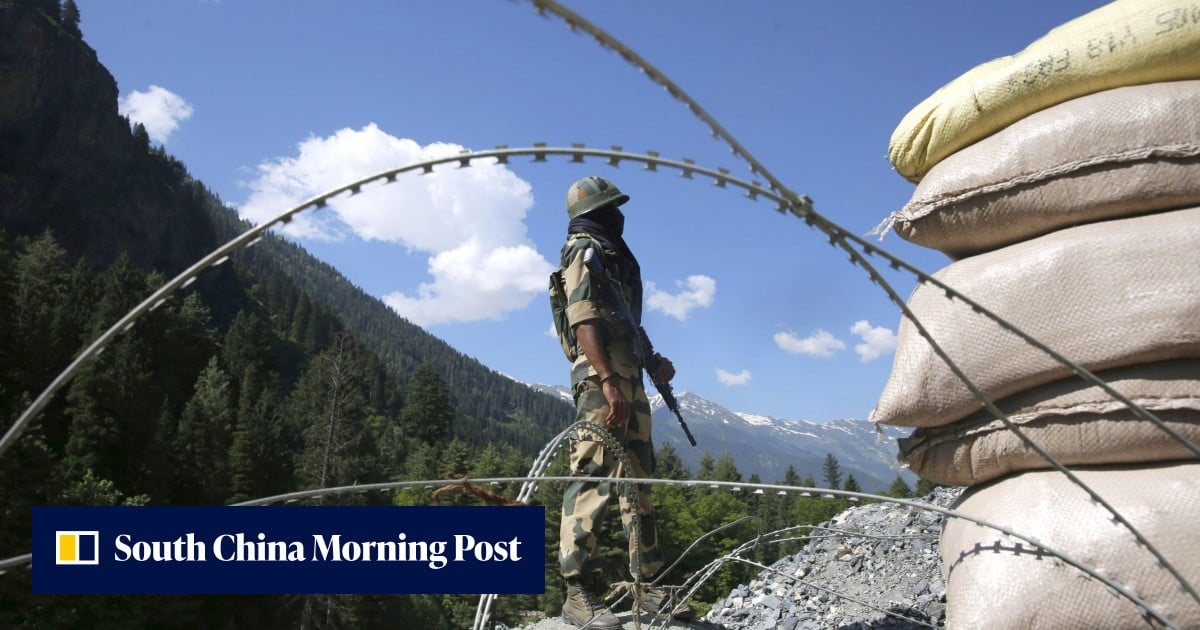
This increased uncertainty is particularly problematic given the history of intermittent deadly flare-ups in the region, such as the 2020 Galwan clashes between Indian and Chinese troops and a recent India-Pakistan conflict. The new alliance forces India to re-evaluate its security posture and potential responses in a more complex and unpredictable environment. The potential for a multi-front or multi-actor conflict scenario becomes a more pressing concern for Indian strategists.
Brahma Chellaney
Strategic analyst Brahma Chellaney, based in New Delhi, has provided a critical assessment of the Mecca pact's implications. He highlights that the agreement's significance for India lies less in the likelihood of its direct invocation and more in its capacity to fundamentally alter Pakistan's strategic position. Chellaney emphasizes the institutionalization of a framework that leverages distinct strengths from each signatory nation.
His analysis underscores that regardless of whether the pact's provisions are ever directly invoked, its mere presence introduces a new layer of complexity. This complexity directly impacts India's strategic planning, particularly concerning crisis management and deterrence against its nuclear-armed neighbors. Chellaney's perspective suggests that the pact's indirect effects on regional stability and India's security calculations are profound and far-reaching.
Key points
- Pakistan, Turkey, and Saudi Arabia signed a defensive pact in Mecca, agreeing to mutual defense.
- The alliance combines Saudi capital, Turkish defense technology, and Pakistan's strategic geography.
- Analysts believe the pact will alter Pakistan's strategic position and complicate India's security calculus.
- India faces increased uncertainty in its crisis planning due to existing border disputes with China and Pakistan.
- The agreement adds another variable to a region marked by intermittent deadly conflicts, such as the 2020 Galwan clashes.
The new defensive pact significantly complicates the already volatile nuclear triangle, increasing uncertainty for India's strategic planning and potentially escalating regional tensions. This could lead to more frequent or severe flare-ups, given the history of conflicts between the involved nuclear powers.