China’s Middle East policy at a crossroads 6 months into US-Israeli war on Iran
Six months into the US-Israeli war on Iran, Gulf states are re-evaluating their defense strategies, seeking new partners like Pakistan and Turkey, which challenges China's 'involvement without commitment' approach in the region.
Intelligence analysis by Gemini 2.5 Flash
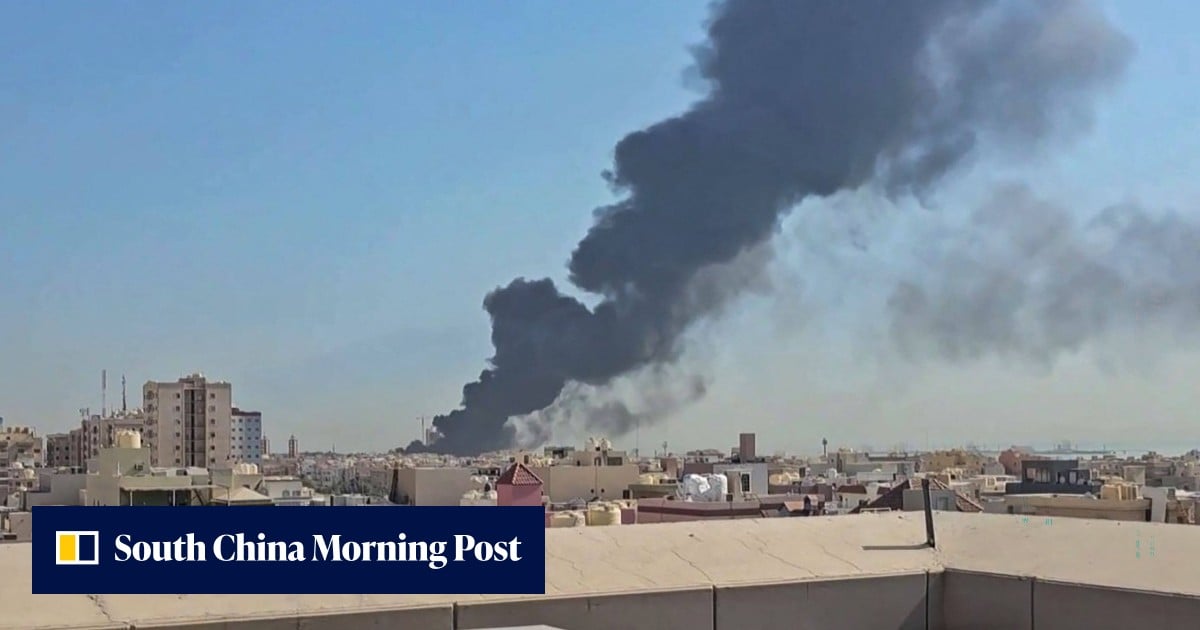
The ongoing conflict in Iran has prompted Gulf nations to pursue self-reliant defense networks and diversify their security alliances, recognizing that neither the United States nor China offers complete protection. This strategic pivot puts Beijing's cautious Middle East policy, characterized by engagement without deep military commitments, at a critical juncture as regional dynamics…
Imagine a playground where two groups are arguing, making other kids nervous. These nervous kids used to rely on two big friends, like the US and China, for protection. But now they feel those friends aren't fully protecting them, so they're making new alliances. China, who likes to be friends with everyone but avoids fights, now has to decide if its 'friendly but not committed' approach is still working.
Analysis
The Middle East is undergoing a significant strategic realignment, driven by the protracted US-Israeli war on Iran, now in its sixth month. This conflict has exposed the vulnerabilities of Gulf states, compelling them to reconsider their traditional security reliance on external powers. The article highlights a growing sentiment among these nations that neither the United States nor China can fully guarantee their protection against regional aggressors, particularly Iran. This realization is pushing them towards a more diversified and self-reliant defense posture, exemplified by recent military pacts.
Gulf States' Pivot
The strategic shift among Gulf states is evident in their proactive pursuit of new security alliances. Kuwait, for instance, has recently formalized a military cooperation agreement with Pakistan, focusing on training and enhancing its defensive capabilities. This move signifies a broader trend towards strengthening indigenous defense mechanisms and forging partnerships beyond traditional Western allies. Similarly, Saudi Arabia has entered a significant three-way pact with Turkey and Pakistan, which notably includes a NATO-style collective defense clause. This provision, treating an attack on one member as an attack on all, represents a substantial departure from previous bilateral security arrangements and underscores the urgency with which these nations are seeking robust, multilateral defensive frameworks. These developments suggest a regional rebalancing of power and a diversification of security providers.
Iran's Warning
A critical catalyst for this strategic re-evaluation is the explicit threat emanating from Iran. The Iranian army recently issued a stark warning, indicating that any potential future conflict with the United States could rapidly escalate and engulf the entire region. Crucially, this warning specifically targeted vital energy and communications infrastructure, which are the economic lifelines of many Gulf states. Such direct threats underscore the immediate and tangible risks faced by these nations, making their quest for enhanced security not merely a geopolitical maneuver but an imperative for national survival and economic stability. The specificity of Iran's warning has likely accelerated the Gulf states' efforts to fortify their defenses and seek reliable partners.
China's Crossroads
This evolving security landscape places China's long-standing "involvement without commitment" strategy in the Middle East at a significant crossroads. Beijing has historically sought to cultivate strong economic and diplomatic ties with regional players, including both Gulf states and Iran, without entangling itself in complex military alliances or security guarantees. This approach has allowed China to maintain neutrality and pursue its economic interests unhindered. However, as Gulf states increasingly demand concrete security assurances and forge new defense pacts, China's reluctance to commit deeply could diminish its influence and perceived reliability as a partner. The challenge for Beijing now is to navigate this shifting terrain, potentially re-evaluating whether its current strategy remains viable in a region where security concerns are paramount and partners are increasingly expected to offer tangible protection.
Key points
- Gulf states are re-evaluating their defense strategies six months into the US-Israeli war on Iran.
- They perceive neither the US nor China as fully capable of protecting them from Iranian threats.
- Kuwait signed a military cooperation agreement with Pakistan for training and defense capacity.
- Saudi Arabia formed a three-way pact with Turkey and Pakistan, including a collective defense clause.
- These shifts challenge China's "involvement without commitment" policy in the Middle East.
If China can adapt its strategy, it might find new ways to engage with Gulf states, perhaps through economic incentives or diplomatic mediation, strengthening its regional influence without direct military entanglement. This could lead to a more stable, multi-polar security architecture in the Middle East, benefiting all parties.
China's continued reluctance to offer robust security commitments could alienate Gulf states, pushing them further into the arms of other partners and diminishing Beijing's long-term strategic and economic interests in the vital energy-rich region. This could lead to a reduction in China's influence and a more complex geopolitical landscape.
Market signals
- OIL The Iranian army's warning of potential attacks on energy infrastructure in the region could create supply route risks, pushing oil prices higher.
AI-generated analysis of potential market relevance. Not financial advice.