Don’t leave Hong Kong parents to their own devices on child social media use
Hong Kong's children spend excessive time on social media, leading to family disputes. The city lags in regulating youth screen time, unlike Australia, which banned social media for under-16s.
Intelligence analysis by Gemini 2.5 Flash Lite
The article argues that Hong Kong is failing to adequately protect children from the harms of social media, leaving parents to manage screen time addiction alone. It highlights alarming statistics on youth screen usage and family conflicts, contrasting Hong Kong's inaction with Australia's ban on social media for minors.
Imagine video games that are so fun they're hard to stop playing. Social media apps are like that, but they can be even more addictive for kids. Hong Kong's government isn't making rules to help parents limit this screen time, unlike Australia, which banned it for young teens.
Analysis
Hong Kong's Screen Time Crisis
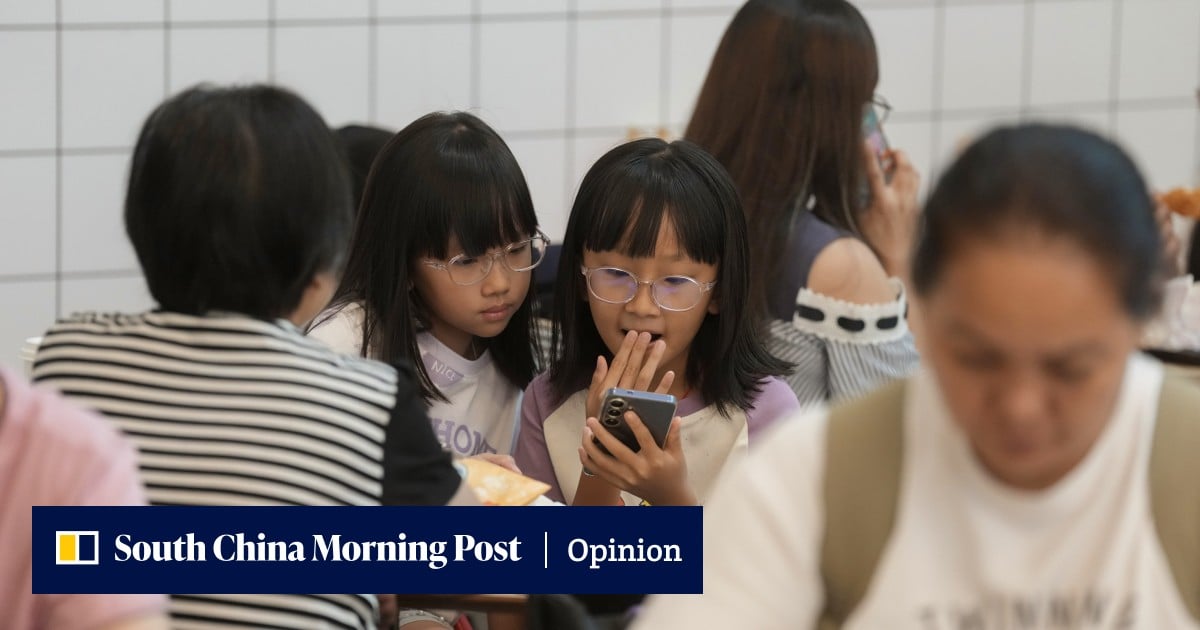
Hong Kong, a city renowned for its high-achieving youth, is also grappling with a significant issue of early social media adoption among its children. Statistics reveal that nearly 35 per cent of kindergarten pupils engage in at least one hour of recreational screen time daily. This trend escalates dramatically by junior secondary school, where 60 per cent of students exceed the internationally recommended two-hour daily limit. The pervasive use of screens has become a major source of domestic tension, reportedly contributing to 85.5 per cent of family disputes. This situation raises critical questions about whether the government is sufficiently addressing the addictive nature of social media platforms or if parents are indeed being left to navigate these challenges without adequate support.
The article points to a concerning lack of proactive government intervention in Hong Kong regarding youth social media use. While platforms like Meta are implementing superficial measures, such as parental alerts for searches related to suicide and self-harm on Instagram, the author expresses skepticism about the platforms' genuine concern for child welfare, suggesting these actions are more likely driven by profit motives and a response to mounting regulatory pressure. This passive approach contrasts sharply with more decisive actions taken elsewhere, leaving Hong Kong's families to bear the brunt of the problem.
Australia's Social Media Ban
In a significant move towards safeguarding young users, Australia became the first country to implement a ban on social media for individuals under the age of 16. This policy acknowledges the heightened susceptibility of youth to the systemic features of social media, including algorithms designed for user engagement and the proliferation of inappropriate content. The ban, while perhaps not a complete solution on its own, represents a crucial step in holding social media companies accountable for prioritizing profit over the mental well-being of children.
The Australian government's initiative underscores a global trend towards stricter regulation of digital platforms concerning minors. Prime Minister Anthony Albanese's administration has taken a firm stance, signaling a commitment to protecting young citizens from the potential harms associated with excessive and unsupervised social media consumption. This proactive legislative approach serves as a stark contrast to the apparent inertia in Hong Kong, highlighting a divergence in governmental priorities regarding child protection in the digital age.
Platform Accountability
The article questions the motivations behind social media platforms' recent actions, such as Meta's introduction of parental alerts for sensitive searches on Instagram. The author suggests that these measures are not born out of altruism but rather a strategic response to increasing scrutiny and potential regulatory action. The core issue remains the platforms' business models, which are inherently designed to maximize user engagement, often at the expense of mental health, particularly for vulnerable young users.
Social media companies profit from keeping users, especially children, hooked on their platforms. Features like addictive algorithms and the lack of robust content moderation create an environment where young people are exposed to risks ranging from addiction to harmful content related to self-harm and suicide. The article implies that without stronger governmental oversight and regulation, these platforms will continue to prioritize their financial interests over the well-being of their youngest users, leaving parents in Hong Kong and elsewhere to manage the fallout.
Key points
- A significant percentage of Hong Kong's children, including kindergarteners, exceed recommended daily screen time limits.
- Excessive screen time is a major cause of family disputes in Hong Kong.
- Hong Kong lags behind other regions like Australia in regulating youth social media use.
- Australia has banned social media for individuals under 16 to protect minors from platform harms.
- The article questions the sincerity of social media platforms' efforts to protect children, suggesting profit motives are primary.
If Hong Kong implements stricter regulations on social media use for minors, it could lead to improved mental health outcomes for children and reduced family conflict. Such measures could also encourage social media platforms to develop more child-friendly features and prioritize user well-being over engagement metrics.
Without government intervention, Hong Kong's children may continue to face escalating rates of screen addiction and related mental health issues. Parents will remain burdened with managing these challenges alone, potentially leading to further family disputes and long-term negative consequences for youth development.