Dow soars 1,000 points on strong corporate earnings and hopes of Iran deal
The U.S. stock market approached record highs on Tuesday after Treasury Secretary Scott Bessent said a deal to reopen the Strait of Hormuz could be reached within days. Investors were also cheered by strong corporate profits, with companies ranging from equipment maker Ca…
Intelligence analysis by Llama
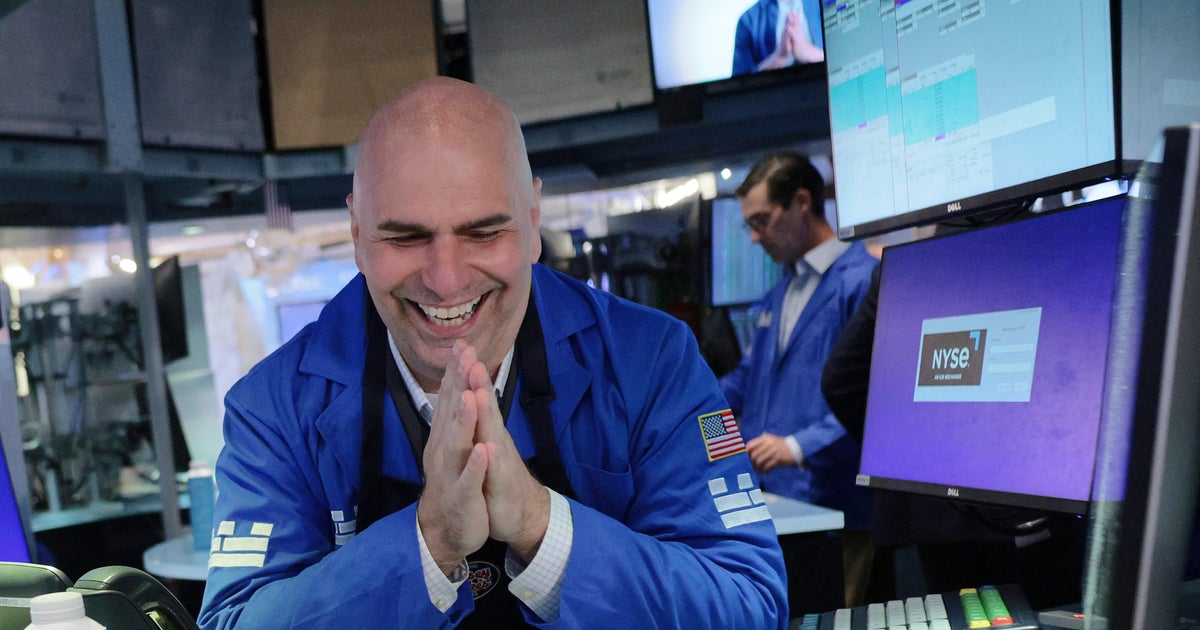
The U.S. stock market surged on Tuesday after Treasury Secretary Scott Bessent said a deal to reopen the Strait of Hormuz could be reached within days, and strong corporate profits from companies like Caterpillar and Palantir Technologies.
Imagine you're at a big store where people buy and sell things. The store is doing really well because many of the companies that sell things there are making a lot of money. This makes people who own the store (investors) happy, and they want to buy more of the store. It's like when you do well in school and your parents are proud of you, so they give you more allowance. The store's value is going up because of the good news, and people are hoping that the conflict in Iran will soon be over, which could make the store's value go up even more.
Analysis
A $60B Vote of Confidence
The U.S. stock market's surge on Tuesday is a significant development, driven by strong corporate profits and hopes of a deal to reopen the Strait of Hormuz. Treasury Secretary Scott Bessent's statement that a deal could be reached within days has given investors hope that the conflict in Iran will soon be resolved, which could lower global energy prices and reduce inflation. The S&P 500 climbed 142 points, or 1.9%, to 7,731 in afternoon trading, putting it on track to surpass its previous high set on June 2. The Dow Jones Industrial Average jumped 1,007 points, or 1.9%, while the tech-heavy Nasdaq Composite gained 2.6%. Investors are hopeful that an end to the Iran war could lower global energy prices and reduce inflation. New government figures, the so-called Job Openings and Labor Turnover Survey (JOLTS), also showed that hiring in the U.S. remains solid, with layoffs at modest levels. The equity rally is being driven by blowout earnings from the day's two most important reports (CAT and PLTR), positive remarks from Bessent on CNBC about the potential for a deal to reopen Hormuz arriving within the next 24-48 hours, and a JOLTS report that wasn't as hot as feared. To be sure, investors eager for peace in the Middle East have been disappointed before, with President Trump and other U.S. officials previously signaling that a breakthrough was at hand only for the conflict to resume. The S&P 500 and Dow have each risen 13% this year, while the Nasdaq is up 14%. Stocks have rebounded after sliding in the weeks following the outbreak of war in Iran in late February and despite some concerns about an AI-driven stock bubble. Strongest growth in years Stocks are rising in large part because profits are soaring for U.S. companies, a key factor for investors, as equity prices tend to follow corporate earnings over the long term. Coming into this week, companies in the S&P 500 index were on track to deliver growth of nearly 50% in earnings per share for the spring from a year earlier, according to FactSet. That would be the biggest such jump since the spring of 2021, when the economy was emerging from the COVID-19 pandemic. Stock prices today look more in line with corporate profits, said Phil Segner, a co-portfolio manager at the Leuthold Group. Shares of Palantir Technologies jumped 29.3% after CEO Alex Karp said the defense tech company's revenue leaped 93% in what he called an 'otherworldly' quarter. Besides reporting a stronger profit for the spring than analysts expected, the company also raised its revenue forecast for the full year of 2026. Caterpillar was another strong stock performer on Tuesday, with its shares climbing 6.5% after the heavy-equipment maker reported stronger-than-forecast profit and revenue. It was the first time Caterpillar made more than $20 billion in sales and revenue in a quarter, and CEO Joe Creed said it's seeing strong order rates and a growing backlog across its main businesses. Lower oil prices Stocks were helped by a drop in oil prices on Tuesday. Brent crude, the international benchmark, sank 4.9% to $79.64 per barrel as hope once again took over from fear in the oil market. It had swung sharply between $72 and $102 through July amid uncertainty about when the war with Iran would allow oil tankers to transit the Persian Gulf freely again to deliver crude around the world. Bessent told CNBC on Tuesday that a U.S. deal with Iran could soon be within reach. 'I think there is a chance we may have a deal today or tomorrow to open the Strait and move towards a more normalized position in this conflict,' Bessent told the network.
Key points
- The U.S. stock market surged on Tuesday after Treasury Secretary Scott Bessent said a deal to reopen the Strait of Hormuz could be reached within days.
- Strong corporate profits from companies like Caterpillar and Palantir Technologies drove the stock market higher.
- The S&P 500 climbed 142 points, or 1.9%, to 7,731 in afternoon trading.
- The Dow Jones Industrial Average jumped 1,007 points, or 1.9%.
- The tech-heavy Nasdaq Composite gained 2.6%.
If the deal to reopen the Strait of Hormuz is reached, it could lower global energy prices and reduce inflation, which would be good for the economy and the stock market. Additionally, strong corporate profits from companies like Caterpillar and Palantir Technologies could continue to drive the stock market higher.
However, investors have been disappointed before when it comes to a breakthrough in the Middle East, and the conflict in Iran could resume. Additionally, concerns about an AI-driven stock bubble could continue to weigh on the market.