Economist Lan Xiaohuan on the balancing act needed to boost China’s consumption
Economist Lan Xiaohuan discusses the evolving global and domestic environments impacting China, emphasizing the need for a new economic framework to boost consumption.
Intelligence analysis by Gemini 2.5 Flash
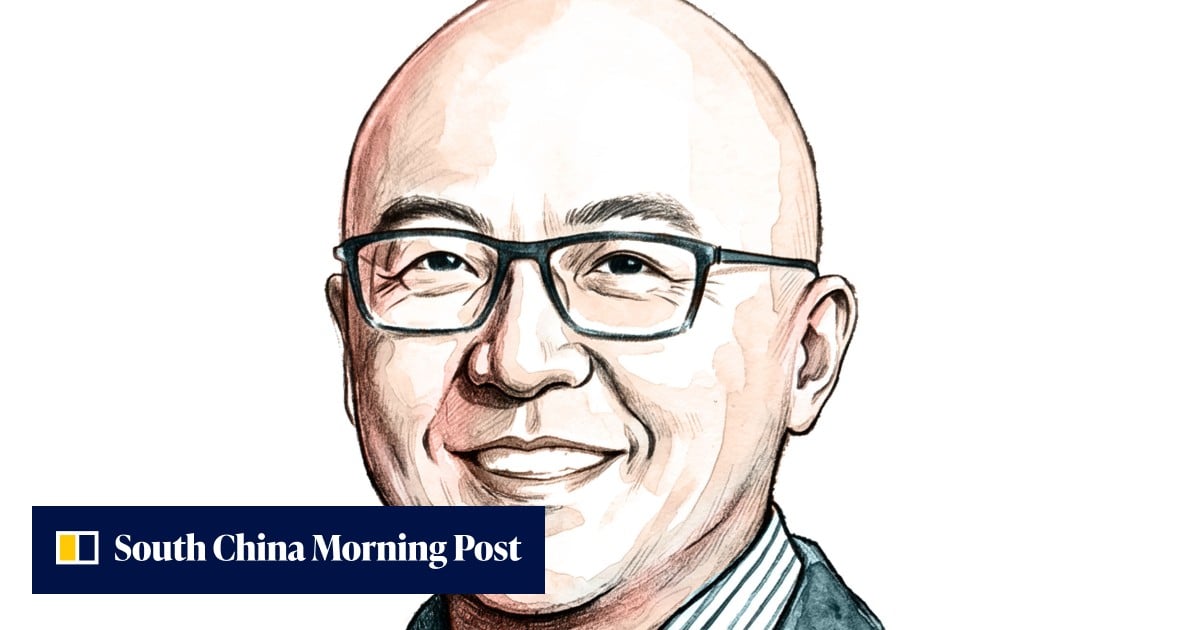
In an exclusive interview, bestselling author and economist Lan Xiaohuan highlights critical shifts in China's economy, including the real estate decline and the rise of manufacturing, alongside external pressures like geopolitical events. He advocates for a stronger social safety net and discusses the role of public data infrastructure in the AI race with the United States.
Imagine China's economy is like a big family's piggy bank. An expert named Lan Xiaohuan says the family needs to change how they save and spend because things outside, like other families' arguments, and inside, like their old house needing repairs, have changed a lot. He thinks they need to make sure everyone feels safe and secure so they'll spend more money on things they need, which helps the whole family's shop do better.
Analysis
Lan Xiaohuan's New Framework
Economist Lan Xiaohuan, author of the bestselling 'How China Works,' asserts that the current economic landscape necessitates an entirely new analytical framework, rather than merely an additional chapter to his previous work. This perspective underscores the profound nature of the shifts China is experiencing, both internally and externally, suggesting that incremental adjustments are insufficient to address the complexities at hand.
His proposed new book would likely center on China's industry and technology, reflecting the significant domestic transition away from real estate and towards these sectors. This indicates a recognition of the structural changes within China's economy, where traditional growth drivers are waning and new engines of development are emerging as central to its future trajectory.
Social Safety Net
The article highlights Lan Xiaohuan's advocacy for a stronger social safety net as a critical component for boosting China's consumption. A robust social safety net, encompassing areas like healthcare, education, and pensions, can alleviate household anxieties about future uncertainties.
By reducing the need for precautionary savings, such a system empowers citizens to spend more freely, thereby stimulating domestic demand. This policy recommendation directly addresses a key challenge for China: rebalancing its economy from an export and investment-led model to one driven by internal consumption, which is essential for sustainable long-term growth.
Artificial Intelligence Race
Lan Xiaohuan also delves into the artificial intelligence race, particularly in the context of competition with the United States. He posits that public data infrastructure plays a pivotal role in shaping this technological rivalry, suggesting that a nation's ability to collect, manage, and utilize vast datasets is fundamental to its AI development capabilities.
This emphasis on data infrastructure underscores the strategic importance of digital governance and national data policies in the global tech landscape. The economist's view implies that success in AI is not solely about algorithms or hardware, but also about the foundational data ecosystems that fuel innovation and application.
Key points
- Economist Lan Xiaohuan believes China needs an entirely new economic framework, not just an updated one, to address current challenges.
- Significant domestic shifts include the decline of the real estate market and the rapid rise of manufacturing and technology sectors.
- External factors like the pandemic, Russia-Ukraine war, Iran energy shocks, and US political dynamics are seen as the most consequential changes.
- Lan Xiaohuan advocates for a stronger social safety net to boost domestic consumption by reducing household anxieties.
- Public data infrastructure is highlighted as a key factor in the artificial intelligence race between China and the United States.
A stronger social safety net could significantly boost domestic consumption by reducing household precautionary savings, leading to a more stable and internally driven economic growth model for China. Focusing on manufacturing and technology could also foster innovation and create new avenues for economic prosperity.
The decline of the real estate market and ongoing geopolitical tensions, including energy shocks and shifting US dynamics, pose substantial risks to China's economic stability. These external and internal pressures could hinder efforts to rebalance the economy and sustain growth.