Fifa's World Cup plan never stacked up - here are 4 reasons why
Fifa's plan to part-privatise the World Cup has been met with resistance. Documents obtained by the BBC reveal four key reasons why the plan may have fallen apart.
Intelligence analysis by Llama
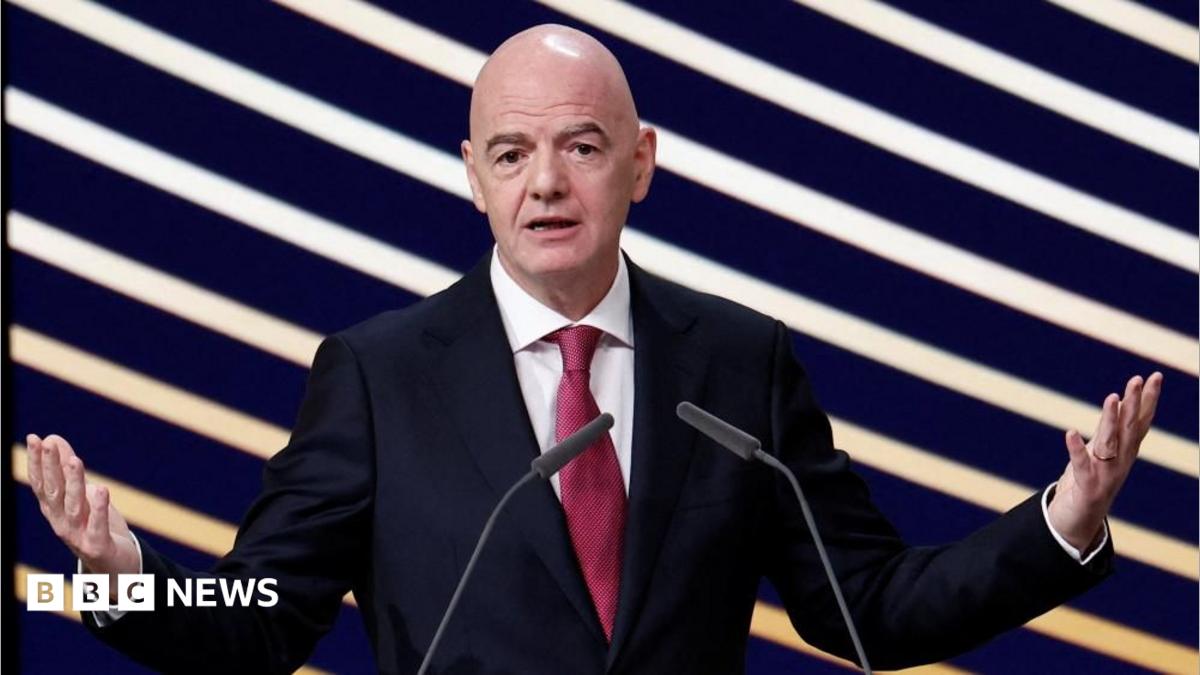
Fifa's plan to part-privatise the World Cup has been met with resistance due to concerns over ticket prices, revenue distribution, and the involvement of private investors. The plan, which would have seen a privately backed company take control of the World Cup, has been criticized for its potential to increase ticket prices and reduce the amount of money available to football associa…
Fifa's plan to part-privatise the World Cup has been met with resistance due to concerns over ticket prices and revenue distribution. The plan would have seen a privately backed company take control of the World Cup, which could have led to increased ticket prices and reduced the amount of money available to football associations.
Analysis
The Claim that Football is 'Under-Monetised'
Fifa's central argument for part-privatising the World Cup was that football is 'under-monetised' compared to other sports leagues. However, this claim is suspect, as it relies on a comparison of annual revenue per fan, which is not a fair measure of a sport's financial health. The World Cup is a four-year event, and football is a decentralised sport with revenues going to individual leagues. Fifa's argument is essentially that it wants to keep more of the overall football pie.
Extraordinary Ticket Prices
The document revealed that the new partly privatised entity, Fifa Forward Enterprise (FFE), would have become the 'organiser and operator of competitions' and would be responsible for ticketing, broadcast, licensing, and sponsorship. This would have been a clear transfer of responsibility and accountability from Fifa itself. The slides suggested that the FFE structure would 'expand and optimise media rights monetisation' and 'maximise the value of Fifa IP, which has been undermonetised, historically'. This would have underpinned the continuation of the extraordinary ticket prices charged in 2026.
The Kushner Connection
The private timetable shared in the document showed that investors would be given access to the materials starting this month, with terms to be confirmed by September and bids and transfer of funds by the end of October. The lead investors were publicly named as Thrive Eternal, run by Joshua Kushner, the brother of US President Donald Trump's son-in-law Jared. Thrive was almost entirely concerned with AI investments, with OpenAI taking a stake in one of its arms. Thrive only began its sports investment arm in April, with an investment in the San Francisco Giants baseball team, which was the pioneer in sport-based dynamic pricing of tickets.
Key points
- Fifa's plan to part-privatise the World Cup has been met with resistance due to concerns over ticket prices and revenue distribution.
- The plan would have seen a privately backed company take control of the World Cup, which could have led to increased ticket prices and reduced the amount of money available to football associations.
- The involvement of private investors, including Joshua Kushner's Thrive Eternal, has raised concerns over the potential for conflicts of interest and the prioritisation of profits over the sport itself.
If the plan to part-privatise the World Cup is scrapped, it could lead to a more equitable distribution of revenue among football associations, benefiting the sport as a whole.
If the plan to part-privatise the World Cup is implemented, it could lead to increased ticket prices and reduced revenue for football associations, potentially harming the sport.