FM, Finance Minister discuss boosting economic diplomacy
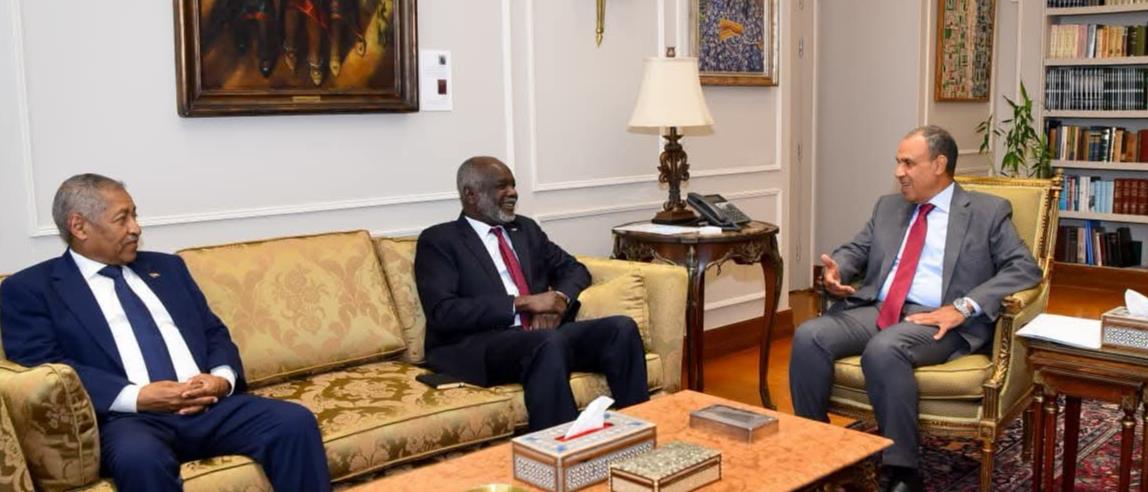
Egypt's Foreign Affairs Minister Badr Abdelatty and Finance Minister Ahmed Kouchouk met to enhance economic diplomacy, aiming to attract investment and boost exports through diplomatic missions abroad.
Intelligence analysis by Gemini 2.5 Flash

The meeting between Egypt's top diplomats and finance officials focused on aligning state institutions to support economic and financial policies. They discussed leveraging Egyptian embassies to promote the economy, highlight investment opportunities, and strengthen ties with international financial institutions and business communities.
Imagine Egypt wants to sell more of its cool stuff, like yummy fruits or handmade crafts, to other countries, and also wants big companies to build factories there. So, the Foreign Affairs Minister and the Finance Minister had a meeting with all the Egyptian ambassadors who work in different countries. They told them, "Hey, your job isn't just to talk about politics; it's also to be like super salespeople for Egypt!" They want the ambassadors to tell everyone how great Egypt's economy is, find people who want to invest money, and help Egyptian businesses sell their products all over the world.
Analysis
The recent discussions between Egypt's Minister of Foreign Affairs, Badr Abdelatty, and Finance Minister, Ahmed Kouchouk, underscore a concerted effort by the Egyptian government to bolster its economic standing on the global stage. This strategic alignment between foreign policy and financial objectives highlights a proactive approach to addressing economic challenges and fostering growth. The emphasis on coordination and integration among state institutions signals a more unified front in promoting Egypt's economic interests abroad, moving beyond traditional diplomatic roles to embrace a more commercially focused agenda.
Ahmed Kouchouk
Finance Minister Ahmed Kouchouk's active participation in these discussions, including a separate meeting with Egyptian ambassadors, indicates the critical role of financial policy in Egypt's economic diplomacy. His engagement with diplomatic missions abroad is designed to ensure that ambassadors are well-versed in the state's economic and financial priorities, enabling them to effectively advocate for Egypt's reform efforts and investment opportunities. This direct communication channel aims to bridge the gap between domestic economic strategies and their international promotion, ensuring a consistent and compelling message to potential investors and trade partners. The minister's focus on highlighting economic reform efforts suggests an intent to reassure international markets and investors about Egypt's commitment to a stable and growth-oriented financial environment. By presenting a clear picture of the nation's economic trajectory, Kouchouk aims to build confidence and attract the necessary capital to fuel development projects and expand trade relations. This proactive engagement is vital for a country seeking to diversify its economy and reduce reliance on traditional revenue streams.
Badr Abdelatty
Minister of Foreign Affairs Badr Abdelatty's involvement signifies the elevation of economic considerations within Egypt's foreign policy framework. His role in enhancing coordination with the Finance Ministry and other state institutions demonstrates a recognition that diplomatic missions are key instruments for achieving economic objectives. By integrating economic and financial efforts into the broader diplomatic agenda, Egypt aims to maximize the impact of its international engagements. Abdelatty's leadership in this initiative reflects a modern approach to diplomacy, where economic prosperity is seen as a cornerstone of national security and international influence. The discussions on supporting Egypt's economic and financial efforts through diplomatic missions abroad illustrate a strategic pivot towards leveraging diplomatic networks for tangible economic gains. This includes not only attracting investment but also facilitating trade and opening new markets for Egyptian products, thereby strengthening the national economy.
Egyptian Diplomatic Missions
The role of Egyptian diplomatic missions abroad is being significantly re-evaluated and strengthened as a primary conduit for economic diplomacy. These missions are tasked with actively promoting the Egyptian economy, showcasing investment and trade opportunities, and fostering stronger engagement with international financial institutions and business communities in their host countries. This expanded mandate transforms embassies from purely political representations into active economic development hubs. The efforts to empower these missions are designed to create a robust network capable of identifying and capitalizing on global economic opportunities. By equipping ambassadors with the necessary tools and information, Egypt aims to enhance its ability to attract foreign direct investment, increase its export volumes, and forge new trade partnerships. This strategic deployment of diplomatic resources is crucial for achieving the state's economic priorities and ensuring sustainable growth in a competitive global landscape.
Key points
- Egypt's Foreign Affairs Minister Badr Abdelatty and Finance Minister Ahmed Kouchouk met to enhance economic diplomacy.
- The discussions focused on improving coordination among state institutions to support Egypt's economic and financial efforts.
- Egyptian diplomatic missions abroad are tasked with promoting the economy, highlighting investment opportunities, and strengthening international business ties.
- The initiative aims to attract foreign investment, increase exports, and open new markets for Egyptian products.
- Finance Minister Kouchouk also met with ambassadors to review economic policy priorities and reform efforts.
If these efforts succeed, Egypt could see a significant increase in foreign investment, leading to job creation and economic growth. Enhanced economic diplomacy could also open new markets for Egyptian products, boosting exports and strengthening the nation's financial resilience.
Should the coordination between ministries and diplomatic missions prove ineffective, or if global economic conditions remain challenging, Egypt's efforts to attract investment and boost exports may fall short. This could hinder economic growth and limit the country's ability to achieve its financial objectives.