Foreign foothold in region must end
Iran's deputy foreign minister, Kazem Gharibabadi, condemned a U.S. attack on Larak island as military aggression, vowing retaliation and demanding an end to foreign military presence in the region.
Intelligence analysis by Gemini 2.5 Flash
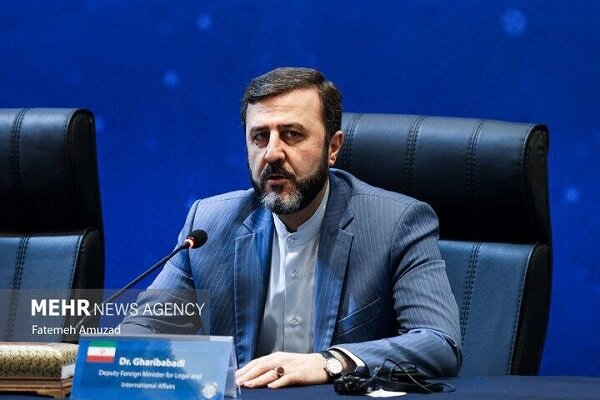
Following a U.S. attack on Larak island that reportedly caused casualties, Iran's deputy foreign minister for legal and international affairs, Kazem Gharibabadi, labeled the incident as military aggression. He asserted that Iran would respond decisively to any threats to its territorial integrity and called for all foreign forces to withdraw from the region, emphasizing the need for t…
Imagine two big kids, Iran and the U.S., are playing in a sandbox, which is like the Middle East. One day, the U.S. kid throws sand at Iran's special sandcastle, Larak island, hurting some of Iran's toy soldiers. Iran's grown-up, Mr. Gharibabadi, got very angry and said that was a mean attack. He promised Iran would throw sand back, and they did, hitting the U.S. kid's forts in other parts of the sandbox. Mr. Gharibabadi also said all the other big kids who aren't from this sandbox should leave, so everyone can play peacefully.
Analysis
The recent statements by Iran's deputy foreign minister, Kazem Gharibabadi, underscore a significant hardening of Iran's stance against foreign military presence in the Middle East, particularly following direct military engagements with the United States. His declaration that the U.S. attack on Larak island constituted "military aggression" and would receive an "appropriate response" signals a clear intent for retaliation and a rejection of perceived infringements on Iranian sovereignty. This rhetoric is consistent with Iran's long-standing policy of asserting regional dominance and pushing back against external military influence, framing such presence as a source of instability rather than security.
Kazem Gharibabadi
Kazem Gharibabadi, serving as Iran's deputy foreign minister for legal and international affairs, articulated a firm and uncompromising position regarding the recent military confrontation. His comments highlight Iran's legal interpretation of the U.S. actions as a direct violation of its territorial integrity, necessitating a robust response. Gharibabadi's emphasis on the armed forces' proven capability to respond decisively at any level serves as a deterrent message, aimed at discouraging future aggressions and reinforcing Iran's military readiness. His call for foreign forces to "learn serious lessons" suggests a demand for a fundamental shift in regional power dynamics.
Larak island
The U.S. attack on Larak island is presented as a pivotal event that triggered Iran's strong condemnation and subsequent retaliatory actions. The article states that this attack led to the "martyrdom and injury of several Iranian military forces and civilians," framing it as a direct assault with human cost. This narrative is crucial for mobilizing domestic support and justifying Iran's retaliatory measures on the international stage. The incident on Larak island, therefore, serves as a flashpoint, illustrating the immediate and severe consequences of military engagements in the highly volatile Persian Gulf region.
Jordan and the UAE
In response to the Larak island incident, Iranian forces reportedly attacked U.S. military bases located in Jordan and the UAE. These retaliatory strikes demonstrate Iran's capacity and willingness to project power beyond its immediate borders, targeting U.S. assets in allied nations. The choice of targets in Jordan and the UAE indicates a strategic decision to hit locations perceived as supporting the U.S. military presence in the region. Such actions escalate the conflict geographically and underscore the interconnectedness of regional security, potentially drawing more actors into the unfolding tensions and further destabilizing the broader Middle East.
Key points
- Iran's deputy foreign minister, Kazem Gharibabadi, labeled the U.S. attack on Larak island as military aggression.
- Gharibabadi stated that Iran would deliver an appropriate and decisive response to the aggression.
- The U.S. attack on Larak island reportedly resulted in the martyrdom and injury of Iranian military forces and civilians.
- Iranian forces subsequently attacked U.S. military bases in Jordan and the UAE.
- Iran demands an end to the foreign military foothold in the region, urging them to learn from their aggressions.
The direct military confrontation and Iran's strong rhetoric against foreign presence could lead to further escalation, potentially drawing more regional and international actors into a wider conflict. Continued retaliatory cycles risk significant instability, economic disruption, and increased casualties in an already volatile region.
Market signals
- OIL Escalating tensions and military actions in the Middle East, particularly involving Iran, typically increase supply-route risks and drive up crude oil prices.
AI-generated analysis of potential market relevance. Not financial advice.