French cities ‘calm overnight’ after targeted curfews, prime minister says – Europe live
France's Prime Minister stated that targeted curfews contributed to overnight calm following recent protests. Meanwhile, US envoy Witkoff is in Oslo for talks with Ukraine's President Zelenskyy.
Intelligence analysis by Gemini 2.5 Flash Lite
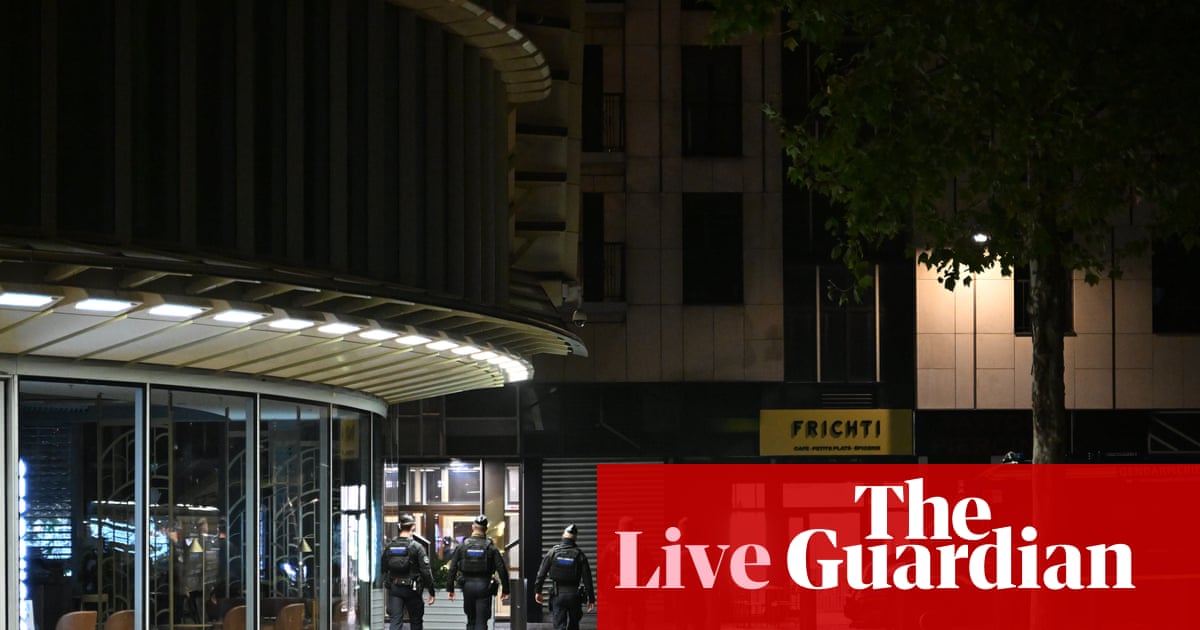
France is implementing targeted curfews to quell unrest, with the Prime Minister reporting overnight calm. Simultaneously, international diplomacy is active, with a US envoy meeting Ukrainian President Zelenskyy in Oslo to discuss aid and war efforts.
Imagine France is like a classroom where some students are very upset about the cost of snacks, leading to disruptions. The principal put some students on a short "time out" (curfew) in certain areas to calm things down. Meanwhile, in another part of the world, a special helper (US envoy) is meeting with a leader (Zelenskyy) to discuss how to get more tools to protect their home from a bully.
Analysis
Targeted Curfews in France
The French government's decision to implement targeted curfews appears to be yielding some initial success in quelling widespread unrest. Prime Minister Sébastien Lecornu's statement that these measures "have contributed to calm overnight" suggests a strategic shift towards localized control to manage escalating protests. The article notes that the parliament is considering an inquiry into the protests and the law enforcement responses, indicating a potential for deeper examination of the underlying causes and the effectiveness of the government's actions. This approach, while potentially effective in the short term, raises questions about the long-term implications for civil liberties and the potential for renewed unrest if underlying grievances are not addressed.
The unrest, fueled by cost-of-living concerns, has seen significant violence, including the fire at the Limoges town hall, for which a 40-year-old man was arrested. The government's response, including securing additional diesel deliveries from the Gulf to lower domestic prices, indicates a multi-pronged strategy to both maintain order and address economic pressures. The potential for further curfews suggests a government prepared to escalate measures if the situation deteriorates, a move that could further strain public sentiment.
Diplomatic Engagements in Oslo
Simultaneously, the international stage is active with US envoy Steve Witkoff's arrival in Oslo for crucial talks with Ukrainian President Volodymyr Zelenskyy, alongside the leaders of Norway and Finland. This meeting underscores the persistent international commitment to supporting Ukraine amidst its ongoing conflict. President Zelenskyy's stated priorities for discussion – ballistic missile interceptors, early warning systems, and the restoration of Starlink/Starshield services – highlight the critical, immediate needs of Ukraine's defense.
US Secretary of State Marco Rubio's assurance that "nothing is being deliberately denied to Ukraine" attempts to allay concerns about the flow of aid, though the specific requests from Zelenskyy suggest ongoing challenges. The presence of Norwegian PM Jonas Gahr Støre and Finnish PM Alexander Stubb indicates a coordinated regional approach to the conflict and its implications, particularly concerning security and humanitarian aid.
EU-UK Relations and Global Context
Beyond these immediate crises, the article touches upon the broader geopolitical and economic landscape, with EU trade commissioner Maroš Šefčovič outlining priorities for an upcoming EU-UK summit. Agreements on sanitary rules, emissions trading systems, and youth experience schemes are among the key areas for discussion, signaling a desire to solidify post-Brexit cooperation. The emphasis on fully implementing existing agreements and addressing the rights of citizens residing in each other's territories highlights the ongoing complexities of the UK's departure from the EU.
Šefčovič's mention of foreign policy issues, particularly the continued support for Ukraine, contextualizes the EU-UK relationship within the current global security environment. The summit aims to navigate these challenges, seeking to strengthen ties amidst a backdrop of international instability and economic pressures, demonstrating how interconnected global events are influencing bilateral relationships.
Key points
- France is using targeted curfews to manage protests, with the Prime Minister reporting overnight calm.
- The French parliament is considering an inquiry into recent protests and law enforcement actions.
- A US envoy is in Oslo for talks with Ukrainian President Zelenskyy and Nordic leaders regarding aid.
- Discussions in Oslo focus on crucial military aid, including missile interceptors and communication systems for Ukraine.
- EU and UK officials are preparing for a summit to discuss trade, cooperation, and support for Ukraine.
The targeted curfews in France could lead to a de-escalation of violence, allowing for constructive dialogue on cost-of-living issues. In parallel, the diplomatic talks in Oslo might result in enhanced military and technological support for Ukraine, bolstering its defense capabilities and potentially accelerating a path toward peace.
The continued reliance on curfews in France may suppress dissent without addressing root causes, potentially leading to renewed or more intense unrest. The diplomatic discussions in Oslo, while important, could falter if immediate aid is not delivered or if geopolitical complexities prevent a unified strategy, prolonging the conflict and its humanitarian toll.