Governor’s rule, emergency enforced in KP after president’s approval
Pakistan's President Asif Ali Zardari has approved the imposition of Governor's Rule and a state of emergency in Khyber Pakhtunkhwa (KP) province, citing a severe deterioration of law and order.
Intelligence analysis by Gemini 2.5 Flash
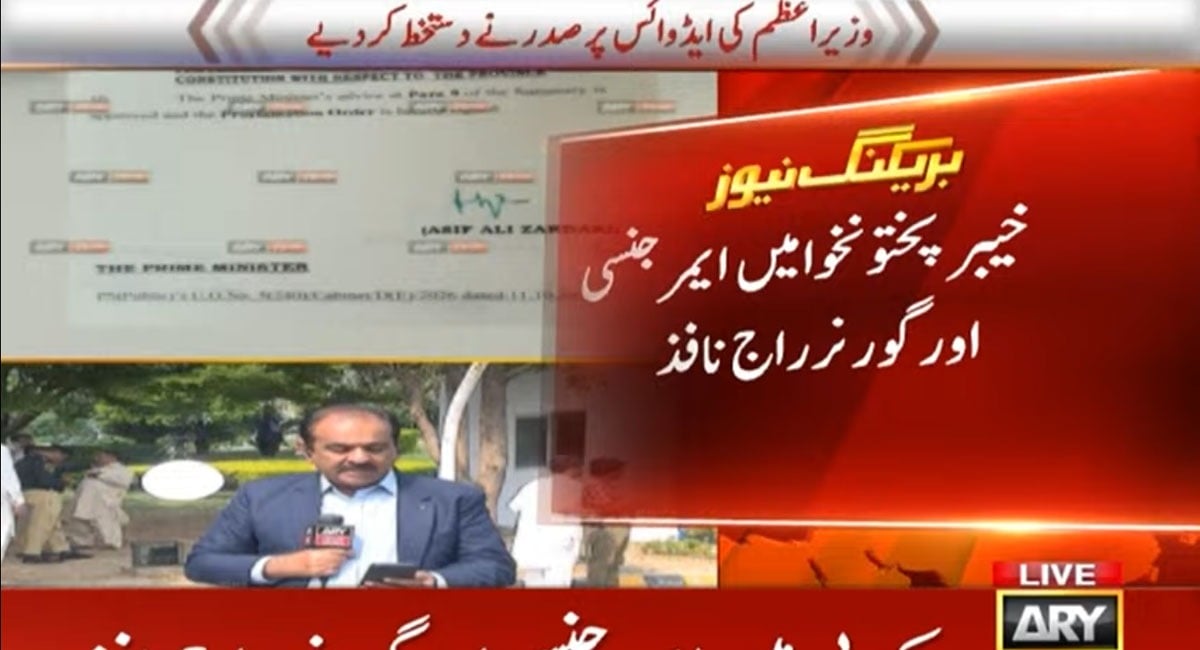
The decision to enforce emergency measures in KP comes on the advice of Prime Minister Shehbaz Sharif, following an alarming increase in terrorist incidents and attacks on government installations. The presidential proclamation highlights the provincial government's alleged failure to address the security threats and maintain constitutional order, leading to the invocation of Articles…
Imagine your school playground suddenly became very messy and unsafe, with kids not following rules and some even causing trouble. The principal (like the President) and the head teacher (like the Prime Minister) decided that the usual student council (the provincial government) wasn't able to fix it. So, they stepped in to take charge directly, bringing in new rules and a new person to run things (the Governor's Rule and emergency) to make sure everyone is safe and the playground can be managed properly again.
Analysis
Khyber Pakhtunkhwa's Security Crisis
The imposition of Governor's Rule and a state of emergency in Khyber Pakhtunkhwa (KP) underscores a critical security crisis gripping the province. The presidential proclamation explicitly cites an "extraordinary surge in terrorist incidents" and "serious security threats" as the primary justifications for these drastic constitutional measures. Attacks on government installations and law enforcement agencies have reportedly escalated, posing significant risks to public order and the overall security landscape.
The federal government's intervention suggests a perceived inability of the provincial administration to effectively counter the rising tide of militancy. The declaration points to the provincial government's alleged failure to implement adequate measures to address terrorism and lawlessness, creating a vacuum that necessitated federal oversight. This situation highlights the persistent challenges Pakistan faces in stabilizing its western border regions, which have historically been vulnerable to extremist activities.
President Asif Ali Zardari's Role
President Asif Ali Zardari's approval of the summary for emergency and Governor's Rule was a pivotal step, acting on the advice of Prime Minister Shehbaz Sharif. This action, as per the official statement, was deemed an "immediate constitutional action necessary" in view of the serious emergency situation in Khyber Pakhtunkhwa. The President's decision was also informed by a report from the provincial governor, which reportedly detailed disruptions in the constitutional system and alleged that the provincial government was not functioning in accordance with the Constitution.
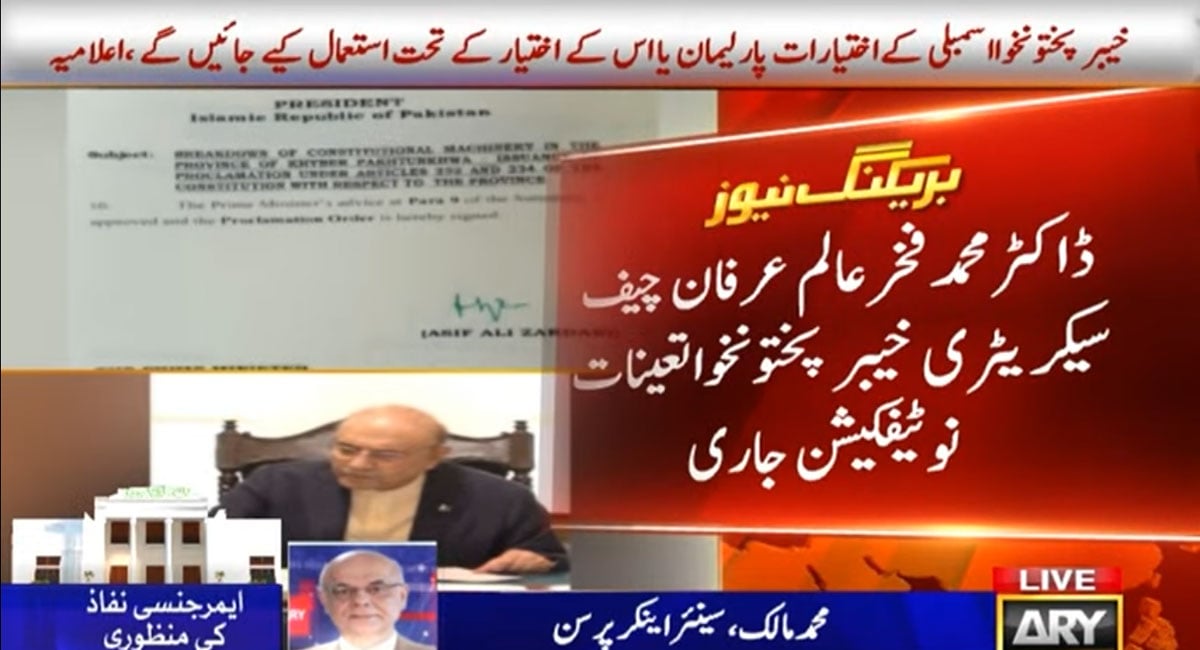
This presidential intervention signifies the federal government's assertion of authority in a province where security concerns have reached a critical threshold. By signing the proclamation, President Zardari has formally initiated a period of direct federal control over KP's administration, aiming to restore law and order and ensure constitutional governance. The appointment of Dr Muhammad Fakhre Alam Irfan as the new Chief Secretary immediately following the enforcement of Governor's Rule further illustrates the swift administrative changes being implemented under this new arrangement.
Articles 232 and 234 Invoked
The legal basis for these sweeping measures rests on Articles 232(1) and 234(1) of the Constitution of Pakistan. Article 232 pertains to the proclamation of emergency on account of war, internal disturbance, or financial emergency, while Article 234 allows for the proclamation of Governor's Rule if the constitutional machinery in a province breaks down. The presidential proclamation explicitly states that the provincial government cannot be run in accordance with the Constitution under the prevailing circumstances, directly invoking these provisions.
The use of these articles grants the federal government extensive powers to manage the province, including legislative and executive authority, effectively suspending the provincial assembly and cabinet. This constitutional mechanism is designed for extraordinary situations where provincial governance is deemed to have failed or where severe threats to national security or public order exist. The invocation of these articles underscores the gravity of the situation in KP, signaling a significant shift in the administrative and political landscape of the province as the federal government takes direct charge to address the escalating security challenges.
Key points
- President Asif Ali Zardari approved Governor's Rule and emergency in Khyber Pakhtunkhwa (KP).
- The decision was made on the advice of Prime Minister Shehbaz Sharif.
- The presidential proclamation cites an extraordinary surge in terrorist incidents and security threats.
- It alleges the provincial government failed to take adequate measures against terrorism and lawlessness.
- The measures are enforced under Articles 232 and 234 of the Constitution, indicating a breakdown of constitutional order.
- Dr Muhammad Fakhre Alam Irfan has been appointed as the new Chief Secretary of KP.
The imposition of Governor's Rule could exacerbate political tensions between the federal government and provincial political parties, potentially leading to accusations of overreach and further destabilizing the political landscape. It might also be perceived as a failure of democratic governance, potentially alienating local populations and complicating efforts to build long-term stability in the region.