Gujarat Police arrest 25-year-old linked to 1,090 cyber crimes and ₹1,071 crore in illegal transactions
Gujarat CID Crime arrested Rafikul Alam, 25, from Assam, for his alleged role in 1,090 cyber crimes across India involving ₹1,071.5 crore in illegal transactions. Police say he coordinated with Chinese cyber criminals via WhatsApp and Telegram and laundered funds through …
Intelligence analysis by Llama
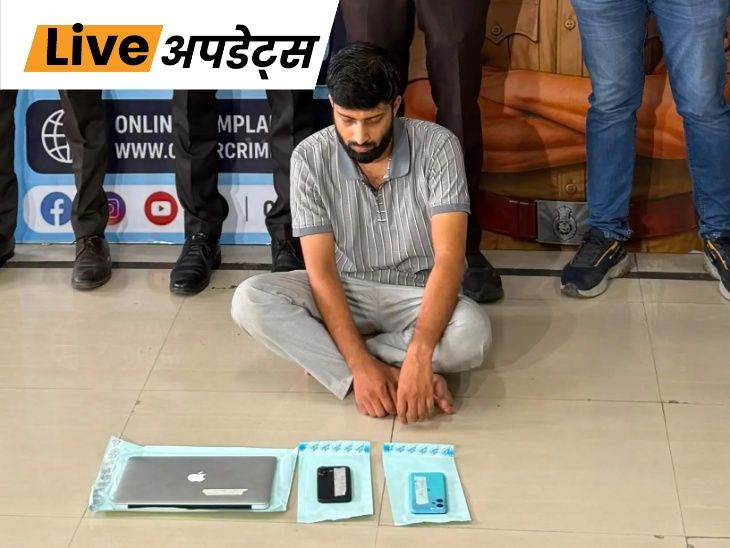
A 25-year-old man from Assam has been arrested in connection with one of the largest cyber fraud networks uncovered in India, spanning 1,090 cases and over ₹1,071 crore. Investigators say the accused was in direct contact with Chinese operators and used crypto to move stolen funds overseas.
Police caught a 25-year-old man who they say helped cheat people in more than a thousand online scams worth over a thousand crore rupees. He talked to scam bosses in China through chat apps, hid the stolen money in lots of bank accounts, and then sent it abroad using digital money called cryptocurrency.
Analysis
The Rafikul Alam arrest
Gujarat's CID Crime has arrested a 25-year-old man named Rafikul Alam from Assam in connection with what police describe as a sprawling nationwide cyber fraud network. According to investigators, Alam was in direct contact with Chinese cyber criminals through WhatsApp and Telegram, the two messaging platforms that have become the default communication rails for cross-border scam syndicates operating in India. The arrest signals that state-level cybercrime units are now tracing suspects beyond their home jurisdictions and into the northeastern states, where recruiters have historically drawn low-wage operators into digital fraud work.
The most striking detail in the police briefing is the sheer scale attributed to a single individual. Authorities link Alam to 1,090 separate cyber crime cases spread across the country and to ₹1,071.5 crore in what they describe as illegal transactions. While Indian police have made similar-sounding arrests before, the ₹1,071.5 crore figure places this case among the larger financial-crime investigations of recent years and suggests the accused may have functioned less as a foot soldier and more as a node coordinating money movement on behalf of overseas handlers.
The 1,754-account money trail
Investigators say the fraud proceeds were funnelled through 1,754 bank accounts before being converted into cryptocurrency and sent to China. The use of such a large account network is consistent with the 'mule account' model that has proliferated in Indian cyber fraud: small balances are layered through hundreds of accounts opened using rented or stolen KYC documents, breaking the paper trail before funds are consolidated and exited through crypto on-ramps. The 1,754-account figure underscores how fragmented and labour-intensive the laundering process remains, even when the ultimate destination is a single overseas wallet cluster.
This architecture matters because it shows where enforcement pressure is actually biting. Banks and payment intermediaries have spent the last two years tightening account-opening norms and flagging rapid in-and-out transfers, which has pushed fraudsters to spread smaller sums across more accounts rather than move large lumps. The Alam case, in effect, is a snapshot of that adaptation in real time: more accounts, smaller individual deposits, faster conversion into digital assets, and a direct pipeline to handlers in China.
The 23 crypto wallets and the digital-arrest angle
A forensic examination of Alam's mobile phone yielded 23 crypto wallets, collectively holding or moving roughly ₹16 crore in transactions. That figure is small relative to the ₹1,071.5 crore headline, which suggests that crypto was the exit ramp for only a slice of the proceeds, or that the wallet activity captured on-device represents just one leg of a much longer laundering chain. Either way, the seizure gives investigators a new cluster of on-chain addresses to trace through exchange compliance teams, a technique that has produced some of the more visible cyber crime breakthroughs in India over the past year.
Separately, Gujarat's Cyber Centre of Excellence (CCE) said it disrupted 10 'digital arrest' cases during the investigation. The term refers to a fast-growing scam format in which fraudsters impersonate law-enforcement or regulatory officials on video calls and coerce victims into transferring money; India has logged thousands of such cases in 2024-25, with losses running into several hundred crore. The CCE's claim of 10 prevented incidents is modest in absolute terms, but the reference is notable because it shows state cyber units framing their work not just as post-fraud arrests but as active intervention during ongoing extortion calls.
Key points
- Gujarat CID Crime arrested 25-year-old Rafikul Alam from Assam in connection with 1,090 cyber crime cases across India.
- Police say the case involves ₹1,071.5 crore in illegal transactions, making it one of the larger cyber fraud investigations in recent years.
- Investigators found 23 crypto wallets on Alam's phone carrying roughly ₹16 crore in transactions, with funds reportedly routed to handlers in China.
- The fraud money was moved through 1,754 bank accounts before being converted to cryptocurrency and sent abroad, police said.
- During the probe, the state's Cyber Centre of Excellence claimed to have disrupted 10 'digital arrest' extortion attempts in time.
If the leads from the 23 seized crypto wallets and the 1,754 bank accounts are fully pursued, Indian agencies could trace the network's handlers in China and disrupt several active scam pipelines at once. The CCE's success in stopping 10 digital-arrest cases during the same probe also points to a growing ability to intervene mid-fraud rather than only after the fact.
The scale attributed to a single 25-year-old suspect suggests the wider network remains largely intact, with new mules and wallets easily replacing those that have been taken down. The fact that proceeds were already exiting to China via crypto means a significant share of the ₹1,071.5 crore is unlikely to be recovered, leaving victims with little realistic prospect of restitution.