India signs Rs 1,943-cr deal with US firm to lease 2 MQ-9B Sea Guardian drones for Navy
The Indian defence ministry has signed a contract with US-based General Atomics Aeronautical Systems for leasing two MQ-9B Sea Guardian drones for the Indian Navy. The lease is valued at Rs 1,943 crore and will last for 30 months.
Intelligence analysis by Llama
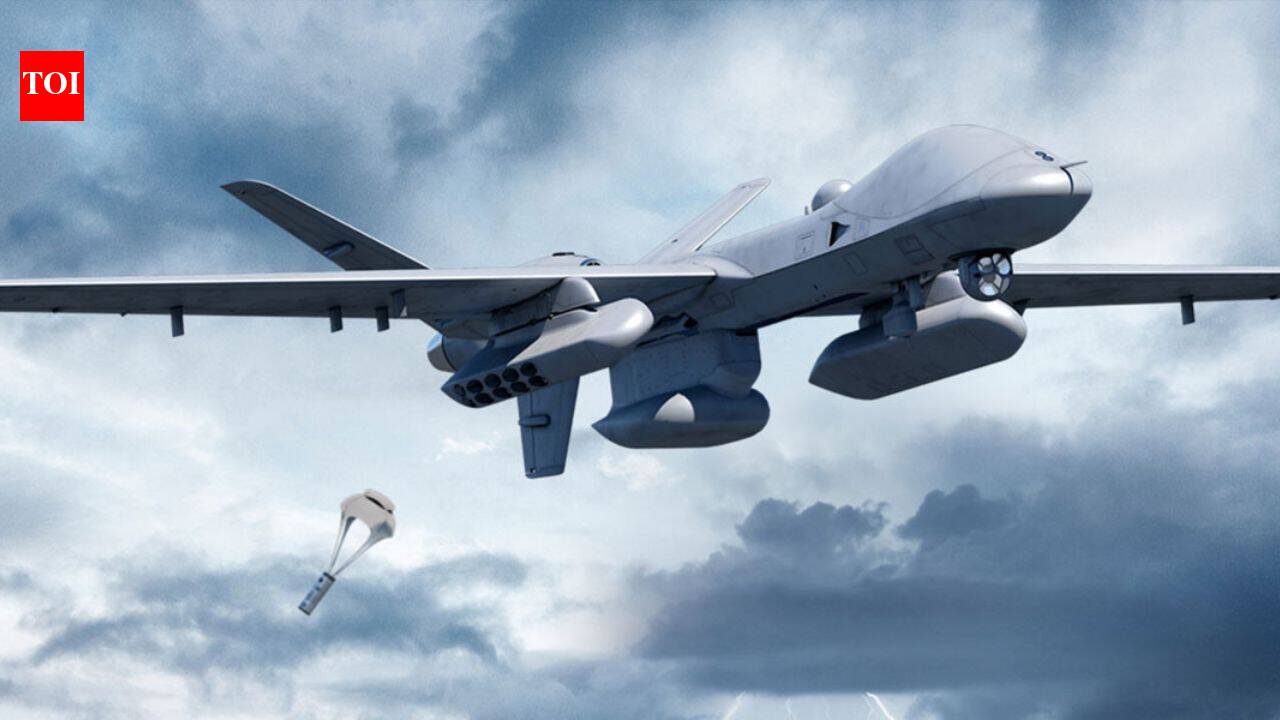
The Indian Navy has leased two MQ-9B Sea Guardian drones from the US-based General Atomics Aeronautical Systems for a period of 30 months. The lease is valued at Rs 1,943 crore and will significantly enhance the Indian Navy's maritime domain awareness capabilities.
The Indian Navy has leased two special drones from the US that can fly high in the air for a long time and see a lot of things. This will help the Navy keep an eye on the ocean and respond to any problems that might come up.
Analysis
Background
The Indian Navy has been looking to enhance its maritime domain awareness capabilities for some time now. The leasing of MQ-9B Sea Guardian drones is a significant step in this direction. The MQ-9B Sea Guardian is a high-altitude long-endurance (HALE) remotely piloted aircraft system that is capable of providing 30+ hours of continuous, multi-domain surveillance while operating safely inside unsegregated civil and military airspace.
What Changed
The Indian defence ministry has signed a contract with US-based General Atomics Aeronautical Systems for leasing two MQ-9B Sea Guardian drones for the Indian Navy. The lease is valued at Rs 1,943 crore and will last for 30 months. The MQ-9B Sea Guardian is equipped with advanced systems, state-of-the-art sensors, and sophisticated payloads that will significantly enhance the Indian Navy's maritime domain awareness capabilities.
What's Next
The leasing of MQ-9B Sea Guardian drones is a stop-gap arrangement as it will cover operational needs of the Indian military till it gets delivery of 31 drones from General Atomics expected under a mega deal that was signed in 2024. The Indian Navy will use the leased drones to provide persistent intelligence, surveillance, and reconnaissance coverage over vast areas of the maritime domain, strengthening India's ability to monitor and respond to developments across the Indian Ocean Region.
Key points
- The Indian defence ministry has signed a contract with US-based General Atomics Aeronautical Systems for leasing two MQ-9B Sea Guardian drones for the Indian Navy.
- The lease is valued at Rs 1,943 crore and will last for 30 months.
- The MQ-9B Sea Guardian is a high-altitude long-endurance (HALE) remotely piloted aircraft system that is capable of providing 30+ hours of continuous, multi-domain surveillance while operating safely inside unsegregated civil and military airspace.
- The leasing of MQ-9B Sea Guardian drones is a stop-gap arrangement as it will cover operational needs of the Indian military till it gets delivery of 31 drones from General Atomics expected under a mega deal that was signed in 2024.
The leasing of MQ-9B Sea Guardian drones is a positive development for the Indian Navy, as it will enhance its maritime domain awareness capabilities and provide persistent intelligence, surveillance, and reconnaissance coverage over vast areas of the maritime domain. This will strengthen India's ability to monitor and respond to developments across the Indian Ocean Region.
However, the leasing of MQ-9B Sea Guardian drones also raises concerns about the Indian Navy's dependence on foreign technology. The Navy's ability to operate and maintain the drones will be critical to its success, and any technical issues or delays could impact its effectiveness.