Haitians in Ohio who lost protected status get ankle monitors instead of ICE detention
ICE is placing ankle monitors on Haitians in Ohio who lost Temporary Protected Status after a Supreme Court ruling, rather than detaining them, attorneys say. The shift reflects a lack of detention space for more than 300,000 affected Haitians.
Intelligence analysis by Llama
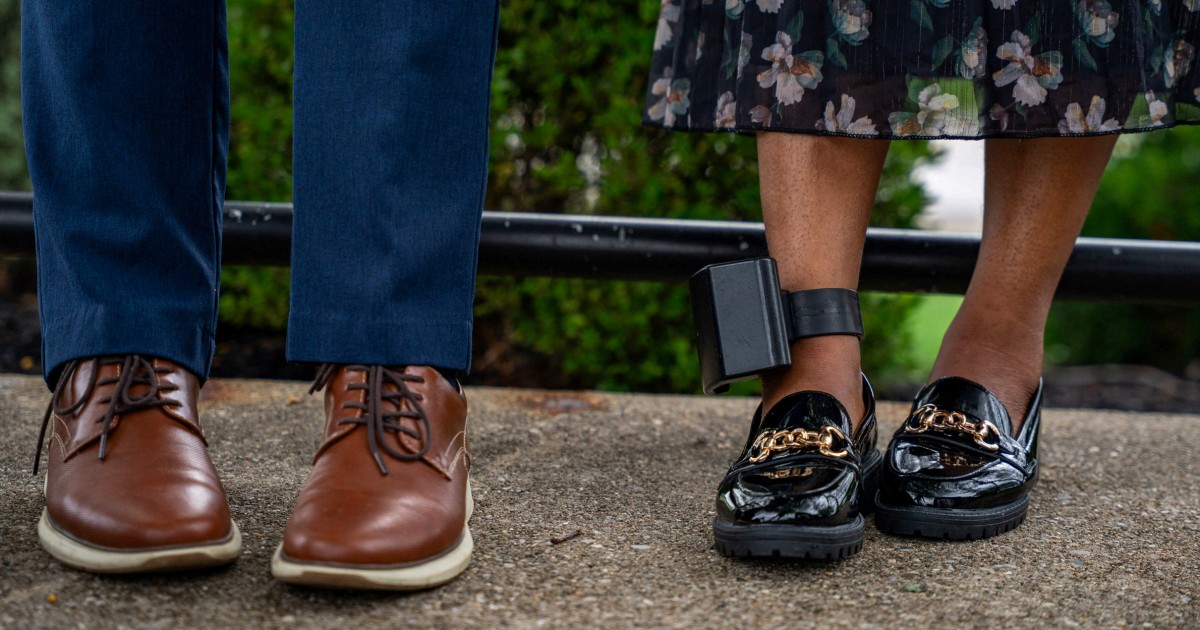
After the Supreme Court allowed the Trump administration to end Temporary Protected Status for over 300,000 Haitians, ICE has opted for ankle monitoring and supervised check-ins over mass detention. Attorneys say the approach is driven by detention capacity limits, but DHS Secretary Markwayne Mullin's softer enforcement posture has drawn friction with White House hardliners led by Ste…
Some people from Haiti were allowed to live in America for a while because their home country had big problems. Now a court said that permission could end, and there's no room to lock up so many people, so the government is putting GPS trackers on their ankles, like a smartwatch, so officials can see where they are while they wait to find out if they can stay.
Analysis
The 300,000-Haitian detention math
The scale of the Supreme Court's June ruling makes mass detention logistically impossible, according to a senior Department of Homeland Security official quoted in the article. Ending Temporary Protected Status affected more than 300,000 Haitians who came to the U.S. following the 2010 earthquake, alongside more than 50,000 Syrians who arrived after civil war broke out in 2015. ICE currently holds roughly 65,000 immigrants in detention facilities across the country, meaning absorbing the newly exposed Haitian population would require multiplying existing capacity roughly fivefold. The senior DHS official told NBC News it would be impossible to hold all 300,000 in ICE detention, and the agency is working to open new facilities but has not yet come close. That arithmetic is the most important context for the ankle-monitor decision: it is not so much a policy preference as a capacity ceiling.
Markwayne Mullin's enforcement recalibration
DHS Secretary Markwayne Mullin, the administration's second Homeland Security secretary who took over in March, appears to be steering enforcement toward alternatives to detention even as White House immigration architect Stephen Miller pushes for holding immigrants in custody. The article notes growing tension between the White House and Mullin, though President Trump does not appear to be preparing to oust him. Last month, Mullin instructed ICE officers to pause vehicle stops after two fatal shootings of men in vehicles, a policy Trump quickly overturned; NBC reported Mullin had not run the pause by the White House. The ankle-monitor approach is the latest policy choice that could draw Trump's ire, and it is the kind of operational decision that has put the DHS chief at odds with the harder enforcement line favored inside the West Wing.
The 75-mile ankle monitor boundary
In practice, the ankle-monitor program means Haitians who have lost TPS are summoned to mandatory in-person check-ins at DHS field offices, such as the one in Blue Ash, Ohio, photographed for the story. If they do not have an immediate claim that would justify continued presence, such as asylum, they are fitted with a tracker and told they cannot travel more than 75 miles from their home. Immigration attorney Katie Kersh of Ohio-based Advocates for Basic Legal Equality said she had feared a "mass enforcement, mass detention operation" and that the letters instructing clients to check in were a less severe outcome than expected. People were arrested during check-ins but not detained long term, instead released to await a judge's decision while monitored. The arrangement has nonetheless sowed confusion among business owners who employ Haitians and among employees uncertain about when or whether they can show up to work, illustrating the ripple effects even of a non-detention enforcement model.
Key points
- ICE is fitting Haitians in Ohio who lost Temporary Protected Status with ankle monitors and a 75-mile travel limit instead of detaining them, attorneys say.
- A senior DHS official cited lack of detention capacity for more than 300,000 Haitians affected by the Supreme Court's June ruling ending their TPS.
- DHS Secretary Markwayne Mullin's softer enforcement posture has reportedly put him at odds with White House immigration architect Stephen Miller.
- ICE currently holds about 65,000 immigrants in detention and is working to open new facilities.
- The policy shift has created confusion among employers of Haitian workers and among employees about whether and when to report to work.
Ankle monitoring combined with pending immigration hearings allows affected Haitians to remain with their families and continue working while their cases are adjudicated, avoiding the disruption that mass detention would cause. The lighter-touch approach also preserves the option of legal relief through asylum claims or other avenues, which an immigration judge can still consider.
The 75-mile travel limit and the looming threat of detention once a judge rules could leave roughly 300,000 Haitians in legal limbo, with employers and employees uncertain about the rules. Internal White House-DHS friction, with Stephen Miller favoring detention over alternatives, raises the risk that the ankle-monitor approach is reversed and mass detention resumes, particularly if new ICE facilities come online.