Hamas agrees to disarmament after agreement with Trump peace delegation; will this plan succeed?
Hamas has reportedly agreed to complete disarmament as part of a deal with a Trump peace delegation, contingent on Israel's withdrawal from Gaza, though skepticism remains high among Palestinians and Israeli officials have not yet responded.
Intelligence analysis by Gemini 2.5 Flash
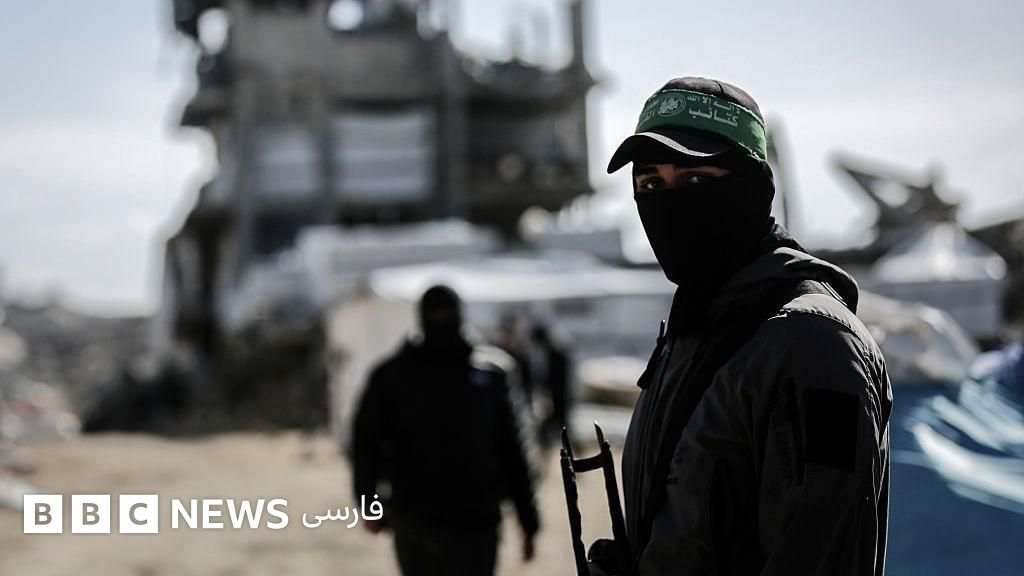
A new peace plan, brokered by a Trump delegation, proposes Hamas's full disarmament in exchange for Israel's withdrawal from Gaza. The phased agreement, built on mutual distrust and verification, faces significant skepticism from Palestinians due to past failures and potential resistance from Israeli leadership.
Imagine two groups who have been fighting for a long time. A special team, like a referee, has come up with a plan: one group (Hamas) would give up all its toys and weapons, and in return, the other group (Israel) would leave their playground. But many people are worried because similar plans have failed before, and they don't trust either side to keep their promises. It's like trying to get two kids to share a toy when they've always fought over it.
Analysis
The Proposed Disarmament-for-Withdrawal Framework
The article details a purported agreement between Hamas and a Trump peace delegation, described as a "historic achievement." The core of this 20-point plan, announced last autumn, involves Hamas agreeing to "complete disarmament" in exchange for the "withdrawal of Israeli forces from Gaza." This phased roadmap, obtained by the BBC, is designed around a "principle of complete distrust," with verification mechanisms ensuring neither side advances until the other fulfills its commitments. The process would begin with smaller armed groups disarming, followed by Hamas dismantling its "quasi-state military infrastructure," including tunnels, weapons depots, and production facilities. Ultimately, a new transitional Palestinian entity, supported by an international force, would assume full control over all weapons in Gaza, with Hamas police handing over their arms.
Skepticism and Implementation Hurdles
Despite the announcement, the plan faces immense skepticism. Rushdi Abu Al-Ouf, BBC's Gaza correspondent, reports a lack of enthusiasm among Gazans, who are deeply cynical after years of failed ceasefires and broken agreements. This pervasive distrust extends to both Hamas and Israel, with many believing past accords brought no tangible improvements. On the Israeli side, Prime Minister Benjamin Netanyahu has shown little inclination for a permanent withdrawal from Gaza and faces strong opposition from his far-right coalition partners. Operational questions, such as which entity would assume control and the fate of the "yellow line" area, remain unanswered. US officials acknowledge the disarmament phase will be "very technical" and time-consuming, with the safe storage of collected weapons posing a significant challenge.
Regional Implications and Iran's Stance
This development, if it were to materialize, would have profound regional implications, particularly for Iran. Hamas, a key component of Iran's "Axis of Resistance," has long received financial and military support from Tehran. A complete disarmament of Hamas would fundamentally alter the power dynamics in Gaza and potentially weaken Iran's influence in the Palestinian territories. While the article does not explicitly state Iran's reaction, such a move would likely be viewed with apprehension by Tehran, as it could diminish a crucial proxy and disrupt its strategy of confronting Israel through non-state actors. The success or failure of this plan, therefore, is not just a matter for Israelis and Palestinians, but a critical barometer for the broader regional security landscape and Iran's strategic positioning.
Key points
- Hamas has reportedly agreed to 'complete disarmament' as part of a deal with a Trump peace delegation.
- The agreement is contingent on the 'withdrawal of Israeli forces from Gaza,' a condition from Trump's 20-point peace plan.
- The plan is phased, based on 'complete distrust,' with verification mechanisms for each step.
- Palestinians in Gaza are highly skeptical due to a history of failed peace efforts and lack of trust in both sides.
- Israeli Prime Minister Netanyahu has shown little willingness to permanently withdraw from Gaza and faces internal political pressure.
- Mediators from Egypt, the US, Qatar, and Turkey are expected to meet soon to confirm commitment to the agreement.
The plan faces significant hurdles, including deep-seated distrust among Palestinians due to a history of broken agreements and the strong opposition from Israeli Prime Minister Netanyahu's far-right coalition partners to a permanent withdrawal from Gaza. The technical complexities of disarmament and the lack of clarity on who would assume control post-withdrawal further diminish the likelihood of successful implementation.