Iran, Armenia seek to turn shared corridor into a trade engine
Iran and Armenia are actively working to transform their shared transport corridor into a robust trade engine, focusing on enhancing infrastructure and removing logistical obstacles. High-level discussions have resulted in a draft memorandum of understanding to boost inte…
Intelligence analysis by Gemini 2.5 Flash
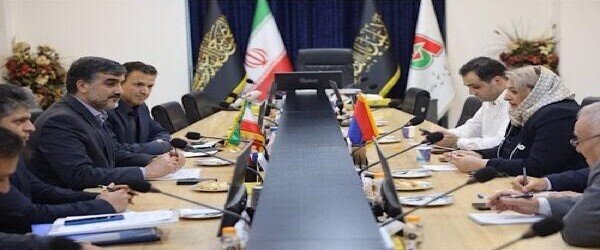
Officials from Iran and Armenia recently held intensive negotiations to finalize a comprehensive memorandum of understanding, demonstrating a firm commitment to developing their shared transport corridor. The agreement aims to streamline cross-border logistics, reduce transit costs, and significantly increase trade volumes, aligning with Iran's strategic goal of becoming a regional tr…
Imagine Iran and Armenia are like two friends who want to share toys and snacks more easily. They're building a super-duper highway between their houses so their toy trucks can deliver things faster and cheaper. This way, they can trade more, help each other out, and even let other friends use their special road to share things too!
Analysis
Bolstering Bilateral Transport Diplomacy
Iran and Armenia are demonstrating a strong political will to deepen their economic and transport cooperation, as evidenced by recent high-level meetings. The Deputy Minister of Territorial Administration and Infrastructure of Armenia met with the Head of Iran's Road Maintenance and Transportation Organization, signaling a concerted effort to advance shared goals. These discussions, attended by representatives from various ministries, underscore the strategic importance both nations place on developing international road transport.
The commitment from both sides is rooted in Iran's broader macro-policy of fostering strategic relations with neighboring countries. This 'transport diplomacy' is not merely about bilateral trade but also about enhancing regional connectivity and stability. The ongoing dialogues are crucial for overcoming traditional obstacles and paving the way for sustainable economic convergence, positioning Iran as a pivotal player in regional transit.
Concrete Steps for Corridor Enhancement
The core of the current efforts revolves around a comprehensive draft memorandum of understanding (MoU) that addresses several key areas. This draft focuses on critical infrastructure development, which is essential for increasing the efficiency and capacity of the shared corridor. Furthermore, it aims to remove existing border crossing obstacles, which often impede the smooth flow of goods and add to transit times and costs.
Another significant aspect of the proposed MoU is the reduction or elimination of road tolls, a measure designed to make transit more economically viable and competitive. The agreement also seeks to increase the reception capacity for transit fleets within both countries, ensuring that the improved infrastructure can handle higher volumes of trade. These practical steps are expected to significantly reduce problems for drivers and improve overall border logistics.
Iran's Regional Transit Ambitions
The activation of the Iran–Armenia–Georgia corridor is highlighted as a decisive factor in boosting regional trade and supply chains. This corridor represents a strategic pathway that can significantly increase trade exchanges, leveraging Iran's substantial trade capacities with its neighbors. By establishing parallel corridors and fully utilizing existing ones, Iran aims to diversify its transit options and enhance its role as a regional economic linchpin.
The development of this corridor is a testament to Iran's ambition to become a central transit hub, a goal that aligns with its broader economic and geopolitical objectives. The ongoing coordination among executive bodies in both countries is crucial for advancing these common goals, ensuring that the proposed measures translate into tangible benefits for regional trade and economic integration. The results of these intensive negotiations are expected to be announced through diplomatic channels, marking a new phase in Iran-Armenia economic relations.
Key points
- Iran and Armenia are committed to developing a shared transport corridor to boost trade and regional connectivity.
- High-level meetings have led to a draft Memorandum of Understanding (MoU) on international road transport cooperation.
- The MoU focuses on infrastructure development, removing border obstacles, reducing road tolls, and increasing transit capacity.
- The full activation of the Iran–Armenia–Georgia corridor is seen as crucial for increasing regional trade exchanges.
- This initiative aligns with Iran's strategic goal of becoming a regional transit hub and developing strategic relations with neighbors.
If successfully implemented, this initiative could significantly boost trade volumes between Iran and Armenia, reducing transport costs and improving logistical efficiency. It would strengthen regional economic integration, enhance Iran's role as a transit hub, and potentially open new trade routes for the wider region.
Potential challenges include delays in infrastructure development, difficulties in harmonizing border procedures, or political hurdles that could slow down the implementation of the MoU. Failure to fully address existing obstacles could limit the corridor's effectiveness and prevent the realization of its full trade potential.