Has anything changed since Nirbhaya?
The Supreme Court has taken suo motu cognisance of recent rape cases in Delhi-NCR, highlighting persistent systemic failures in public safety despite legal reforms enacted after the 2012 Nirbhaya case.
Intelligence analysis by Gemini 2.5 Flash
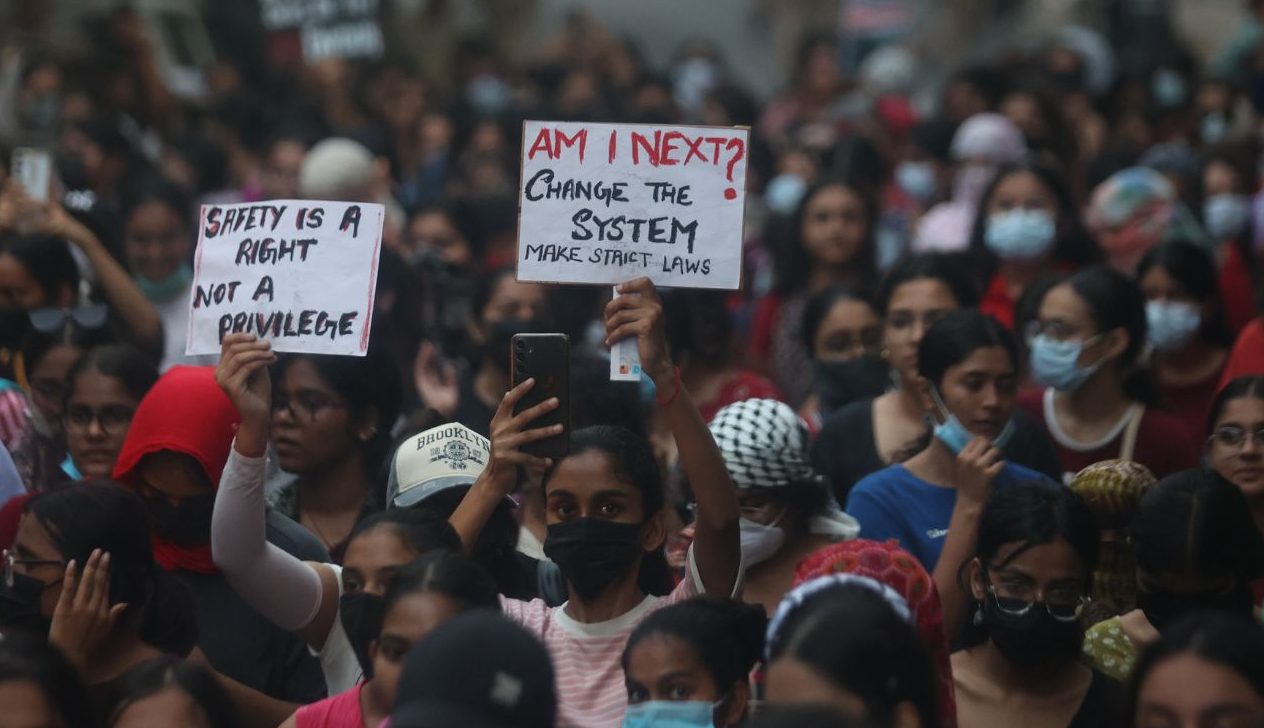
Recent sexual assault cases in Delhi, including a gang rape in a park and a minor's assault on a bus, have prompted the Supreme Court to intervene, drawing "painful parallels" to the 2012 Nirbhaya incident. The article argues that despite stricter laws, fundamental issues in law enforcement, urban planning, and public infrastructure continue to compromise women's safety in the capital.
Imagine your city is like a big playground. After a very sad event called Nirbhaya, grown-ups made new rules to keep girls safe, like making punishments tougher. But the article says it's like the playground still has broken swings and dark corners, even with the new rules. The grown-ups in charge, like the police and city planners, aren't fixing the basic things that make places safe, so bad people still find chances to do bad things. It's not just about catching bad guys, but making sure the playground is bright and watched so they don't get a chance in the first place.
Analysis
Nirbhaya's Legacy
The 2012 Nirbhaya case was a watershed moment for India, sparking widespread protests and leading to significant legal reforms, most notably the Criminal Law (Amendment) Act, 2013. This legislation introduced new offenses like stalking and voyeurism, broadened the definition of rape, and imposed more stringent punishments, including capital punishment in certain circumstances. The Justice J S Verma Committee, formed in the wake of the incident, produced a seminal report advocating for comprehensive police reforms, gender-sensitive investigations, and robust victim support mechanisms, emphasizing that rape is an assault on dignity and autonomy.
However, the article posits that while legal frameworks were strengthened, the critical institutional reforms recommended by the Verma Committee have largely remained incomplete. The Supreme Court's recent observation of "systematic failure" in guaranteeing public safety, drawing direct parallels to Nirbhaya, underscores this persistent gap. The recurrence of severe sexual assault cases in Delhi, the seat of national governance, highlights that legislative changes alone are insufficient without a fundamental overhaul of enforcement and administrative accountability.
Delhi's Persistent Pattern
Delhi, as the national capital, serves as a critical barometer for women's safety in India, yet National Crime Records Bureau (NCRB) data from 2018 to 2024 paints a grim picture. The city consistently reports the highest number of crimes against women among metropolitan areas, indicating a systemic issue rather than isolated incidents. Specifically, the NCRB 2024 data reveals 1,058 rape cases in Delhi, translating to a rape rate of 14 per lakh women, meaning nearly three reported rapes daily. These statistics, the article notes, only capture reported cases, leaving countless others unrecorded due to fear and stigma.
The recent incidents, such as the alleged gang rape of a 17-year-old in a sleeper bus and a 16-year-old in a public park, exemplify the administrative failures. These include poorly lit public spaces, non-functional CCTV cameras, unverified public transport, and inadequate police patrols. Such lapses reduce "effective guardianship," a concept central to the Routine Activity Theory, which suggests that crime thrives when motivated offenders encounter vulnerable targets in the absence of deterrents.
Cesare Beccaria's Certainty
The article delves into the question of why severe punishments, including life imprisonment and capital punishment for rape, have not acted as effective deterrents. It references Cesare Beccaria's Classical Theory of Penology, which argues that the certainty of punishment, rather than its severity, is the true deterrent. In India, despite stringent laws, offenders often operate under the belief that they can evade immediate detection and prosecution, thereby undermining the deterrent effect.
This lack of certainty stems from the aforementioned institutional breakdowns, including insufficient surveillance, delayed police response, and a perceived lack of accountability for administrative failures. The Supreme Court's suo motu cognisance is not just a judicial intervention but an indictment of this collective failure, emphasizing that the state's duty extends beyond punitive measures to proactively ensuring safe public spaces through better urban planning, infrastructure, and consistent law enforcement presence. The right to live free from fear of violence, enshrined under Article 21, remains unfulfilled without these foundational changes.
Key points
- The Supreme Court has taken suo motu cognisance of recent rape cases in Delhi-NCR, highlighting persistent systemic failures in public safety.
- These incidents draw "painful parallels" to the 2012 Nirbhaya case, indicating that reforms enacted since then have not fully addressed underlying issues.
- Despite stringent laws, administrative failures like poor lighting, inadequate surveillance, and lack of patrolling create opportunities for crime.
- NCRB data shows Delhi consistently reports the highest number of crimes against women, with 1,058 rape cases in 2024, reflecting a persistent pattern.
- The article argues that the certainty of punishment, as per Cesare Beccaria, is a greater deterrent than severity, which is lacking due to institutional breakdowns.
The Supreme Court's proactive intervention, taking suo motu cognisance of recent cases, signals a renewed judicial push for accountability and systemic change. This high-level attention could compel government and law enforcement agencies to finally implement the long-pending institutional reforms and address the administrative failures in public safety and urban planning.
Despite past legal reforms and public outrage following the Nirbhaya case, systemic failures persist, as evidenced by the recent incidents and NCRB data. Without fundamental shifts in institutional accountability, urban design, and law enforcement practices, the cycle of violence and administrative negligence is likely to continue, leaving public spaces unsafe for women.