Hong Kong’s AI education blueprint is a start – but schools need more
Hong Kong's schools are at a critical juncture as artificial intelligence reshapes learning. The government's Blueprint for Digital Education Development sets out a clear vision with students as the focus, teachers as professionals, schools as the base, and society as a p…
Intelligence analysis by Llama
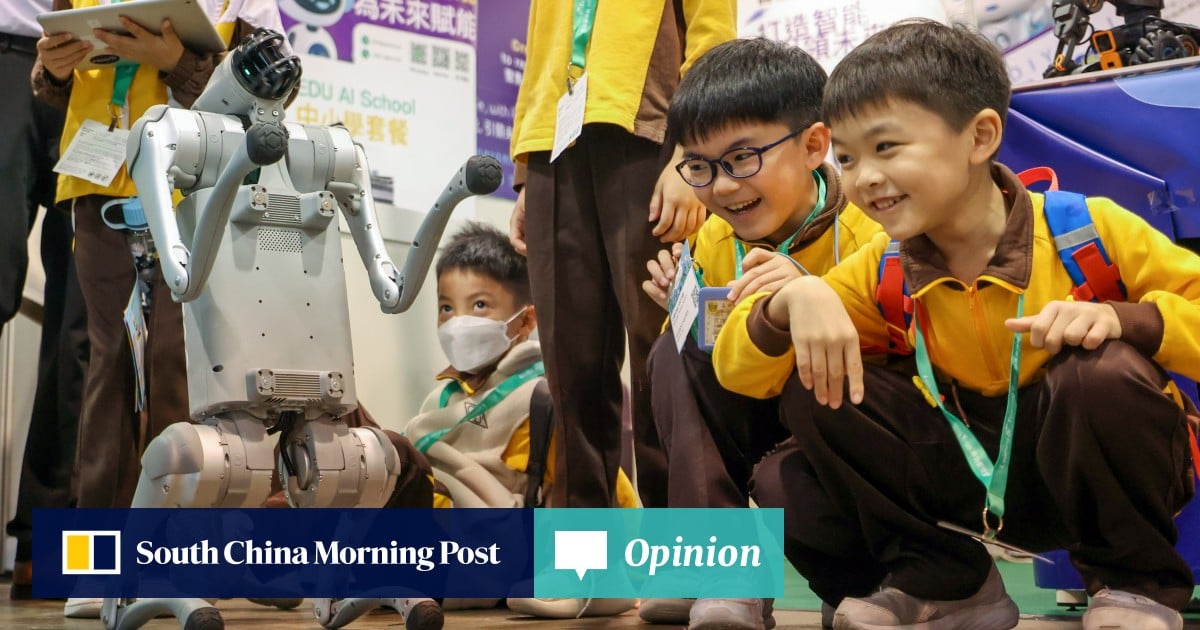
Hong Kong's AI education blueprint is a start, but schools need more. A pedagogical framework, case studies, and genuine collaboration between authorities, researchers, school leaders, and teachers are vital for meaningful AI integration in education.
Imagine you're in a classroom where the teacher uses a special tool called artificial intelligence to help you learn. This tool can help you understand things better and make learning more fun. But, the teacher needs to be trained to use this tool properly, and the school needs to have a plan to make sure everyone is using it correctly.
Analysis
A $60B Vote of Confidence
Hong Kong's government has launched the Blueprint for Digital Education Development in Primary and Secondary Schools, a clear vision for the future of learning in the city. The blueprint sets out a framework for the integration of artificial intelligence (AI) in education, with students as the focus, teachers as professionals, schools as the base, and society as a partner. The blueprint has incorporated concerns and suggestions raised by educators and researchers, including an AI pedagogical framework, a plan to build a shared resource platform, and progressive AI literacy training for teachers.
Why Cursor?
The recent evidence from schools shows that there is still a gap before achieving meaningful AI integration in education. Our Hong Kong Foundation's survey, conducted between July and December last year, found that while two-thirds of teachers say they integrate AI tools in their classrooms, the figure varies sharply by subject. About 89 per cent of information and communication technology teachers reported teaching their students to use AI tools, while 70 per cent of languages and science teachers did so. In comparison, only around 44 per cent of mathematics teachers reported integrating AI in their teaching, with the percentage falling to 40 per cent for visual arts, music, and history.
The Road Ahead
Publishing a blueprint is only the first step. The blueprint should trigger subject-wide curriculum renewal, with AI literacy built into every subject's learning objectives, with teachers supported to use AI in areas where it deepens thinking, improves practice, or offers new perspectives. That is a demanding task for already-busy teachers. Simply urging more AI use risks either token gestures or quiet resistance.
Key points
- Hong Kong's government has launched the Blueprint for Digital Education Development in Primary and Secondary Schools.
- The blueprint sets out a clear vision for the future of learning in the city, with students as the focus, teachers as professionals, schools as the base, and society as a partner.
- The blueprint has incorporated concerns and suggestions raised by educators and researchers, including an AI pedagogical framework, a plan to build a shared resource platform, and progressive AI literacy training for teachers.
- Recent evidence from schools shows that there is still a gap before achieving meaningful AI integration in education.
- The government's blueprint should trigger subject-wide curriculum renewal, with AI literacy built into every subject's learning objectives.
If the government's blueprint is implemented successfully, it could lead to a more innovative and effective education system in Hong Kong. This could result in better learning outcomes for students and a more competitive education sector.
If the government's blueprint is not supported by teachers, researchers, and the community, it could lead to a lack of meaningful AI integration in education. This could result in a waste of resources and a failure to prepare students for the future.