How Iran's unyielding stance exposed President Trump's TACO pattern
An editorial in the Tehran Times argues that Iran's firm resistance to repeated US ultimatums has exposed a pattern of maximalist threats followed by retreat, framing Tehran as having achieved strategic deterrence.
Intelligence analysis by Llama
Iranian state media editorial cataloging a series of US threats against Iran that were each followed by extensions, ceasefires, or inaction. The piece credits Iran's 'unyielding stance' with neutralizing Washington's maximum-pressure campaign.
Imagine a kid at the playground who keeps shouting 'I'm going to push you!' but never actually does. After a while, nobody believes his threats anymore. This article says that's what happened between the US and Iran - big scary threats followed by no action, and Iran didn't back down.
Analysis
The Anatomy of a TACO Pattern
The editorial assembles a timeline of escalating US demands, each paired with a quieter retreat. A 48-hour ultimatum on March 21 demanding Iran reopen the Strait of Hormuz was extended as the deadline neared. Threats on March 30 to destroy Iran's electricity plants, oil wells, and Kharg Island were followed on April 1 by a White House address warning that the US was prepared to send Iran 'back to the Stone Age.' That posture dissolved into a 14-day ceasefire brokered by Pakistan on April 7. The pattern persisted: claims on April 21 that the military was 'raring to go' preceded an indefinite ceasefire extension; the May 5 launch of Project Freedom to escort merchant ships was paused after two days; and a June 14 threat to strike and seize Kharg Island oil infrastructure was never carried out. According to the Tehran Times, this sequence of 'maximalist posturing followed by immediate retreat' defines the current US approach.
Tehran's Strategic Deterrence Playbook
The article credits Iran's leadership with maintaining what it calls an 'unyielding stance' throughout the months of combat and rhetoric. Iranian officials, including Parliament Speaker Mohammad Baqer Qalibaf, are described as dismissing Washington's threats as 'desperate psychological operations and economic manipulation aimed at destabilizing regional markets.' By asserting 'absolute military readiness to deliver a decisive counter-blow to any aggression,' Tehran positioned itself as having neutralized the maximum-pressure campaign. The piece argues that Iran's posture forced Washington to repeatedly recalculate 'the severe costs of direct conflict,' transforming what the article calls 'extreme US red lines into tactical retreats.' This framing functions on two levels: a domestic message of resilience and sovereignty, and an external signal that Iran will not bend under coercive diplomacy.
Credibility Erosion and the Limits of Coercion
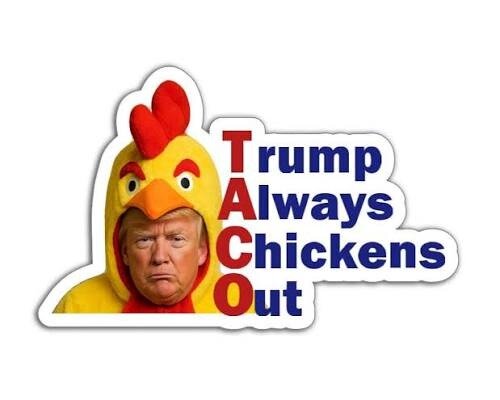
The editorial's central thesis is that the cycle of threats and pullbacks has corroded American credibility. The TACO label, originally coined by Financial Times columnist Robert Armstrong in May 2025 to describe the administration's pattern of backing away from trade tariffs, is reframed here as a lens on military and diplomatic behavior. The article concludes that Washington's 'aggressive rhetoric represents little more than short-lived tactical bluster' in the eyes of regional players and international observers. By casting US escalation as performative, Tehran aims to weaken the deterrent value of future American threats and to encourage other actors to hold their ground rather than capitulate under pressure. Whether that framing gains traction in Western capitals will shape the credibility calculus of the next round of negotiations.
Key points
- The editorial catalogs a series of US ultimatums between March and June that were each extended, paused, or abandoned.
- It credits Iran's 'unyielding stance' and parliamentary leadership with neutralizing Washington's maximum-pressure campaign.
- The 'TACO' label, originally about trade tariffs, is repurposed to describe US military and diplomatic behavior toward Iran.
- Tehran frames the standoff as a victory for strategic deterrence and a credibility loss for Washington.
- The article is published by Iranian state-affiliated media and presents a one-sided, pro-Iran editorial perspective.
If Tehran's framing is accurate, sustained Iranian resolve combined with Washington's apparent reluctance to follow through on threats could open space for a negotiated de-escalation that preserves Iran's sovereignty while avoiding a wider regional war. The article suggests that Iran's posture has already forced the US into repeated ceasefires, indicating that diplomacy remains a viable path.
The article's confident framing may overstate Iran's actual leverage. A single US miscalculation, an Israeli unilateral strike, or an Iranian misstep could collapse the deterrence equation and trigger the kind of escalation both sides have so far avoided. Additionally, the piece's heavy editorial slant risks being dismissed abroad, limiting its influence on Western policymakers and investors.
Market signals
- OIL Repeated threats to destroy oil wells, Kharg Island infrastructure, and blockade the Strait of Hormuz, as described in the article, sustain supply-route risk premia in crude markets.
AI-generated analysis of potential market relevance. Not financial advice.